The 2026 market for Water Cooling Plate manufacturers is becoming more demanding. Buyers now expect efficient heat transfer, stable construction, and dependable delivery. These expectations extend beyond simple cooling performance. A plate may look polished, yet poor channel design can create uneven temperatures, pressure loss, or hidden leakage risks.
Professor Satish Kandlikar, a respected thermal-management researcher, has emphasized that “thermal management is a key enabling technology for continued miniaturization.” His point remains highly relevant. Modern battery packs, power electronics, laser systems, and data-center equipment operate within narrow temperature limits. A reliable Water Cooling Plate must therefore match the application, not merely fit its dimensions.
This guide examines leading manufacturers through practical buyer criteria. These criteria include material selection, brazing or friction-stir welding quality, flow-path design, thermal resistance, pressure testing, customization, and after-sales support. Manufacturing records matter. So do inspection reports, sample testing, and evidence from comparable projects. A low quotation may seem attractive, but it can hide thinner materials, weaker joints, or inconsistent tolerances.
There is no perfect supplier.
Even experienced buyers can misjudge performance when they rely only on brochures. Real evaluation should consider coolant compatibility, pump capacity, operating temperature, maintenance access, and expected service life. Certification can support confidence, but it should not replace independent technical review. The manufacturers discussed here are assessed from a buyer’s perspective, with attention to measurable capability and practical risk. Some conclusions may change as technologies improve. That is worth remembering.
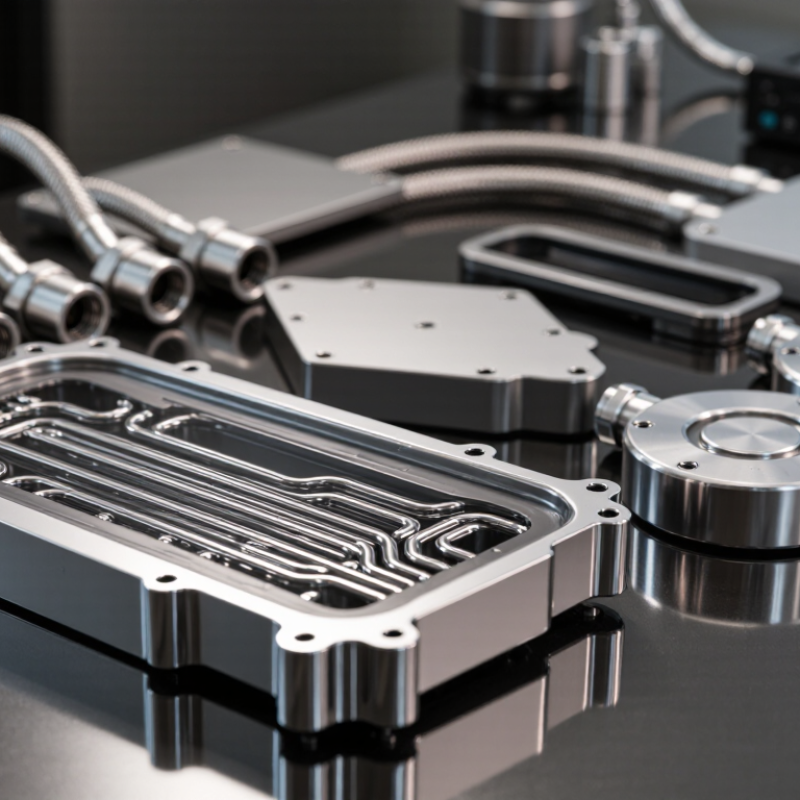
A water cooling plate is a machined or formed metal component that removes heat from a concentrated source. It usually sits beneath a processor, power module, laser, or battery cell. Inside, channels guide water or another approved coolant across the heated surface. Heat moves from the component into the plate, then into the flowing liquid. The warmed liquid travels to a radiator or chiller. Cooler liquid returns to repeat the cycle. Simple principle. Careful engineering.
Performance depends on contact quality, channel design, flow rate, and material choice. Copper often transfers heat quickly, while aluminum can reduce weight and cost. The choice must match the coolant and surrounding metals. Poor compatibility may encourage corrosion inside narrow passages. A thin thermal interface layer also matters. Too much paste can add resistance. Too little may leave air gaps.
When comparing water cooling plate manufacturers, buyers should request thermal test data, pressure testing records, and dimensional drawings. Ask how flatness, leak resistance, and internal cleanliness are checked. A reliable supplier should explain its brazing, welding, or machining process clearly. Test conditions should resemble the real application, not only a laboratory fixture. A plate can look efficient on paper. It may perform differently after vibration, scaling, or uneven mounting. I would also inspect sample channels and review service support before approving volume production. The overlooked detail is often the expensive one.
2026 Best Water Cooling Plate Manufacturers for Buyers
Key Materials, Designs, and Performance Standards to Compare
Choosing a water cooling plate in 2026 requires more than checking the lowest quoted price. Experienced buyers should examine the base material, internal geometry, surface finish, and test evidence. Copper usually offers strong thermal conductivity, while aluminum can reduce weight and cost. Mixing these metals may create galvanic corrosion without proper separation. Nickel plating can improve surface protection, but poor application may crack or peel.
Design details affect real performance. Microchannels provide high surface area for heat transfer, yet they can increase pressure drop and clogging risk. Pin-fin designs often tolerate debris better and support more flexible flow paths. Ask for drawings showing channel width, wall thickness, port position, and machining tolerances. Flatness also matters when the plate contacts a processor or power module. Small gaps can raise thermal resistance.
Demand measured results, not attractive claims. Compare thermal resistance, inlet temperature, coolant flow, pressure drop, and test heat load under identical conditions. A manufacturer should provide leak testing, pressure testing, material certificates, and repeatable inspection records. ISO 9001-based quality controls can indicate process discipline, but certification alone proves little. I would still question results without raw test conditions. No plate is perfect. A highly efficient design may be harder to clean, repair, or scale for production. Look for documented aging tests and clear acceptance limits before approving samples.
| Comparison Area | Option or Requirement | Typical Engineering Data | Primary Advantages | Limitations or Risks | Recommended Buyer Verification | Relative Suitability |
|---|---|---|---|---|---|---|
| Base Material | Copper, C11000 or equivalent high-conductivity copper | Thermal conductivity: approximately 380–400 W/m·K; density: approximately 8.9 g/cm³ | Excellent heat spreading, low thermal resistance, and strong compatibility with brazing and machining | Higher mass and cost than aluminum; bare copper may oxidize and can create galvanic issues with aluminum loops | Confirm material certificate, temper, surface finish, copper purity, and coolant compatibility | High thermal performance |
| Base Material | Aluminum, 6061-T6 or equivalent | Thermal conductivity: approximately 160–205 W/m·K; density: approximately 2.7 g/cm³ | Low weight, good machinability, and competitive cost for large cooling plates | Lower conductivity than copper; aluminum must be protected from galvanic corrosion in mixed-metal coolant systems | Verify alloy, temper, anodizing or conversion coating, coolant chemistry, and corrosion-control measures | Lightweight solution |
| Base Material | Nickel-plated copper | Uses a copper thermal core with a nickel surface layer; coating thickness commonly specified in micrometres | Combines copper heat transfer with improved surface protection and reduced copper exposure to the coolant | Plating defects, poor adhesion, or excessive coating thickness can affect reliability and thermal performance | Request coating thickness, adhesion test method, porosity inspection, and corrosion-test results | High coolant compatibility |
| Flow-Channel Design | Serpentine channel | Long continuous flow path with relatively uniform coolant coverage; pressure drop increases as path length and flow rate rise | Good temperature uniformity and effective coverage of elongated heat sources | Can require a higher pump head and may be more sensitive to blockage or particle contamination | Compare pressure-drop curves at the intended flow rate and coolant temperature | Uniform cooling |
| Flow-Channel Design | Parallel channels | Multiple branches divide the flow; overall pressure drop can be lower than a single long path when distribution is balanced | Efficient flow with lower pump demand and suitability for broad rectangular heat sources | Uneven manifold distribution can create hot spots and channel-to-channel flow imbalance | Request flow-distribution analysis, channel dimensional inspection, and thermal mapping | Balanced systems |
| Flow-Channel Design | Pin-fin or micro-pin-fin structure | High wetted surface area; channel dimensions and fin spacing must be matched to coolant cleanliness and pump capacity | High heat-transfer capability in compact footprints and strong performance at high heat flux | Higher pressure drop, greater manufacturing complexity, and increased blockage sensitivity | Confirm minimum channel clearance, filtration requirements, pressure drop, and cleanability | High heat flux |
| Manufacturing Method | CNC-machined channel with bonded or welded cover | Suitable for prototypes, low-to-medium volumes, and complex channel geometry | Flexible design changes, accurate feature control, and good traceability for development programs | Higher unit cost at large volumes; joint quality and residual machining debris require control | Review dimensional capability, cleaning process, joint inspection, and sample cross-sections | Prototype to medium volume |
| Manufacturing Method | Vacuum brazed plate | Provides a sealed internal channel network with no conventional external weld bead on the fluid path | Good repeatability for production and suitable for intricate internal passages | Requires controlled furnace parameters, proper filler selection, and prevention of blocked passages | Request braze-cycle records, filler-metal specification, leak-test results, and metallographic samples | Production capable |
| Manufacturing Method | Friction stir welded plate | Solid-state joining process with low filler-metal contamination and strong suitability for aluminum assemblies | Good structural integrity, low distortion, and suitability for larger aluminum cooling plates | Tool access, weld-path design, exit features, and process qualification are important | Verify weld qualification, cross-section inspection, distortion data, and pressure-test records | Large aluminum plates |
| Thermal Performance | Thermal resistance from heat source to coolant | Must be specified with mounting pressure, interface material, coolant type, flow rate, inlet temperature, and heat load | Provides a meaningful comparison between complete cooling-plate assemblies | A single value is not comparable when test conditions differ | Require a complete thermal test definition and temperature-measurement uncertainty | Critical KPI |
| Hydraulic Performance | Pressure drop at design flow | Report in kPa or bar at the specified flow rate, coolant temperature, fittings, and orientation | Allows correct pump sizing and identifies excessive restriction | Pressure drop changes with viscosity, temperature, flow rate, and internal surface condition | Request a pressure-drop curve covering minimum, nominal, and maximum flow | Critical KPI |
| Leak Integrity | Pressure decay, hydrostatic, or helium leak testing | Acceptance limits must be agreed before production; test pressure and hold time depend on the application | Detects leaks that could damage electronics or reduce coolant availability | Overly aggressive pressure testing can damage thin walls or seals if not engineered correctly | Define test medium, test pressure, hold time, allowable loss, calibration, and test record format | Mandatory |
| Surface Protection | Anodizing, conversion coating, nickel plating, or controlled bare-metal finish | Selection depends on base alloy, coolant chemistry, electrical isolation, and cosmetic requirements | Can improve corrosion resistance and reduce galvanic interaction | Coatings may crack, add dimensional variation, or introduce surface-resistance and adhesion concerns | Confirm coating specification, thickness tolerance, adhesion, porosity, and post-treatment cleanliness | Application dependent |
| Dimensional Quality | Flatness and mounting-interface control | Typical requirements range from general machined flatness to tighter values for high-pressure thermal interfaces | Improves contact uniformity and reduces interface-material thickness variation | Flatness can change after brazing, welding, plating, or thermal cycling | Specify datum structure, measurement method, sampling points, and post-process flatness requirement | Thermal interface critical |
| Applicable Standards | Material and process documentation | Common references include ASTM B152 for copper plate, ASTM B209 for aluminum plate, and ASTM A240 for stainless steel plate | Creates a consistent basis for material identification and incoming inspection | Standards do not automatically define the finished cooling plate’s thermal or leak performance | List the exact standard revision, alloy, temper, certificate type, and inspection scope in the purchase specification | Documentation control |
| Reliability Validation | Thermal cycling, vibration, corrosion, and coolant compatibility testing | Test profiles should represent actual temperature range, mounting loads, vibration environment, and coolant exposure | Reveals joint fatigue, coating failure, seal degradation, and corrosion risks before field deployment | Generic tests may not represent the final application or installation constraints | Request a qualification plan based on the product’s operating environment and intended service life | Long-life systems |
| Supplier Capability | Engineering, validation, and production controls | Evaluate drawing review, DFM feedback, process FMEA, control plan, traceability, calibration, and change control | Reduces manufacturing variation and improves response to design or volume changes | A visually strong prototype does not guarantee stable high-volume production | Audit the quality system, production capacity, inspection equipment, sample approval process, and corrective-action procedure | High procurement priority |
Evaluating water cooling plate manufacturers in 2026 requires application evidence, not polished brochures. Ask for thermal resistance data under conditions matching your heat load, coolant, flow rate, and mounting pressure. Reliable manufacturers should explain test methods clearly. They should also provide drawings showing channel dimensions, plate flatness, material grades, and port locations. Numbers reveal more.
Request physical samples. Inspect welds, brazed joints, surface finish, and internal cleanliness before approving production. A capable supplier should perform pressure decay, helium, or hydrostatic leak testing, with documented acceptance limits. Review sample reports, calibration records, and corrective-action histories. Small gaps in documentation can become expensive failures inside dense equipment.
Manufacturing experience also appears in process control. Look for traceable material batches, controlled machining, verified bonding temperatures, and inspection at several production stages. Ask how design changes are recorded and how rejected parts are isolated. Digital traceability is useful, but it cannot replace skilled technicians and repeatable testing. I would compare at least two pilot batches, because one successful sample may hide process variation. No scorecard is perfect. Leave room for technical judgment, especially when a supplier’s published data does not match field conditions. A dependable manufacturer will discuss limitations openly, support thermal simulation, and provide realistic lead times instead of promising everything.
2026 Best Water Cooling Plate Manufacturers for Buyers
Leading manufacturers fall into several practical categories. Precision-machining specialists offer tight tolerances, complex channels, and reliable copper or aluminum plates. Their strength is repeatability for servers, power electronics, and industrial lasers. Brazed-plate and vacuum-bonded manufacturers often deliver strong thermal transfer with fewer assembly steps. They suit higher-volume programs. Cold-plate specialists focus on direct-to-chip designs, where coolant reaches heat sources through milled or bonded passages.
Integrated thermal solution providers add pumps, manifolds, sensors, and testing. This reduces integration work, but may limit customization. According to the IEA Electricity 2024 report, data centers used about 460 TWh of electricity in 2022, with demand potentially exceeding 1,000 TWh by 2026. That pressure makes cooling efficiency a purchasing issue, not a cosmetic feature. ASHRAE TC 9.9 guidance also emphasizes coolant temperature, material compatibility, and controlled operating conditions. Small details matter.
Tips: Request thermal resistance data, pressure-drop curves, leak-test records, and sample inspection reports. Compare results under the same flow rate and heat load. Ask whether testing uses real coolant, not only water. A shiny plate can still perform poorly. I would also inspect channel geometry and surface flatness personally when possible. One weakness remains common: buyers often compare purchase price before calculating pumping energy, maintenance, and replacement risk. That shortcut deserves reconsideration.
Leading Manufacturer Categories and Their Typical Strengths
The chart uses a normalized 1–5 index based on the typical process characteristics of each manufacturer category: thermal performance, design flexibility, production scalability, and cost efficiency. Actual results depend on material selection, channel design, tolerances, joining quality, and required production volume.
A buyer should audit the plate, not just the polished quotation. MarketsandMarkets’ 2024 Liquid Cooling Market report projects growth above 20% annually through 2029. That growth can hide uneven workmanship. Request material certificates, dimensional records, pressure-test results, and thermal-resistance data. Test evidence matters. Ask how the manufacturer controls channel depth, flatness, brazing, and leak risk. A clear sample report is more useful than a broad efficiency claim. Confirm test pressure, duration, coolant, and acceptance limits before approval.
Pricing needs a wider lens. Compare tooling, minimum order quantities, packaging, inspection, freight, and replacement terms. A cheap plate can become expensive after rework or field leakage. Use total cost per qualified unit, not unit price alone. Customization should cover port location, interface geometry, coating, alloy, and mounting tolerances. Send a controlled drawing revision. Verbal changes create avoidable disputes. Support deserves measurable terms: prototype lead time, engineering response hours, spare-part availability, and failure-analysis procedure. The 2024 Uptime Institute Global Data Center Survey continues to identify efficiency and resilience as major operator concerns, making thermal validation commercially important. I would still challenge every forecast. Lab performance may not match a dusty rack, uneven mounting pressure, or aging coolant. Ask for application testing. Expect some imperfections; a supplier willing to document them is often safer than one promising perfection.
Copper usually provides strong thermal conductivity. Aluminum can reduce weight and cost. Mixed metals may cause galvanic corrosion without proper separation.
Microchannels increase heat-transfer area but may raise pressure drop and clogging risk. Pin-fin designs can tolerate debris better. Trade-offs remain.
Request channel width, wall thickness, port positions, flatness, and machining tolerances. Small contact gaps can increase thermal resistance.
Compare thermal resistance, inlet temperature, coolant flow, pressure drop, and heat load. Conditions must match your real application. Numbers reveal more.
Ask for pressure-decay, helium, or hydrostatic testing. Require documented acceptance limits and calibrated equipment records. A confident claim is not enough.
Check welds, brazed joints, surface finish, and internal cleanliness. Inspect the contact surface with care. Tiny defects may become costly failures.
An ISO 9001-based system may show process discipline. Certification alone proves little. Review raw test conditions, inspection records, and corrective actions.
Compare at least two pilot batches. Check material-batch traceability, bonding temperatures, machining controls, and rejected-part isolation. One successful sample can mislead.
Ask about cleaning, repair, scaling, aging, and realistic lead times. Efficient designs may be harder to maintain. No plate is perfect.
This guide explains how a Water Cooling Plate removes heat from high-power components by circulating liquid through precisely designed internal channels. It introduces the main materials, including aluminum, copper, and engineered alloys, along with common designs such as serpentine, parallel-channel, and vacuum-brazed structures. Buyers will learn how thermal conductivity, pressure drop, flow distribution, corrosion resistance, dimensional accuracy, and leak-testing standards affect real-world performance and service life.
The article also provides a practical framework for evaluating manufacturers in 2026. It compares typical supplier categories, from high-volume industrial producers to specialized custom engineering firms, while highlighting their relative strengths in pricing, scalability, innovation, and technical support. A final buyer checklist covers material traceability, testing documentation, customization capability, production capacity, delivery reliability, total cost, warranty terms, and after-sales communication. Together, these points help purchasers select a dependable cooling solution that matches their thermal, mechanical, and budget requirements.

Flotte Energy