Choosing a Spiral Plate Heat Exchanger looks straightforward until real process conditions enter the room. Heat duty is only one part of the decision. Fluid viscosity, fouling tendency, pressure drop, temperature approach, materials, and cleaning access can change the result quickly.
Dr. Ramesh K. Shah, a widely cited heat-transfer specialist, has emphasized, “A heat exchanger must be selected for the complete system, not for heat-transfer duty alone.” That principle deserves attention. A unit may deliver the required kilowatts in a laboratory calculation, yet struggle with sludge, crystallization, or unstable flow on a factory floor. Small details matter. A narrow channel can improve heat transfer. It can also increase blockage risk.
These seven practical tips examine how to compare a Spiral Plate Heat Exchanger with greater confidence. They consider thermal performance, allowable pressure loss, corrosion resistance, gasket selection, maintenance space, operating flexibility, and supplier support. Field experience suggests that cleanability is often underestimated during purchasing. It should not be an afterthought.
No selection method is flawless. A polished spreadsheet can still hide weak assumptions. Actual fluid samples, seasonal temperatures, start-up conditions, and future capacity should challenge the initial design. Requesting verified performance data is sensible. So is asking how the supplier handles fouling, inspection, and replacement parts.
The best choice is rarely the smallest or cheapest unit. It is the exchanger that remains dependable when the process becomes less than perfect. That is where careful engineering begins.
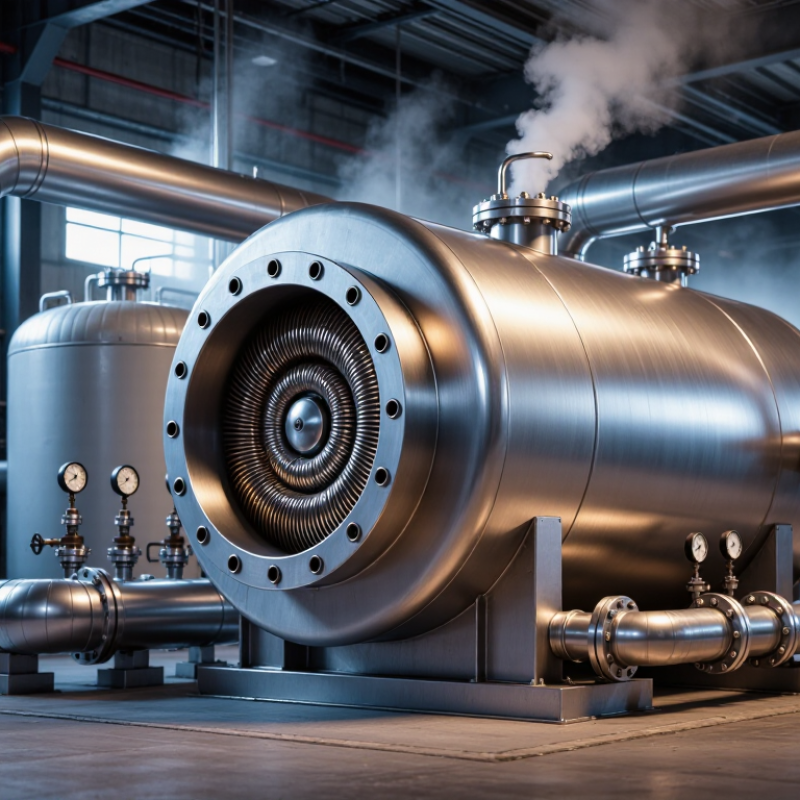
Selecting a spiral plate heat exchanger starts with defining the process, not browsing equipment catalogs. Record fluid names, flow rates, inlet and outlet temperatures, pressure, viscosity, solids content, and fouling tendency. Small details matter. A wastewater stream with 2% suspended solids behaves differently from clean water. Check whether the duty involves heating, cooling, condensing, or heat recovery between two streams. This basic map prevents an attractive but unsuitable design.
Calculate the required heat duty under normal and worst-case conditions. Use realistic operating data, including seasonal feed temperature changes and startup fluctuations. Do not rely only on average values. I have seen designs pass steady-state calculations but struggle when viscosity rises during winter operation. Specify the maximum allowable pressure drop on both sides, then confirm the available pump head. A compact exchanger can save space, yet excessive pressure loss may increase energy use.
Materials and corrosion resistance must match the fluids, cleaning chemicals, and temperature range. Ask for thermal design margins, test conditions, gasket compatibility, and inspection records. These documents support informed decisions. Also consider access for cleaning. Spiral channels often handle fouling well, but no geometry eliminates maintenance planning. Leave room for uncertainty. Your first assumptions may be wrong, especially when laboratory data replaces plant measurements. A pilot test or verified field data can reveal blockage, unexpected pressure loss, or unstable temperatures before purchase.
| Tip | Selection Dimension | Typical Process Data to Define | Why It Matters for Spiral Plate Heat Exchanger Selection | Recommended Design Check |
|---|---|---|---|---|
| 1 | Identify the Process Fluids |
Hot side: hot water Inlet / outlet: 90 / 70 °C Flow rate: 12 m³/h Cold side: process water Inlet / outlet: 25 / 45 °C Flow rate: 14 m³/h |
Fluid type, density, viscosity, heat capacity, and thermal conductivity determine the required heat-transfer area, channel size, pressure drop, and materials of construction. | Record the fluid composition and operating properties at the expected inlet, outlet, and average temperatures. Include suspended solids, dissolved salts, oils, or gas content. |
| 2 | Calculate the Heat Duty |
Target heat duty: approximately 275 kW Specific heat of water: approximately 4.18 kJ/(kg·K) Hot-side temperature change: 20 K Cold-side temperature change: 20 K |
Heat duty defines the exchanger capacity. For sensible heating or cooling, the basic relationship is:
Q = m × Cp × ΔT where Q is heat duty, m is mass flow, Cp is specific heat, and ΔT is temperature change. |
Use the maximum credible duty rather than only the normal duty. Allow for reasonable fouling and production-rate variation without creating excessive oversizing. |
| 3 | Check the Temperature Program |
Hot inlet / outlet: 90 / 70 °C Cold inlet / outlet: 25 / 45 °C Counter-current terminal temperature differences: 45 K and 45 K Approximate logarithmic mean temperature difference: 45 K |
Counter-current flow generally provides a stronger temperature driving force and can achieve closer outlet temperatures than parallel flow. The temperature approach affects the required surface area. | Confirm the minimum terminal temperature difference remains practical under start-up, turndown, and maximum-load conditions. Avoid selecting an approach that leaves no operating margin. |
| 4 | Define Allowable Pressure Drop |
Hot-side allowable pressure drop: 50 kPa Cold-side allowable pressure drop: 60 kPa Typical design velocity for clean liquid service: approximately 0.5–2.0 m/s |
Higher velocity can improve turbulence and heat transfer but also increases pressure drop and pumping cost. The exchanger must operate within the available pump head. | Specify separate pressure-drop limits for each side, including piping and control-valve constraints. Check both normal flow and maximum flow conditions. |
| 5 | Evaluate Fouling and Solids |
Example service: cooling water containing suspended solids Suspended solids: up to 100 mg/L Fouling tendency: moderate Cleaning interval target: every 6–12 months |
Spiral channels promote a self-cleaning effect in many liquid services because of their continuous flow path and turbulent conditions. However, fibrous, abrasive, or rapidly settling materials still require careful channel selection. | Confirm particle size, concentration, viscosity, and fouling resistance. Provide filtration or strainers when solids could block passages, and select a design that permits mechanical or chemical cleaning. |
| 6 | Select Materials for Corrosion Resistance |
Example fluid: aqueous chloride solution Chloride concentration: 500 mg/L Operating temperature: 60 °C Typical wetted-material options: stainless steel, higher-alloy stainless steel, or nickel-based alloy depending on chemistry |
Material selection depends on chloride level, pH, dissolved oxygen, temperature, cleaning chemicals, and galvanic-contact risks. Incorrect materials can result in pitting, crevice corrosion, or stress corrosion cracking. | Obtain a complete chemical analysis, including chlorides and cleaning agents. Verify plate, cover, nozzle, gasket, and weld-material compatibility rather than checking the plates alone. |
| 7 | Confirm Mechanical and Operating Limits |
Design pressure: 1.0 MPa(g) Operating pressure: 0.6 MPa(g) Design temperature: 120 °C Operating temperature: 90 °C Required checks: pressure rating, thermal expansion, start-up conditions, shutdown drainage, and maintenance access |
The exchanger must tolerate the maximum pressure and temperature, pressure fluctuations, thermal cycling, vacuum risk, and possible differential expansion. These factors influence plate thickness, covers, seals, connections, and support structure. | Review normal, upset, start-up, cleaning, and emergency conditions. Verify relief protection, drain and vent arrangements, nozzle loads, installation orientation, and access for inspection and maintenance. |
Record fluid names, flow rates, inlet temperatures, outlet temperatures, pressure, viscosity, and solids content. Small details matter. Also identify fouling tendency and the required duty, such as heating, cooling, condensation, or heat recovery.
Average operating data can hide seasonal changes and startup problems. Check winter viscosity, changing feed temperatures, and unusual flow conditions. A design may pass steady-state calculations but struggle during colder operation.
Set the maximum allowable pressure drop for both fluid sides. Then compare it with available pump head. A compact unit may save space but increase energy use if resistance becomes excessive.
Confirm material compatibility with process fluids, cleaning chemicals, and operating temperatures. Request thermal margins, test conditions, gasket compatibility, design pressure, and inspection records. Promises need evidence.
No geometry removes the need for maintenance planning. Spiral channels may handle fouling well, but solids can still cause blockage or rising pressure loss. Plan cleaning access, drainage, inspection space, and realistic service intervals.
Measure doorways, lifting routes, service clearance, and pipe alignment. Leave room for plate access. Also allow space for insulation, drainage, and safe inspection. A unit can fit the process but fail through a narrow maintenance route.
The proposal should show duty calculations, assumptions, materials, gasket compatibility, design pressure, and test standards. Request performance references for similar duties, not only laboratory results. Commissioning guidance, spare parts, response times, and technician training also matter.
Include purchase, transport, installation labor, pumps, cleaning chemicals, energy, inspections, seals, and downtime. Use actual utility prices and production losses. A cheaper exchanger may become costly when fouling increases pressure loss. I once underestimated access time. That mistake still matters.
Choosing the right Spiral Plate Heat Exchanger begins with a clear understanding of the process requirements and operating conditions, including fluid properties, temperatures, flow rates, pressure limits, and available space. Material selection should match the chemical environment and corrosion risks, while thermal performance must be evaluated through heat-transfer efficiency, flow arrangement, pressure drop, and energy consumption. These factors help ensure stable operation and appropriate equipment sizing.
Long-term reliability also depends on maintenance access, fouling control, and suitable cleaning methods. Consider whether the unit can be inspected, flushed, or serviced without excessive downtime. Installation requirements, technical support, spare parts availability, and commissioning assistance should also be reviewed before purchase. Finally, compare the total ownership cost rather than focusing only on the initial price. A well-selected Spiral Plate Heat Exchanger can provide dependable performance, easier maintenance, and better lifecycle value when its design matches both present needs and future operating conditions.

 Flotte Energy