Choosing the right Flat Plate Exchanger begins with the duty it must perform, not with a catalog photo. A unit that looks suitable on paper may struggle when flow rates shift or fluids carry suspended solids. That mismatch can cause unstable temperatures, frequent cleaning, or unnecessary pressure loss. Small details matter.
A practical review starts with inlet and outlet temperatures, design flow, pressure limits, fluid properties, and available space. For example, a process handling a viscous liquid may need a different plate pattern and cleaning plan than a clean-water loop. These operating details help establish the required heat-transfer area and acceptable pressure drop.
Material and gasket choices deserve equal care. Compatibility depends on the actual fluids, concentrations, and operating temperatures, so assumptions should be checked against reliable technical data. Ask suppliers to explain their sizing basis, expected performance, maintenance access, and limits under changing conditions. Clear answers are useful; vague assurances are not.
There is no universal best model. A compact exchanger may save floor space but leave less room for future capacity changes. One estimate may also miss real operating variation. That deserves a second look. This guide explains how to compare exchanger types, materials, thermal requirements, and service needs, so the final choice fits the process rather than just the specification sheet. When important data is uncertain, confirm it before committing to a design.
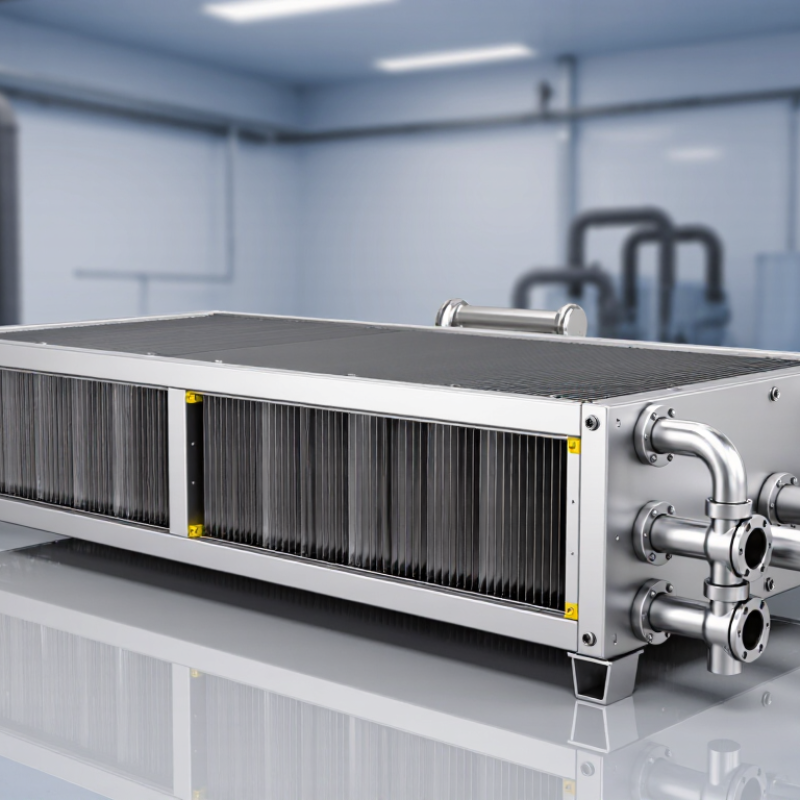
Before choosing a flat plate exchanger, define the heat-transfer duty in operating terms, not just by a catalog rating. State the required heat load, inlet and target outlet temperatures, and flow rate for each stream. For example, cooling 2.5 cubic meters of process water per hour from 70°C to 42°C gives a clearer design basis than “moderate cooling.” Confirm whether those values describe normal operation, startup, or the worst expected case. Numbers can mislead. A changing feed temperature or seasonal cooling-water supply may shift the duty enough to matter. Record fluid composition, viscosity, suspended solids, and any tendency to form scale or deposits. These details affect heat transfer and cleaning intervals.
Operating limits belong in the same brief. Set allowable pressure drop on both sides, maximum working pressure, temperature range, and acceptable leakage risk. Check that the plate material and gasket type suit the fluids and cleaning chemicals. Ask whether the unit must handle frequent starts, batch swings, or occasional flow imbalance. Those moments are often missing from the first calculation. A compact exchanger can look efficient on paper, yet narrow channels may foul quickly with fibrous or dirty fluids. Allow for fouling, but avoid a large safety margin without evidence; it can increase cost and reduce control flexibility. If field data are incomplete, label assumptions plainly and revisit them after measurements. That is less tidy, but more reliable.
Choose a flat plate exchanger using the fluids you will actually run, including startup and cleaning conditions. Record viscosity, suspended solids, corrosivity, and any tendency to foul. Thick fluids and debris can raise pressure drop or obstruct narrow channels. A clean-water rating may therefore be misleading. Check chemical compatibility for both plates and gaskets, not just the main fluid.
Map inlet and outlet temperatures, seasonal extremes, and brief process swings. Then compare the required heat duty with the exchanger’s allowable temperature approach. Pressure needs equal care: verify operating and design pressures on both sides, differential pressure across the plates, and available pump head. Include possible surges. The International Energy Agency’s Energy Efficiency 2023 report estimates that industry used about 37% of global final energy in 2022, making avoidable heat loss worth examining. Still, an efficiency target cannot replace a sound operating envelope. A tempting shortcut is selecting from nominal temperatures alone; it misses cold-start viscosity and pressure limits. Review the duty with a qualified thermal designer, and treat uncertain fouling data as an assumption to test, not a settled fact.
| Selection dimension | What to assess | Practical screening guidance | Selection implication |
|---|---|---|---|
| Fluid identity and composition | Chemical composition, concentration, pH, dissolved gases, solids, and any cleaning chemicals. | Provide the full composition and operating range, not just a fluid name. Corrosion behavior can change with concentration, temperature, and contaminants. | Use compatibility data to shortlist plate, frame, and gasket materials; obtain a corrosion review for uncertain or aggressive fluids. |
| Viscosity and flow behavior | Viscosity at operating temperatures, flow rate, and whether the fluid is Newtonian or non-Newtonian. | Viscosity often rises as liquids cool. Review properties across the full temperature range rather than relying on a room-temperature value. | High viscosity can increase pressure drop and reduce heat-transfer performance; it may require a larger exchanger or a different flow arrangement. |
| Suspended solids and fouling | Particle size, concentration, fibers, scaling tendency, biological growth, and fouling history. | Narrow plate passages can be vulnerable to plugging. Specify filtration or screening details and expected cleaning frequency. | For dirty or fibrous fluids, consider a wider-gap or serviceable design and confirm passage dimensions and cleanability. |
| Thermal duty and temperatures | Required heat duty, inlet and outlet temperatures on both sides, temperature approach, and start-up or upset conditions. | A smaller temperature approach generally requires more heat-transfer area. Check all normal, minimum, maximum, and transient temperatures. | The temperature program determines exchanger area and pass arrangement; verify that the selected materials and seals suit the maximum temperature. |
| Pressure and pressure differential | Design pressure for each side, operating pressure, differential pressure, vacuum conditions, and pressure surges. | There is no single pressure limit for all plate exchangers. Allowable pressure depends on construction, plate pattern, frame, materials, temperature, and code requirements. | Specify the design pressure and differential pressure separately for each side, including relief and transient cases; obtain a documented rating for the exact unit. |
| Allowable pressure drop | Available pump head, piping losses, flow variation, and the permitted pressure drop on each circuit. | A tighter pressure-drop allowance can require more heat-transfer area or a different plate and pass arrangement. | Set maximum pressure-drop limits early and assess them at both design flow and expected turndown. |
| Plate and gasket materials | Corrosion resistance, temperature compatibility, chemical exposure, and gasket contact with process fluids and cleaning agents. | Common plate choices include stainless steel and titanium, but suitability depends on the specific fluid and service conditions. Elastomer limits also vary by grade and exposure. | Confirm material compatibility for normal operation, cleaning, and credible excursions; do not select materials by fluid name alone. |
| Maintenance and inspection | Cleaning method, access, inspection requirements, spare parts, and acceptable downtime. | Gasketed units can generally be opened for inspection and mechanical cleaning. Brazed or welded designs are not opened in the same way. | Choose a serviceable construction when regular inspection or mechanical cleaning is important, subject to pressure and temperature requirements. |
| Final design verification | Validated heat-transfer calculation, pressure-drop calculation, design code, connections, and operating scenarios. | Provide the supplier with verified fluid properties, flow rates, thermal targets, fouling assumptions, and pressure limits for both sides. | Approve a specific model only after its thermal performance, mechanical rating, materials, and code documentation match the project requirements. |
Sizing a flat plate exchanger starts with the heat duty, not the plate count. Record each fluid’s flow rate, inlet temperature, and required outlet temperature. Then estimate capacity using the fluid properties and expected operating conditions. For water, even a small temperature change can shift the required surface area. Small errors matter. Include fouling allowance and check pressure-drop limits on both sides; a unit that transfers heat well may still demand too much pumping power. Field measurements are useful, but readings taken during unstable operation can mislead.
Plate configuration shapes performance. More plates usually add heat-transfer area, while pass arrangements affect velocity and pressure drop. Higher velocity can improve heat transfer, but it may increase pumping demand or erosion risk for some fluids. Plate patterns also vary: steeper corrugations often create stronger mixing, while gentler patterns may reduce resistance. The right choice depends on the fluids, duty, available pressure, and cleaning needs. Specify materials that suit the fluid chemistry and operating temperature, then confirm the selection with a thermal calculation. Real systems rarely match tidy design assumptions exactly. Leave room to revisit the estimate after commissioning, especially if seasonal temperatures or flow rates change.
Choosing a flat plate exchanger starts with the fluids, temperatures, and pressure—not the catalog photo. Stainless steel suits many clean water and food-service duties, while titanium can resist chloride-rich or seawater conditions. Confirm compatibility with both fluids and cleaning chemicals. A material that performs well on one side may still corrode on the other. There is no universal best plate; operating conditions decide.
Gaskets need the same careful match. EPDM often handles hot water, but oils can damage it. Nitrile may suit some oil services, yet temperature limits matter. Check the gasket maker’s temperature and chemical-resistance data against real operating conditions, including cleaning cycles. Construction matters too: a gasketed unit can be opened for inspection, while a welded design reduces gasket exposure but is harder to service. That trade-off is easy to underestimate. Leave access for plate removal, and verify the design pressure and temperature before ordering.
Tips: Ask for a compatibility review using fluid names, concentrations, temperatures, and cleaning agents. Request the plate alloy, gasket compound, pressure rating, and service clearances in writing. If the fluid composition changes, reassess the selection; small changes can matter. Don’t guess.
A flat plate exchanger is not just a price comparison. Gasketed models can be opened for inspection and cleaning, but their seals need periodic checks and replacement. Brazed units have no removable plates, so cleaning options are more limited. Access matters. Leave room to pull plates, reach isolation valves, and remove the unit without disrupting nearby pipework. A crowded plant room can turn routine maintenance into costly downtime.
Installation constraints can change the economics. Check available floor and wall space, pipe alignment, fluid compatibility, design pressure, and pressure drop. A unit that fits the flow rate on paper may still need larger pumps or piping changes. The U.S. Department of Energy’s 2008 report, Waste Heat Recovery: Technology and Opportunities in U.S. Industry, estimated about 1.6 quadrillion Btu of technically recoverable industrial waste heat. That is a sector-wide technical estimate, not a promised saving for one exchanger. Still, it shows why evaluating heat recovery alongside installation costs matters.
Compare the purchase price with cleaning labor, gasket replacement, pumping energy, and the cost of a shutdown. Ask suppliers for service intervals based on your fluid’s fouling risk, not a generic schedule. Not glamorous. I would also verify the quoted pressure drop against actual operating conditions; this detail is easy to overlook, and it can quietly erode expected savings.
Compare typical maintenance needs, installation constraints, and upfront cost across common plate-exchanger designs.
Ratings are indicative qualitative comparisons on a 1–5 scale, where 1 is low and 5 is high. Actual requirements and costs depend on the application, materials, operating conditions, and service access.
Record each fluid’s viscosity, suspended solids, corrosivity, and fouling tendency. Include startup and cleaning conditions. Clean-water data alone can mislead.
Map inlet and outlet temperatures, seasonal extremes, and brief process swings. Check operating pressure, design pressure, pressure difference across the plates, pump head, and possible surges. Small details matter.
Start with heat duty, flow rates, and target outlet temperatures. Use actual fluid properties and operating conditions. Unsteady field readings may distort the estimate.
More plates usually add heat-transfer area. Pass arrangements affect velocity and pressure drop. Higher velocity can improve heat transfer, but may increase pumping demand or erosion risk.
Yes. Steeper corrugations often create stronger mixing, while gentler patterns may reduce resistance. The best choice depends on fluid properties and available pump head. It is not always obvious.
Check compatibility with both fluids and cleaning chemicals. Stainless steel suits many clean-water duties; titanium may resist chloride-rich conditions. Verify limits against actual temperatures and concentrations.
Gasketed units can be opened for inspection and plate removal. Welded designs reduce gasket exposure but are harder to service. Leave enough clearance. That trade-off is easy to overlook.
Confirm pressure and temperature ratings, materials, gasket compound, and service clearances in writing. Recheck the estimate after commissioning, especially when seasonal flows change. Assumptions may need revision.
Choosing the right Flat Plate Exchanger starts with clearly defining the heat-transfer duty and operating requirements, including the desired flow rates, temperature changes, and expected operating conditions. Assess the properties of each fluid, such as viscosity, fouling tendency, and compatibility with exchanger materials, along with inlet temperatures and allowable pressure limits. These factors help determine whether a proposed unit can perform reliably and safely in the intended system.
Next, match the exchanger’s thermal capacity and plate configuration to the required duty, considering plate count, flow arrangement, and the potential for future changes in demand. Select plate materials, gaskets, and construction suited to the fluids and operating environment. Finally, compare maintenance access, cleaning requirements, installation space, and overall costs—not just the initial purchase price. A balanced evaluation of performance, durability, serviceability, and practical constraints will help identify an exchanger that meets current needs while supporting dependable long-term operation.

Flotte Energy