China’s leading Electric Chiller Plate manufacturers serve applications where stable cooling, reliable heat transfer, and consistent production quality matter. Yet a supplier’s position on a list tells only part of the story. Buyers should compare plate materials, channel design, pressure ratings, leak testing, and the manufacturer’s ability to document performance.
The thermodynamics pioneer Lord Kelvin wrote, “When you can measure what you are speaking about, and express it in numbers, you know something about it.” That principle fits chiller plate selection well. Ask manufacturers for test conditions, temperature ranges, flow data, and quality-control records—not just headline specifications. Details count.
A well-made plate may still disappoint if it does not match the coolant, operating load, or system layout. This guide examines Chinese manufacturers through practical considerations, including product range, customization, production experience, and technical support. It does not treat promotional claims as proof. That distinction matters.
There are trade-offs. A lower purchase price can bring longer validation work, while a highly customized design may require closer engineering coordination. Even a strong supplier can be the wrong fit. The comparisons ahead aim to help buyers ask sharper questions, verify key claims, and shortlist Electric Chiller Plate manufacturers with evidence rather than appearances. One limitation remains: published specifications rarely reveal every detail of real-world performance.
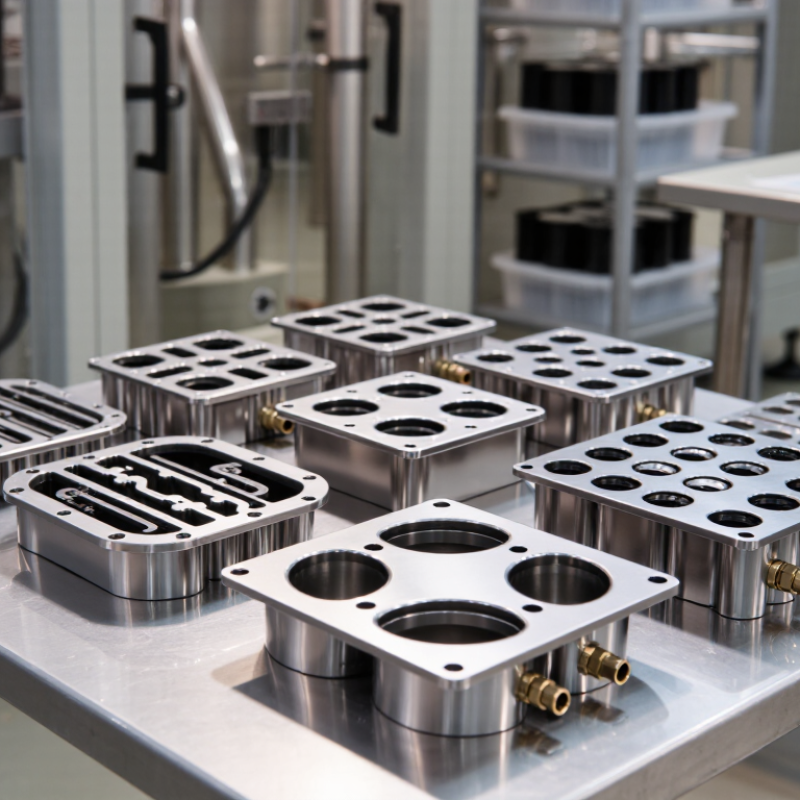
An electric chiller plate is a flat heat exchanger with internal channels that carry coolant beside a heat-producing component. It does not make cold by itself. A separate refrigeration or coolant system removes the absorbed heat. In battery packs, plates can sit beneath or between modules, helping limit temperature differences across cells. They also serve power electronics, industrial equipment, and some medical devices. Small details matter: channel layout, contact pressure, coolant flow, and surface flatness all affect performance. A poor interface can leave one corner noticeably warmer.
The need is growing with electrification. The International Energy Agency’s Global EV Outlook 2024 reports nearly 14 million electric cars sold worldwide in 2023, about 18% of all car sales. That figure signals more demand for battery thermal management, but it does not prove every system needs a liquid plate. Application testing should check pressure drop, heat load, leak risk, and service access under realistic operating conditions. Bench results can mislead. A plate that performs well at steady load may respond slowly to sharp temperature spikes, so engineers should examine transient behavior too.
China Top Electric Chiller Plate Manufacturers - Understanding Electric Chiller Plates and Their Applications
| Plate Type | Common Construction | Typical Coolant | Typical Applications | Key Design Considerations | Useful Quality Checks |
|---|---|---|---|---|---|
| Vacuum-brazed aluminum cold plate | Aluminum plates and formed channels are joined through a controlled brazing process to create internal coolant passages. | Water or water-glycol mixtures, subject to material and system compatibility. | Battery modules, power electronics, inverters, and industrial equipment. | Channel layout, plate flatness, pressure drop, corrosion compatibility, and the required heat-transfer area. | Pressure or leak testing, dimensional inspection, and verification of the specified material and joint quality. |
| Friction-stir-welded aluminum cold plate | A cover plate is joined to a base plate, often over machined or formed channels, using a solid-state welding process. | Water or a compatible water-glycol coolant. | Battery thermal management, charging equipment, and high-power electronic assemblies. | Weld path, channel geometry, operating pressure, mounting interface, and thermal contact with the cooled component. | Leak testing, weld and surface inspection, and checks of critical dimensions and flatness. |
| Machined-channel aluminum cold plate | Coolant channels are machined into a metal base and closed with a cover plate or another specified sealing method. | Water or water-glycol mixtures when approved for the system materials. | Prototypes, low-to-medium production volumes, and assemblies requiring customized channel paths. | Machining access, wall thickness, sealing method, channel pressure drop, and cleanliness after manufacturing. | Channel and port inspection, leak or pressure testing, and confirmation that passages are free of machining debris. |
| Extruded aluminum cold plate | An aluminum extrusion forms parallel internal passages; end connections and interfaces are added as required by the design. | Water or a compatible water-glycol coolant. | Equipment with repeated or relatively uniform heat sources, including some battery and power-electronics systems. | Passage dimensions, flow distribution, extrusion tolerances, end sealing, and contact across the cooled surface. | Dimensional checks, end-seal inspection, pressure or leak testing, and confirmation of flow-path continuity. |
| Copper cold plate | Machined, joined, or otherwise fabricated copper plate with internal passages designed for the application. | Coolant selected for compatibility with the complete circuit and its other metals. | Compact electronic systems and applications where copper’s thermal conductivity is useful. | Weight, cost, corrosion behavior in mixed-metal circuits, joining method, and coolant compatibility. | Material verification, joint and surface inspection, dimensional checks, and leak testing. |
| Hybrid or multi-material cold plate | Two or more materials or components are combined to meet structural, thermal, or connection requirements. | Specified according to the wetted materials and the chiller system design. | Specialized battery packs, power converters, and systems with distinct mounting or thermal-interface needs. | Material compatibility, galvanic corrosion risk, joint durability, sealing, and thermal expansion differences. | Material and joint traceability, leak testing, dimensional inspection, and review of the coolant compatibility specification. |
It is a flat heat exchanger with internal coolant channels. It transfers heat away from nearby components. It does not create cold by itself.
The plate sits beneath or between modules, where coolant carries absorbed heat away. Good contact helps limit temperature differences between cells. One warm corner can still appear if the interface is uneven.
Common uses include battery packs, power electronics, industrial equipment, and some medical devices. The right cooling method depends on the equipment and its heat load.
Compare material, channel layout, joining method, weld quality, and surface flatness. Also request measured temperature, flow-rate, and pressure-drop data. A polished sample proves little.
Run it with your own pump and coolant when possible. Record outlet temperature, flow stability, and pressure loss. Test it yourself. Bench results may not match sharp temperature spikes in real operation.
Ask for material certificates, leak-test records, inspection steps, and batch traceability. A recent leak-test record linked to the sample’s batch is especially useful. Still, paperwork alone is not proof.
Request repeatability results from several tests, not just one successful sample. A factory visit or live video audit may show machining, joining, cleaning, and final inspection. I would still question what the audit cannot show.
Provide the target heat load, coolant type, inlet temperature, flow rate, and available space. Ask for drawings and test conditions that resemble your application. Small details matter.
Electric Chiller Plate technology supports efficient temperature control in applications such as commercial refrigeration, food processing, and industrial cooling. These plates transfer heat through carefully designed channels and surfaces, while factors such as material choice, plate geometry, flow distribution, and insulation influence cooling performance, energy use, and durability. Understanding how the system operates and which design features matter can help buyers match equipment to their required capacity, operating conditions, and installation space.
China’s manufacturing landscape includes suppliers with different production capabilities, customization options, and quality-control practices. When comparing manufacturers, assess relevant technical experience, product specifications, material traceability, testing procedures, production consistency, communication, and after-sales support. Request clear documentation and compare quotations against performance requirements rather than price alone. A careful evaluation helps identify a suitable manufacturing partner and ensures the selected Electric Chiller Plate meets operational needs over its intended service life.

 Flotte Energy