Top Thermoelectric Cold Plate Suppliers Worldwide?

Time:2026-09-29 Author:Sienna
0%

Choosing the right Thermoelectric Cold Plate supplier requires more than comparing catalog prices. These systems combine thermoelectric modules, machined plates, coolant channels, sensors, and control electronics. A reliable supplier should explain how each part performs together. Look for measurable cooling capacity, temperature stability, thermal resistance, power consumption, and operating limits. Ask for test conditions, not only attractive headline figures. Real application details matter.

A strong worldwide supplier can support demanding uses in lasers, laboratory instruments, battery systems, medical equipment, and compact electronics. Their engineering team should review heat loads, mounting pressure, fluid compatibility, condensation risk, and control requirements. Manufacturing evidence also matters. Inspect quality systems, production experience, traceability, and validation procedures. Independent certifications may strengthen confidence, but they cannot replace application testing. No supplier is perfect. That matters.

Supplier comparisons can become misleading when regional availability, shipping time, service response, or customization costs are ignored. A technically impressive cold plate may still fail if its connector layout does not fit the enclosure. Prototype support is valuable here. Request drawings, samples, thermal test reports, and realistic delivery schedules before approving a large order. It is also wise to test performance under changing ambient temperatures, vibration, repeated cycling, and unexpected heat spikes. Small details often decide long-term reliability. This guide examines leading Thermoelectric Cold Plate suppliers worldwide through practical performance, engineering capability, product consistency, and customer support, while recognizing that published specifications may not tell the whole story. Careful verification remains essential.
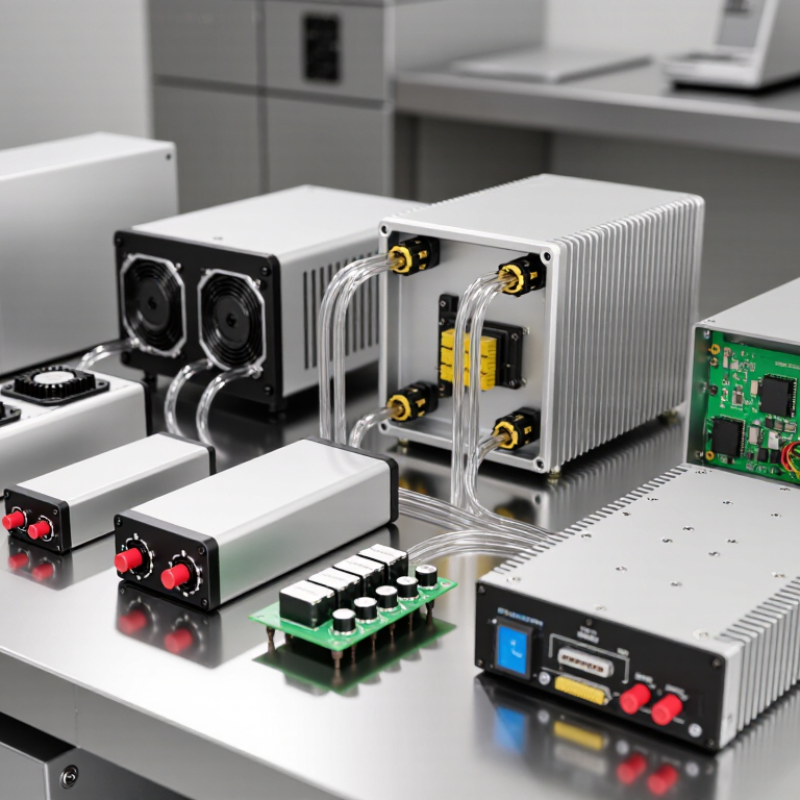
Top Thermoelectric Cold Plate Suppliers Worldwide?

What Are Thermoelectric Cold Plates?

Thermoelectric cold plates are solid-state cooling devices that move heat from one surface to another. They use semiconductor modules, commonly called thermoelectric modules, between two metal plates. When direct current passes through the modules, one side becomes cold while the opposite side releases heat. Reversing the current also reverses the cooling direction. No compressor is required.

A typical cold plate contains copper or aluminum, thermal interface materials, temperature sensors, and electrical connections. Liquid channels may be added when higher heat loads require better heat removal.

The cold surface can cool lasers, medical instruments, detectors, battery packs, or laboratory equipment. It can also maintain a stable temperature in compact spaces. Very quiet.

Performance depends on heat load, ambient temperature, airflow, contact pressure, and power control. A supplier should provide tested data, not only a maximum cooling claim. Ask for thermal resistance, operating voltage, temperature range, sealing details, and life-test results. Poor interface contact can waste much of the module’s capacity. This is easy to overlook.

In practical design work, I calculate the heat path before choosing a supplier. My first estimate is often too optimistic. A cold plate may reach a low surface temperature without cooling the actual component evenly. Condensation is another concern near the dew point. Reliable suppliers should discuss insulation, control accuracy, corrosion resistance, and service conditions openly. Worldwide sourcing also requires checking documentation, delivery consistency, customization limits, and quality inspection procedures.

How Do Thermoelectric Cold Plates Work?

Thermoelectric cold plates use the Peltier effect to move heat without compressors or refrigerant. When direct current passes through paired semiconductor materials, one surface absorbs heat and becomes cold. The opposite surface releases that heat and becomes hot. Reversing the current reverses the cooling direction.

A working system needs more than a cold plate. The hot side must connect to a heat sink, liquid loop, or forced-air cooler. If that heat cannot escape, the cold surface quickly loses performance.

In practical testing, airflow, mounting pressure, and thermal interface quality often matter as much as the module itself. A thin layer of suitable thermal compound helps, but too much can increase resistance.

Temperature sensors and current controls prevent overshoot. Condensation also needs attention when the cold surface falls below the surrounding dew point. This detail is easy to miss. Thermoelectric systems offer precise temperature control and compact installation, but their efficiency is usually lower than compressor systems. Heat load, target temperature, and available power should guide supplier selection worldwide. Datasheets deserve careful review, especially cooling capacity, operating voltage, lifetime testing, and hot-side temperature limits. Some specifications look impressive until tested under real mounting conditions. That is where careful engineering still matters.

Key Factors for Evaluating Global Suppliers

When evaluating global thermoelectric cold plate suppliers, compare measured performance under the same operating conditions. Ask for cooling capacity, coefficient of performance, temperature stability, and hot-side temperature limits. A low advertised temperature is not enough; it may depend on a large heat sink or mild ambient conditions. Request test curves, sample results, and details of the sensor locations. Small differences in measurement setup can change the comparison.

Manufacturing consistency matters as much as peak performance. Review inspection records for plate flatness, leak testing, electrical insulation, and thermal interface quality. Ask how suppliers manage component traceability and production changes. The Lawrence Berkeley National Laboratory’s 2024 United States Data Center Energy Usage Report estimates U.S. data centers used about 176 TWh in 2023. That figure is not specific to thermoelectric cooling, but it underscores why efficiency and dependable thermal control deserve careful evaluation. No supplier scorecard is perfect; field conditions can expose gaps that laboratory tests miss.

Tips: Send the same load profile and ambient-temperature range to each supplier. Compare complete test data, not a single peak figure. If possible, test a sample in your own assembly. Check response time and temperature uniformity. Ask for the failure criteria, too. A vague answer is worth noting.

Leading Thermoelectric Cold Plate Suppliers Worldwide

Leading Thermoelectric Cold Plate Suppliers Worldwide

Leading thermoelectric cold plate suppliers now serve medical imaging, laser systems, battery testing, and laboratory equipment. Their value is not limited to cooling capacity. They must control temperature evenly across the contact surface. They must also manage condensation, vibration, and long operating cycles.

Industry forecasts show steady expansion. The MarketsandMarkets Thermoelectric Modules Market report projects growth from roughly USD 0.6 billion in 2024 to USD 0.9 billion by 2029. Its estimated compound annual growth rate is about 8.7%. Allied Market Research reports a similar direction, forecasting strong demand through 2032. Figures differ between reports. That difference deserves attention.

The strongest worldwide suppliers usually offer custom cold plates, thermoelectric modules, heat sinks, sensors, and control software. Engineering teams should compare temperature uniformity, heat flux, coefficient of performance, and response time. A copper or aluminum plate may look impressive, yet its internal channel design can create hot spots. Ask for thermal maps, life-cycle testing, and documented quality procedures. ISO 9001 certification helps, but it does not replace application testing. A supplier serving Europe may have excellent documentation, while another serving Asia or North America may deliver faster prototypes. Neither advantage is universal. The selection process remains imperfect, especially when published performance data uses different test conditions.

Top Thermoelectric Cold Plate Suppliers Worldwide? - Leading Thermoelectric Cold Plate Suppliers Worldwide

Supplier Region Typical Supplier Profile Common Cold Plate Construction Typical Cooling Capacity Range Typical Temperature Control Range Cooling Medium Customization Strength Common Applications Important Evaluation Criteria
North America Engineering-led suppliers serving medical, aerospace, defense, laboratory, and electronics customers. Aluminum or copper base plates with embedded thermoelectric modules, heat spreaders, sensors, and sealed manifolds. Approximately 20–1,000 W per assembly, depending on module count and heat-rejection design. Typically about -20°C to +80°C at the controlled surface, subject to ambient conditions and heat load. Air-cooled heat sinks or liquid-cooled loops using water or water-glycol mixtures. Strong for engineering validation, thermal simulation, electronics integration, and low-to-medium volume production. Laser systems, analytical instruments, battery testing, optical equipment, and precision electronics. Thermal resistance, control stability, vibration tolerance, electrical safety, documentation, and after-sales engineering support.
Western Europe Quality-focused suppliers commonly supporting industrial automation, medical equipment, laboratory systems, and renewable-energy projects. Machined or brazed aluminum plates, copper spreaders, bonded channels, and integrated temperature sensors. Approximately 30–800 W per cold plate, with higher capacities available through multi-module systems. Typically about -30°C to +90°C, depending on insulation, hot-side temperature, and controller configuration. Forced-air cooling and closed-loop liquid cooling are both widely used. Strong for regulated applications, compact assemblies, documentation packages, and repeatable quality control. Medical analyzers, industrial cameras, semiconductor equipment, food-processing instruments, and test systems. CE-related compliance needs, material traceability, sealing quality, controller compatibility, and long-term reliability.
East Asia Broad supplier base covering thermoelectric modules, machined cold plates, complete assemblies, and high-volume OEM production. Aluminum cold plates, copper heat spreaders, vacuum-brazed channels, and multi-stage thermoelectric assemblies. Approximately 10–1,500 W per assembly, with broad options for both compact and high-volume designs. Commonly about -40°C to +100°C for engineered assemblies; actual limits depend on module and seal selection. Air, water, water-glycol, and specialized dielectric fluids for selected applications. Strong for cost optimization, rapid prototyping, tooling, customization, and scalable production. Consumer electronics testing, optical communications, laser cooling, battery systems, and factory automation. Dimensional tolerances, flatness, leak testing, solder or bonding quality, export documentation, and production consistency.
South Asia Growing engineering and contract-manufacturing suppliers serving electronics, instrumentation, laboratory, and industrial customers. Machined aluminum plates, copper inserts, mechanically fastened assemblies, and basic liquid-channel designs. Approximately 20–500 W per assembly for common laboratory and industrial configurations. Typically about 0°C to +80°C, with wider ranges available after thermal and mechanical validation. Primarily forced air and water-based liquid cooling. Useful for cost-sensitive prototyping, small-batch production, controller integration, and application-specific designs. Laboratory equipment, environmental testing, telecom electronics, medical devices, and industrial sensors. Prototype lead time, thermal cycling results, machining quality, supply-chain continuity, and test-report availability.
Eastern Europe Specialized engineering suppliers with experience in industrial cooling, scientific equipment, automation, and custom thermal assemblies. Aluminum or copper plates with brazed or machined channels, insulation layers, and replaceable thermoelectric modules. Approximately 30–700 W per assembly, depending on the required temperature difference and hot-side cooling. Typically about -25°C to +85°C for commercial and industrial systems. Air-cooled and liquid-cooled configurations, including closed-loop systems. Strong for engineering customization, retrofit designs, and integration with existing control systems. Machine vision, laboratory instruments, industrial lasers, electronic enclosures, and testing equipment. Mechanical compatibility, serviceability, insulation performance, control-loop response, and local technical support.
Middle East Application-oriented suppliers and system integrators adapting thermoelectric cooling to high-ambient and remote operating conditions. Corrosion-resistant aluminum plates, coated copper components, insulated assemblies, and enhanced heat-rejection systems. Approximately 20–600 W per assembly, with capacity strongly affected by high ambient temperatures. Typically about +5°C to +80°C, with design attention required for ambient temperatures above 40°C. Forced air and liquid cooling, often with oversized heat exchangers or remote condensers. Strong for environmental adaptation, enclosure integration, and field-serviceable system design. Outdoor electronics, telecommunications, instrumentation, security systems, and photovoltaic equipment. High-ambient derating, dust protection, corrosion resistance, ingress protection, power quality, and maintenance access.
Oceania Specialist suppliers and engineering integrators supporting mining, scientific research, medical technology, and remote monitoring. Ruggedized aluminum plates, copper spreaders, sealed liquid channels, and vibration-resistant mounting structures. Approximately 20–800 W per assembly, depending on enclosure size and operating environment. Typically about -20°C to +85°C for engineered systems. Air cooling for compact equipment and liquid cooling for higher heat loads or remote installations. Strong for ruggedization, field deployment, environmental testing, and integration into specialized equipment. Mining instruments, remote sensors, scientific devices, medical equipment, and communications systems. Shock and vibration resistance, service interval, environmental sealing, spare-part availability, and remote support.
Latin America Regional distributors, system integrators, and custom fabricators supplying laboratory, industrial, medical, and electronics markets. Standard aluminum plates, copper heat spreaders, modular assemblies, and locally fabricated liquid-cooling structures. Approximately 15–500 W per assembly for commonly available configurations. Typically about 0°C to +75°C, depending on the selected thermoelectric module and heat-rejection system. Air cooling is common; liquid cooling is used for higher power density and continuous operation. Useful for retrofit projects, localized assembly, replacement systems, and small-to-medium production volumes. Laboratory equipment, medical instruments, industrial controls, food testing, and electronics maintenance. Import lead time, local service capability, replacement-module availability, voltage compatibility, and total cost of ownership.
Technical ranges are representative industry values rather than guarantees for a specific supplier. Actual performance depends on thermoelectric module selection, hot-side temperature, ambient conditions, cold-plate material, contact resistance, insulation, controller settings, and heat-rejection capacity.

Applications and Selection Considerations

Thermoelectric cold plates serve electronics, laser systems, medical instruments, battery modules, and laboratory sensors. Their value appears where compact, precise cooling matters more than maximum efficiency. According to MarketsandMarkets’ 2024 report, the thermoelectric market is projected to grow at over 8% annually through 2029. That growth reflects wider demand for localized temperature control. Small footprints matter.

Selection should begin with heat load and temperature lift, not supplier reputation. A plate designed for a 100-watt device may fail on a 180-watt assembly, even if its catalog rating seems attractive. Calculate steady-state and transient loads. Then check the coefficient of performance, allowable hot-side temperature, clamping pressure, and thermal interface resistance. A practical target is often below 0.1°C/W for interface resistance, although the correct value depends on assembly design. IDTechEx reports that thermal management remains a major constraint in power electronics, especially as component density increases.

Condensation is frequently underestimated. Dew-point sensors, insulation, and closed-loop control can prevent moisture around connectors. For battery applications, verify temperature uniformity and cycling durability rather than cooling speed alone. Industry testing should include vibration, thermal shock, and long-duration operation. Reliability data from the supplier matters more than polished efficiency curves. One imperfect assumption remains common: colder is not always better. Excessive temperature gradients can shorten component life and waste power. Suppliers should provide test conditions, calibration methods, and failure-rate evidence before qualification.

FAQS

What is a thermoelectric cold plate?

It uses semiconductor modules between metal plates to move heat. One side cools while the other releases heat. No compressor is needed.

Can a cold plate cool different types of equipment?

Yes. It can serve lasers, battery packs, laboratory sensors, and compact electronics. Small footprints matter.

What affects cooling performance?

Heat load, ambient temperature, airflow, contact pressure, and power control all matter. Poor contact can waste cooling capacity. This is easy to miss.

What information should I request from a supplier?

Ask for test curves, cooling capacity, temperature range, thermal resistance, and hot-side limits. Request sensor locations and test conditions, too. One peak number is not enough.

How can I compare suppliers fairly?

Send each supplier the same heat-load profile and ambient-temperature range. Compare complete test data, then test a sample in your assembly if possible. Lab results may not match field conditions.

How do I choose a plate for my device?

Start with steady-state and transient heat loads, then check temperature lift and interface resistance. A plate rated for 100 watts may not handle a 180-watt assembly. My first estimate is often too optimistic.

How can I reduce condensation risk?

Check the dew point and consider insulation, sensors, and closed-loop control. These measures can help protect nearby connectors. Not always.

What reliability tests should I look for?

Ask about leak testing, electrical insulation, vibration, thermal shock, and long-duration operation. Check traceability and failure criteria. Colder is not always better.

Conclusion

A Thermoelectric Cold Plate is a solid-state temperature-control device designed to cool or heat components with precision. It uses thermoelectric modules, typically based on the Peltier effect, to transfer heat from one surface to another when electrical current passes through them. The hot side must be connected to an effective heat dissipation system, while the cold side contacts the target component or cooling loop. This design offers compact size, low vibration, reliable operation, and accurate temperature adjustment.

When evaluating global suppliers, buyers should consider cooling capacity, temperature range, energy efficiency, customization options, material quality, manufacturing consistency, testing procedures, delivery capability, and technical support. Thermoelectric cold plates are widely used in electronics, laser systems, medical equipment, battery management, laboratory instruments, and industrial control systems. The best selection depends on heat load, operating environment, available space, control accuracy, fluid compatibility, and long-term reliability requirements. Careful comparison of specifications and support services helps ensure stable performance and cost-effective integration.


Sienna

Sienna

Sienna is a skilled marketing professional with a deep expertise in our company’s core products and services. With a passion for innovation and detail, she plays a pivotal role in crafting insightful blog posts that not only highlight the unique features of our offerings but also provide valuable......