Factory-direct thermal equipment engineered for high-performance municipal, pharmaceutical, chemical, and desalination projects globally.
The critical role of high-performance thermal interfaces in modern manufacturing and the global energy transition.
Industrial heat exchangers represent the cornerstone of modern thermal engineering, acting as indispensable components across global manufacturing, chemical synthesis, power generation, district heating networks, and HVAC systems. As the international community intensifies its focus on carbon neutrality and energetic efficiency, the demand for optimized thermal recovery interfaces has skyrocketed. A heat exchanger is no longer regarded simply as a passive vessel for temperature adjustment; it is a critical optimization node that determines the total energy productivity of industrial systems.
In highly regulated industries such as pharmaceuticals and petrochemical processing, precise temperature regulation directly influences output quality and process safety. In these high-stakes applications, any compromise in heat transfer efficiency can lead to excessive operational overhead or safety hazards. Consequently, global procurement teams are transitioning from basic capital-expense (CAPEX) evaluations to long-term operational-expense (OPEX) analyses. They prioritize configurations that mitigate fouling, maximize the overall heat transfer coefficient (U-value), and offer long operational Lifecycles.
Moreover, the integration of advanced thermodynamic models has allowed engineers to tailor heat exchanger dimensions specifically to the dynamic properties of the fluids involved. Whether dealing with high-viscosity media in food processing or cryogenic fluids in clean energy liquefaction, modern heat exchangers are systematically designed using state-of-the-art computational fluid dynamics (CFD) to balance pressure drops and heat transfer rates. This ensures that global enterprises achieve compliance with strict environmental regulations while simultaneously lowering energy consumption.
Delineating mechanical configurations, working principles, and optimal use cases for major thermal transfer designs.
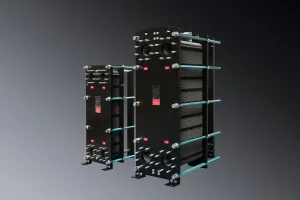
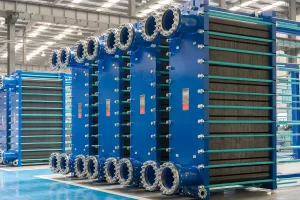
Engineered with a series of corrugated metal plates compressed within a heavy-duty frame and sealed with elastomer gaskets. The herringbone or chevron corrugation pattern induces intense turbulence at low fluid velocities, achieving a heat transfer coefficient 3 to 5 times higher than conventional shell-and-tube designs. These systems are highly modular, allowing plates to be added, removed, or cleaned to accommodate changing process requirements.
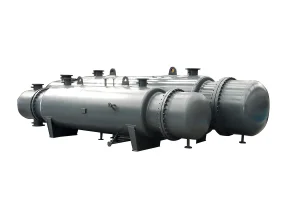
The traditional workhorse of heavy industry. Composed of a pressurized cylindrical shell enclosing a bundle of parallel tubes. One fluid flows through the tubes (tube side) while another passes over them within the shell (shell side). Equipped with transverse baffles to force cross-flow and generate turbulence, this robust design handles extreme pressures (exceeding 100 bar) and temperatures, making it ideal for refinery operations and steam condenser installations.
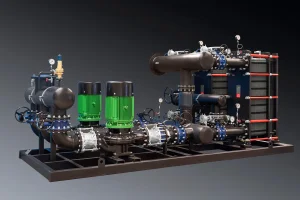
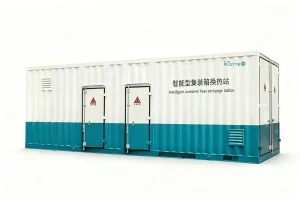
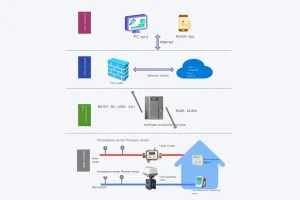
Skid-mounted, fully integrated systems that combine plate heat exchangers, variable-frequency circulation pumps, motorized control valves, expansion tanks, and advanced PLC automation systems. By continuously monitoring external variables, these units modulate flow rates and thermal delivery dynamically. This level of smart integration minimizes manual oversight, maximizes seasonal efficiency, and reduces thermal waste in district heating systems.
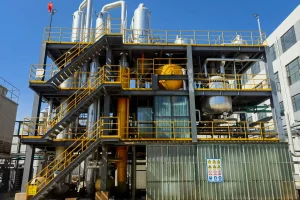
A highly efficient thermal concentration technology designed to reuse water vapor generated in successive stages. By operating each subsequent vessel under a lower pressure, the boiling point of the liquid decreases, allowing the vapor from the previous effect to act as the heating medium for the next. This system dramatically reduces primary steam consumption, offering an optimal approach for high-salinity wastewater treatment and product concentration.
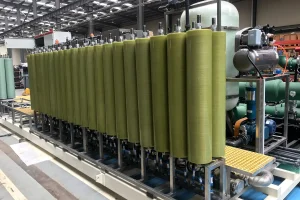
Designed for high-efficiency liquid purification and desalination, these systems combine physical pressure-driven membrane processes (such as reverse osmosis or ultrafiltration) with pre-conditioned heat exchange blocks. By keeping feed liquids at optimal thermal thresholds, they stabilize membrane flux, mitigate fouling, and significantly lower the electrical energy required to achieve zero-liquid-discharge (ZLD) thresholds.
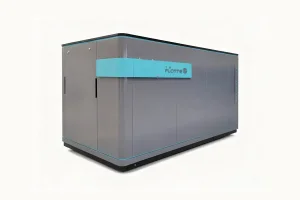
Specially enclosed, modular heating systems engineered for commercial high-rises and localized industrial networks. Combining structural sound insulation with micro-processor controllers, these compact units offer plug-and-play installation. Their enclosed design protects sensitive control elements from environmental contaminants while keeping operational noise to an absolute minimum.
Flotte Energy Saving Company, established in 2013 with a registered capital of 101 million yuan, originated from Flotte Thermal Engineering founded in 1995. With three decades of technical expertise, the company specializes in water equipment, HVAC systems, and water treatment industries. It consistently leads industry peers in adopting cutting-edge technologies, developing innovative products, and delivering comprehensive production and sales services.
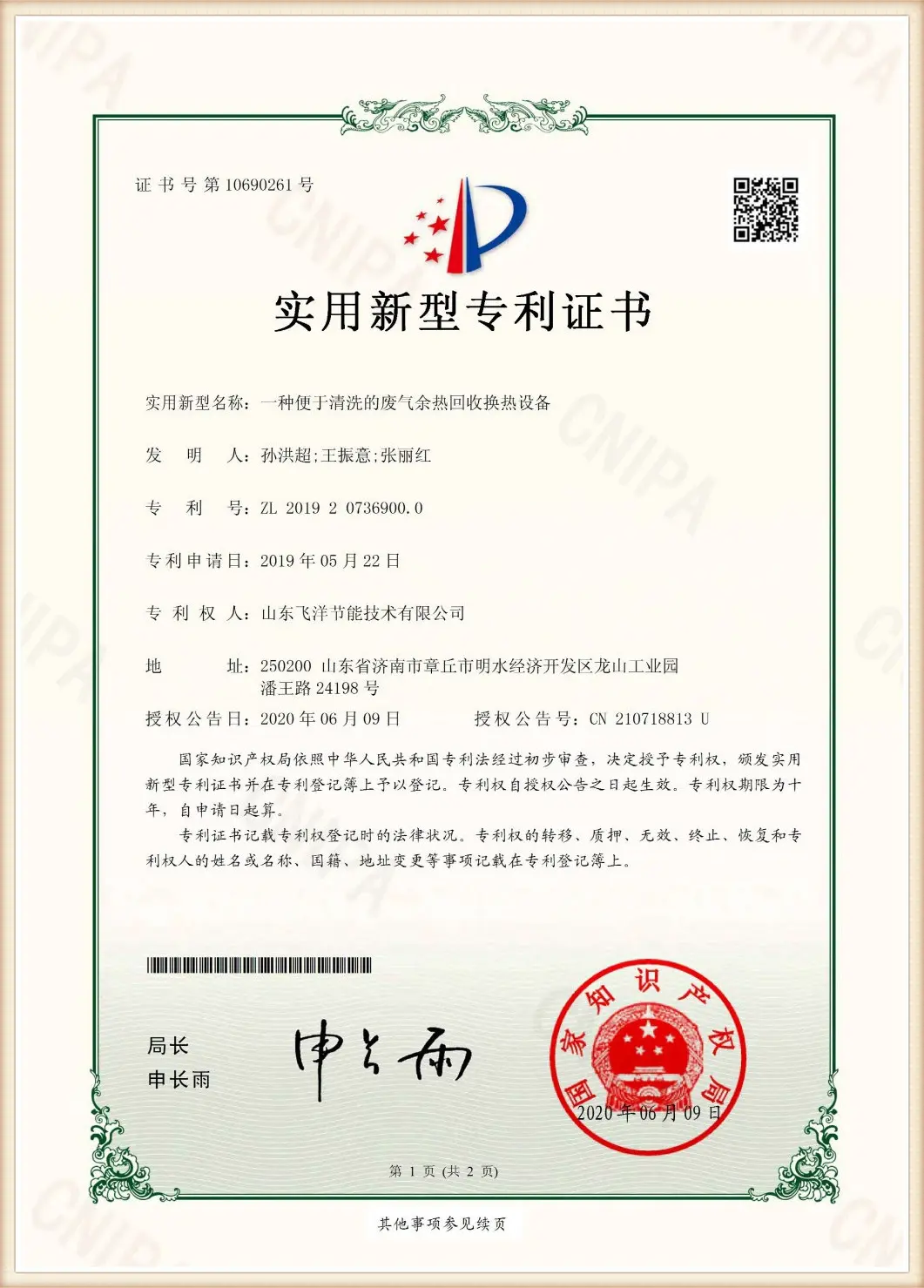
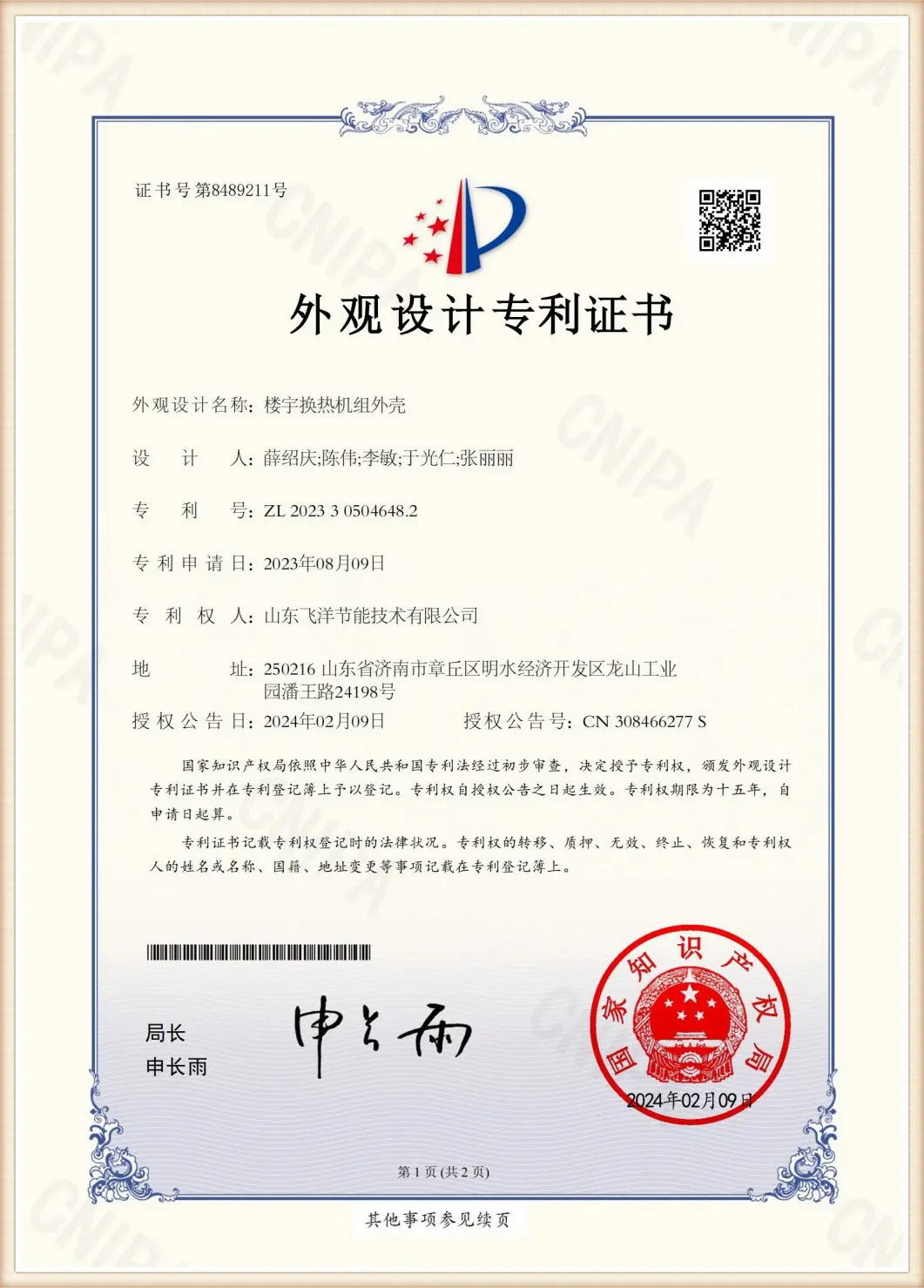
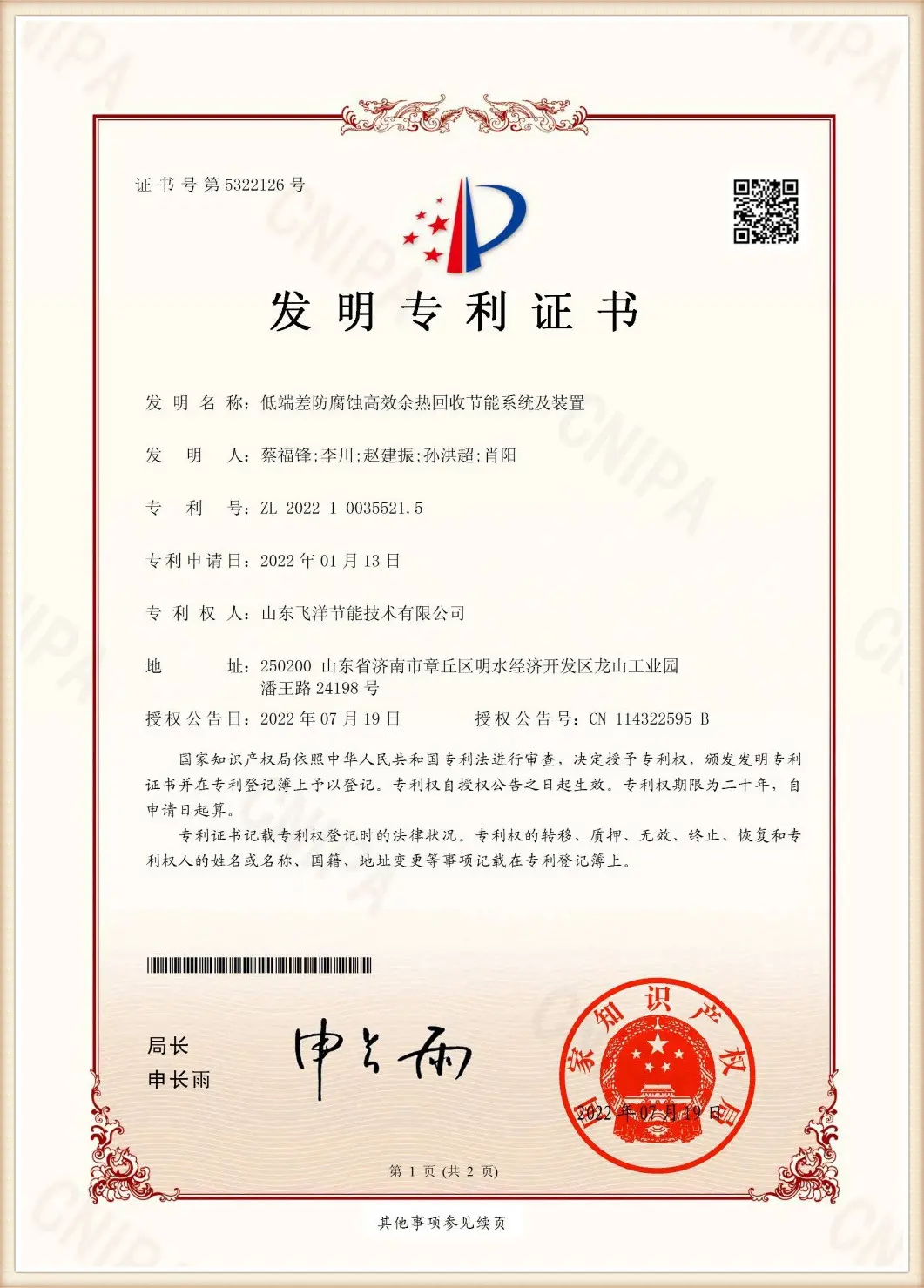
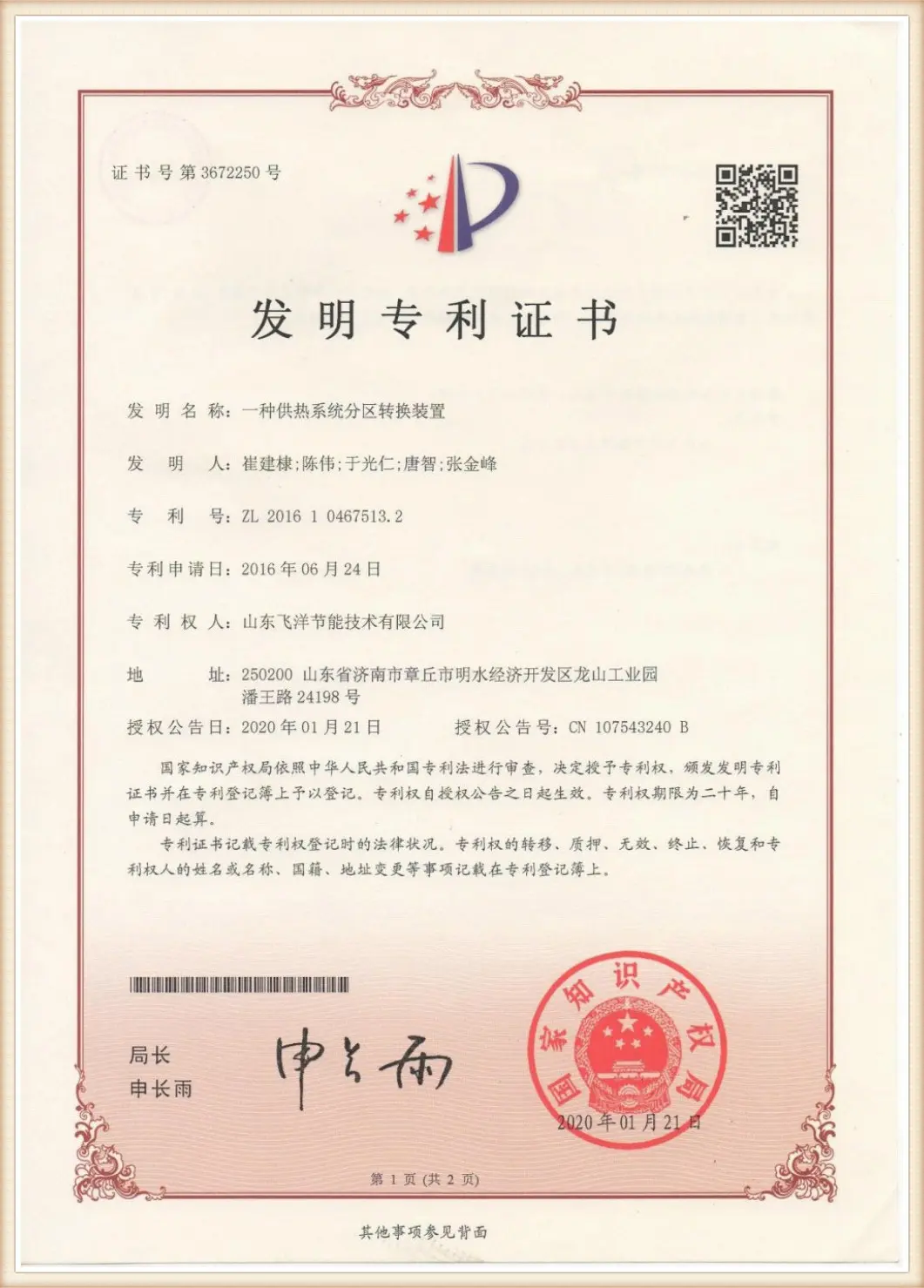
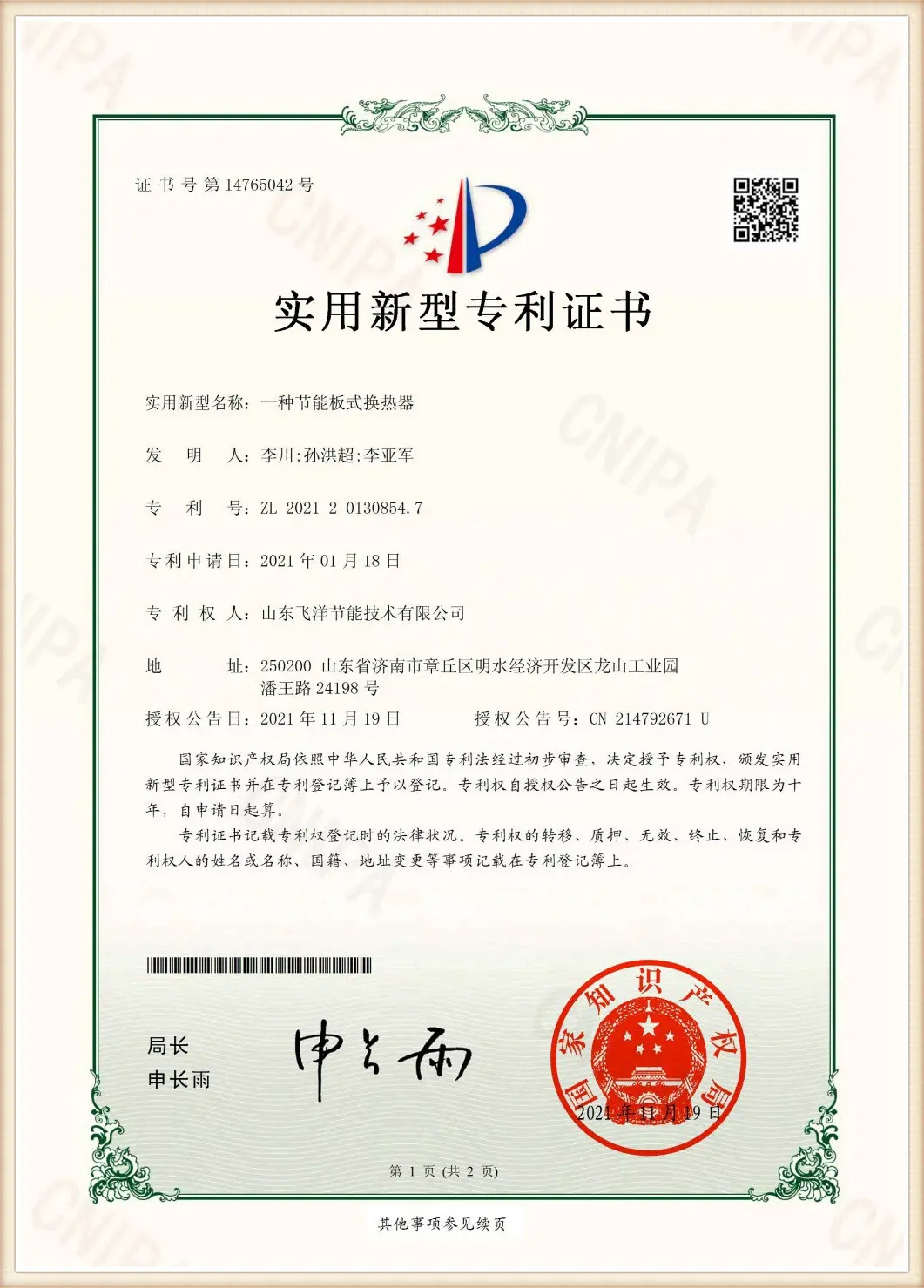
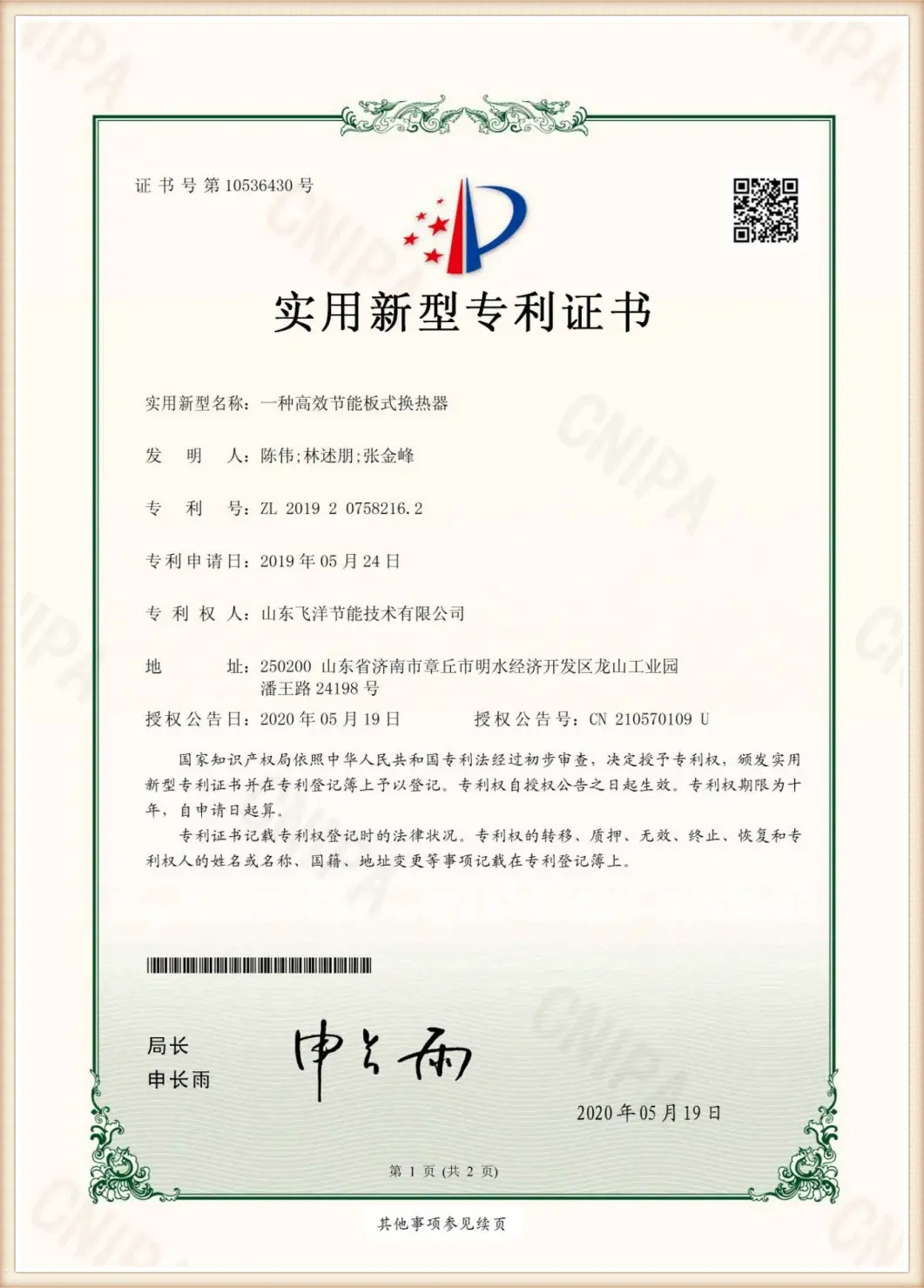
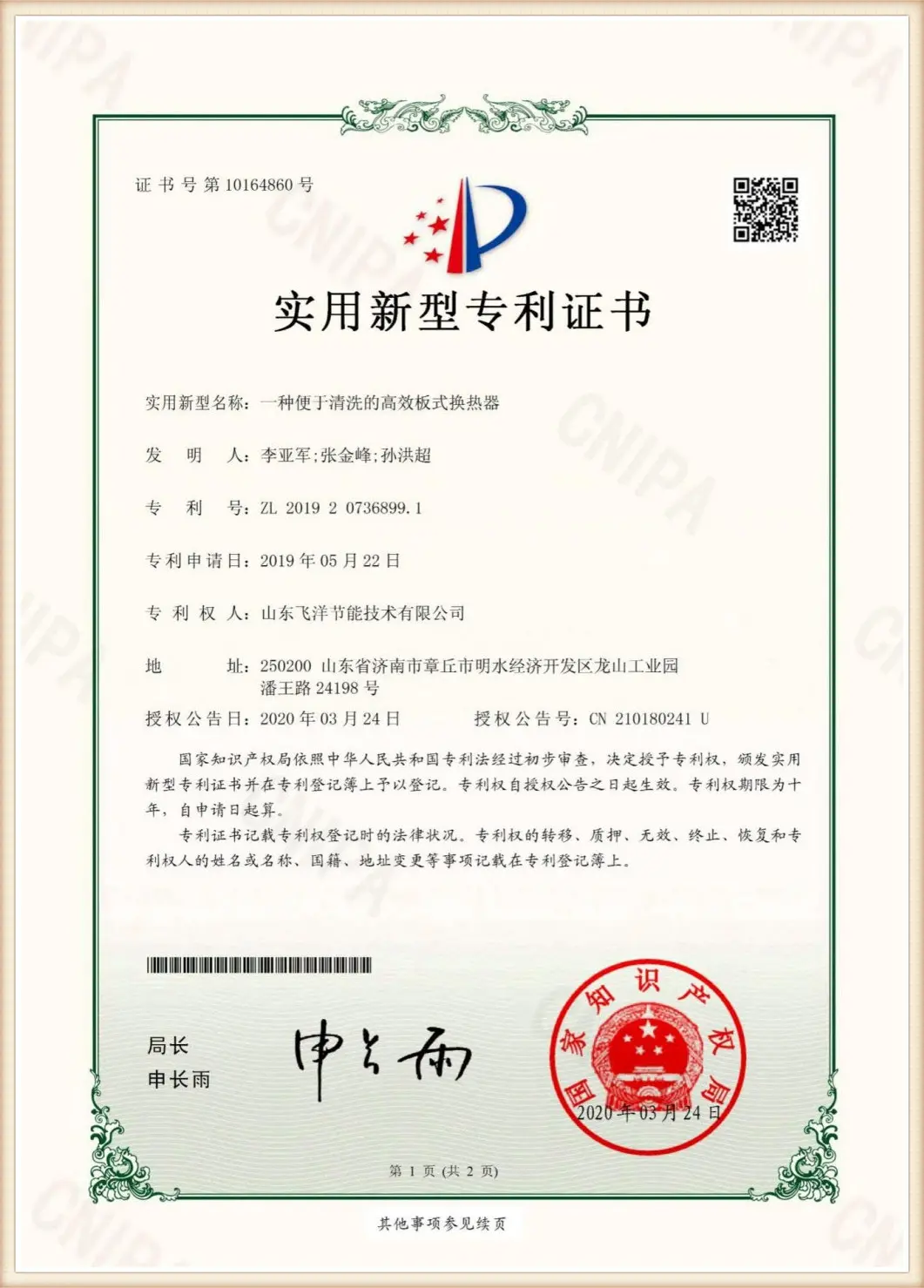
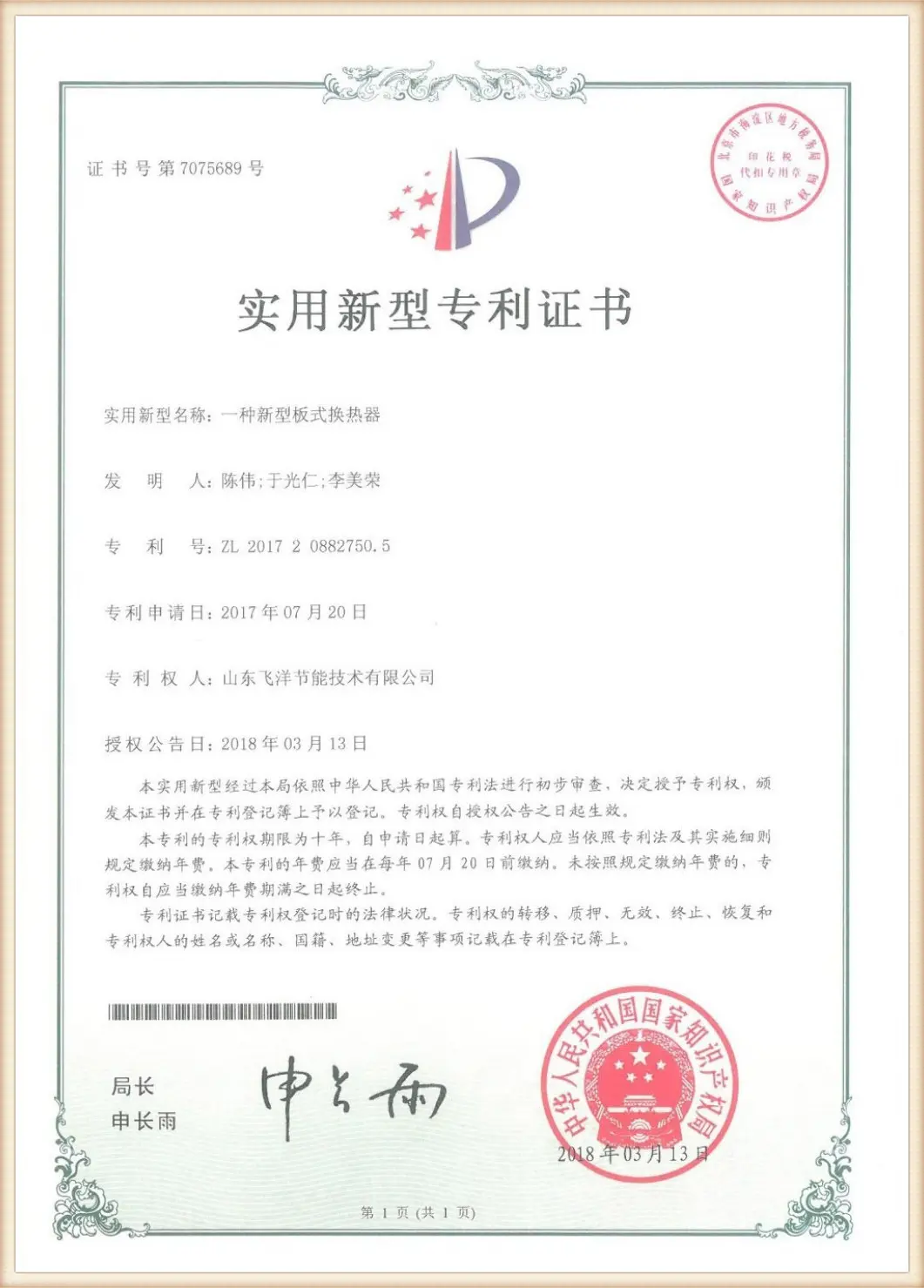
Our company has been continuously advancing in production technology innovation, holding multiple patent certifications including "High-Efficiency Plate Heat Exchanger", "Intelligent Plate Heat Exchanger System", and "Plate Heat Exchanger Scale Removal Device" (see qualification documentation). Its products have obtained mandatory national product certification and safety registration from the National Standardization Committee, along with the safety registration for plate heat exchangers issued by the National Boiler and Pressure Vessel Standardization Technical Committee. The company has also achieved ISO9001 Quality Management System certification, ISO14001 Environmental Management System certification, and ISO45001 Occupational Health and Safety Management System certification.
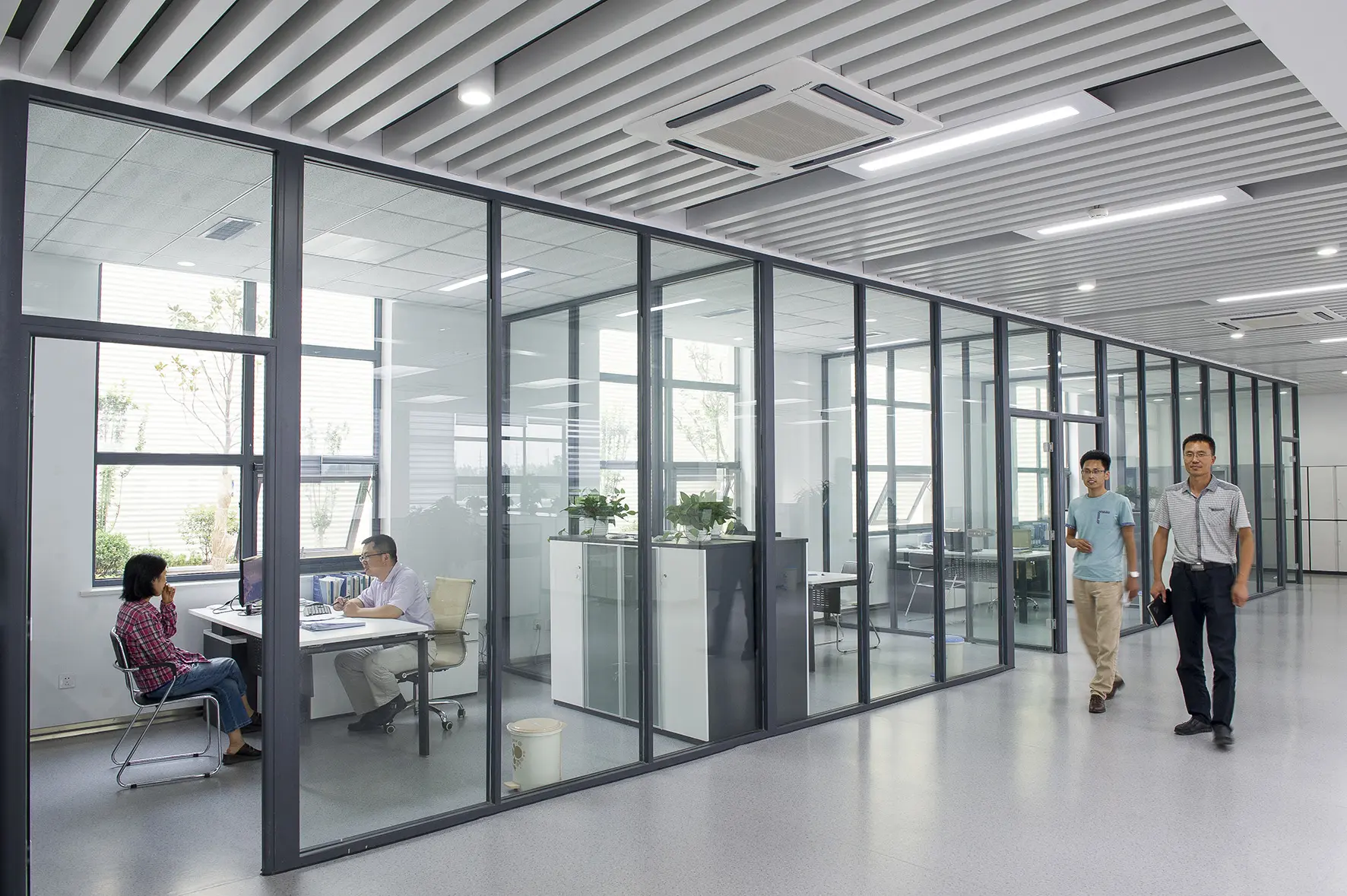
We feature professional designers and skilled technical workers; our designers have been engaged in design work for many years, with good professional knowledge and rich practical experience to ensure the reliability of the technical products designed; we maintain a special R & D center and advanced laboratory, to ensure the technical advancement of products developed and produced.
Why Chinese manufacturing hubs lead the world in delivering high-specification thermodynamic equipment with optimal cost structures.
The global dominance of Chinese heat exchanger manufacturers is rooted in deep structural advantages that extend far beyond labor cost efficiency. The primary driver is a highly integrated industrial ecosystem. China hosts the world's most robust supply chains for critical raw materials, including industrial-grade stainless steel (SS304, SS316L), titanium, nickel alloys, and copper. By sourcing these metals directly from nearby mills, Chinese factories bypass international logistics delays and safeguard material cost margins, passing these direct savings on to global buyers.
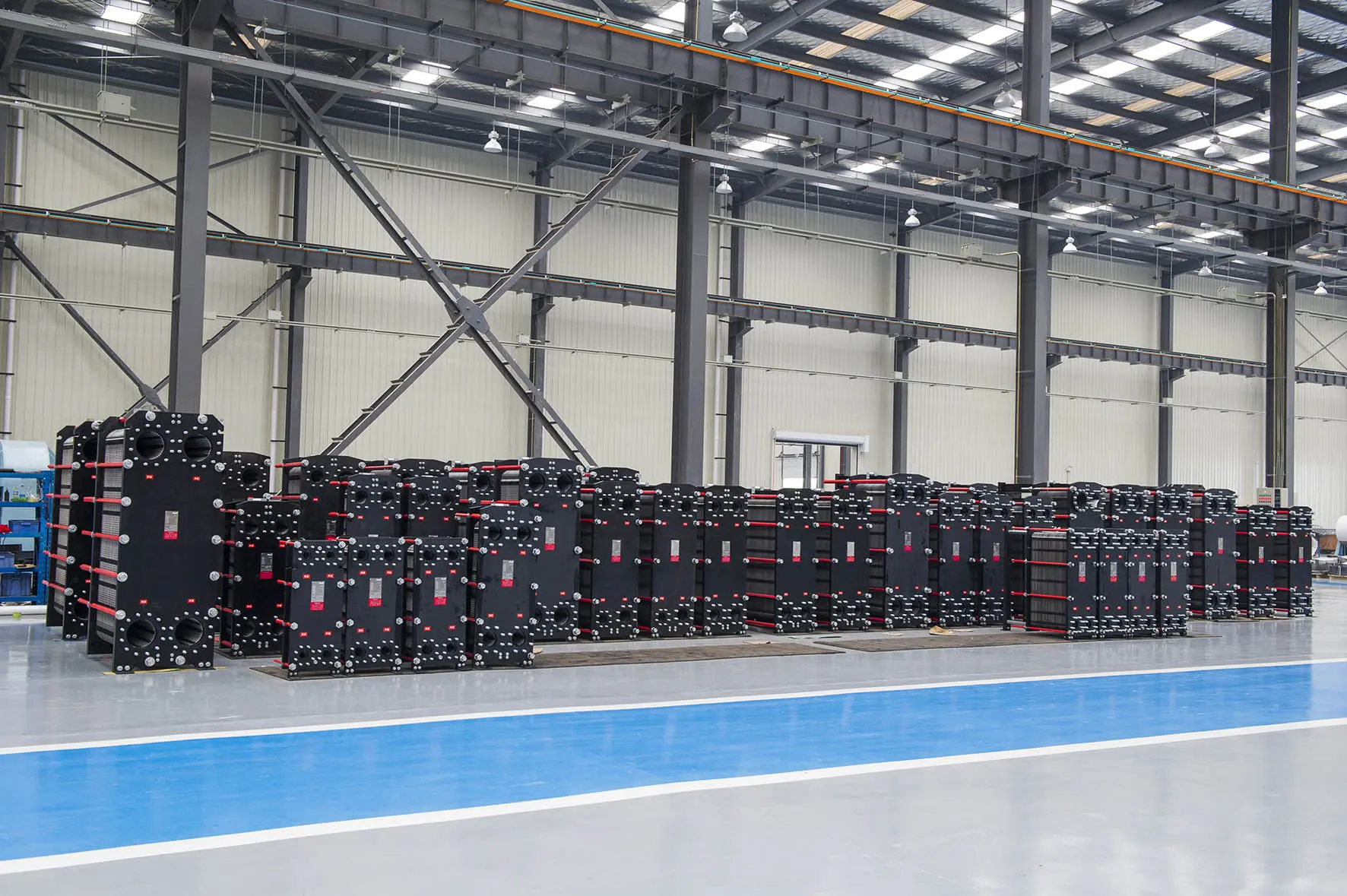
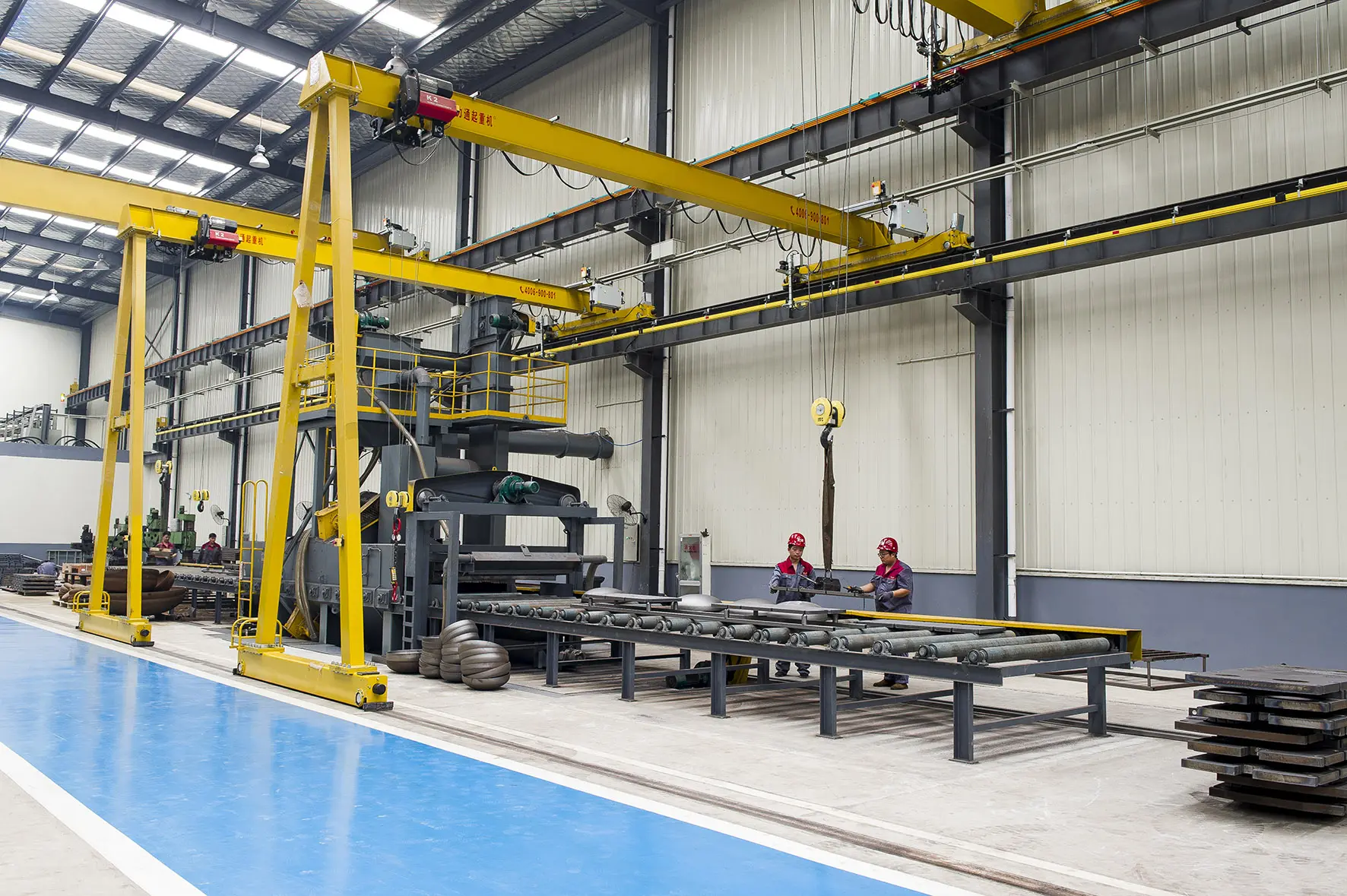
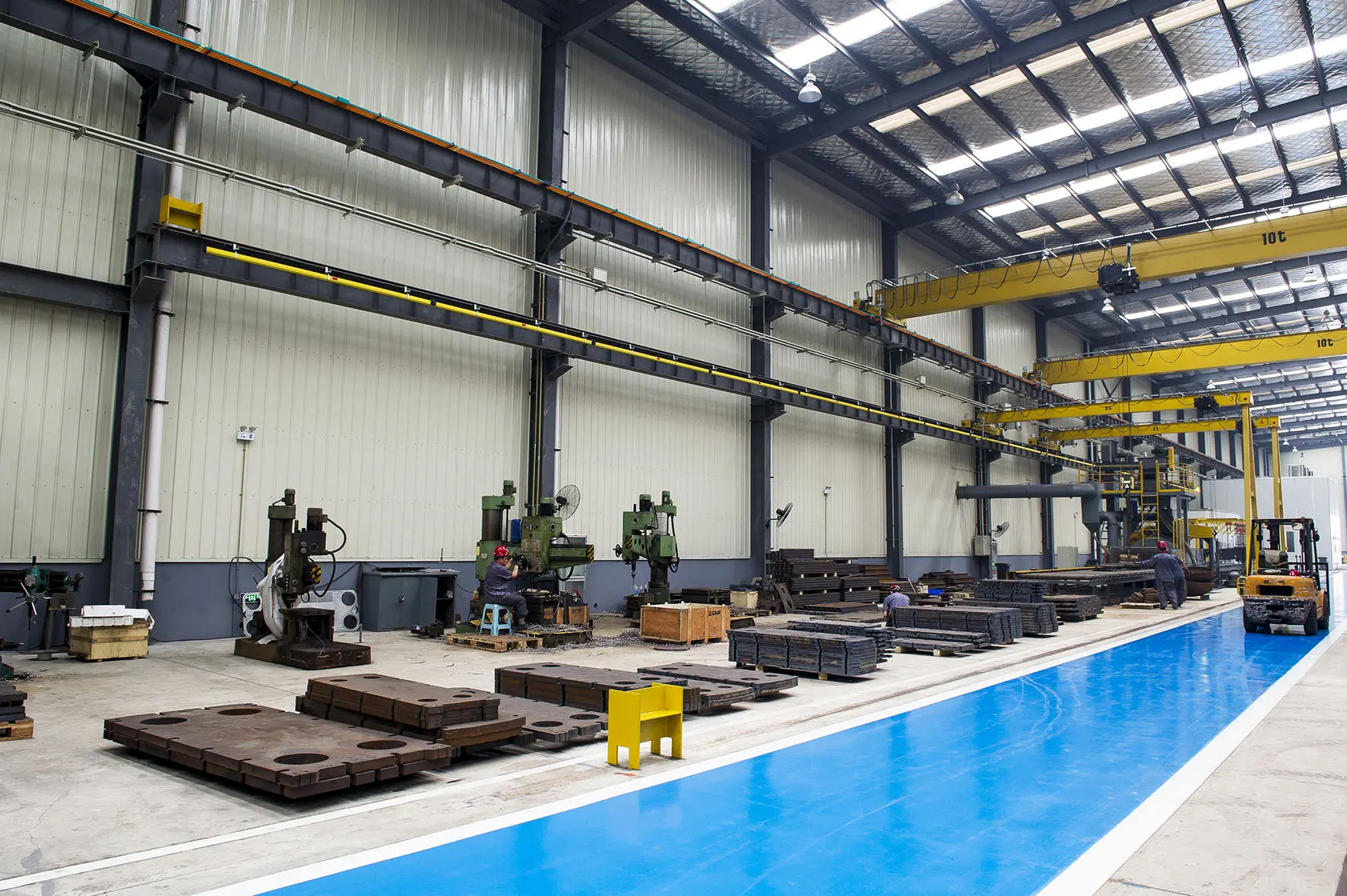
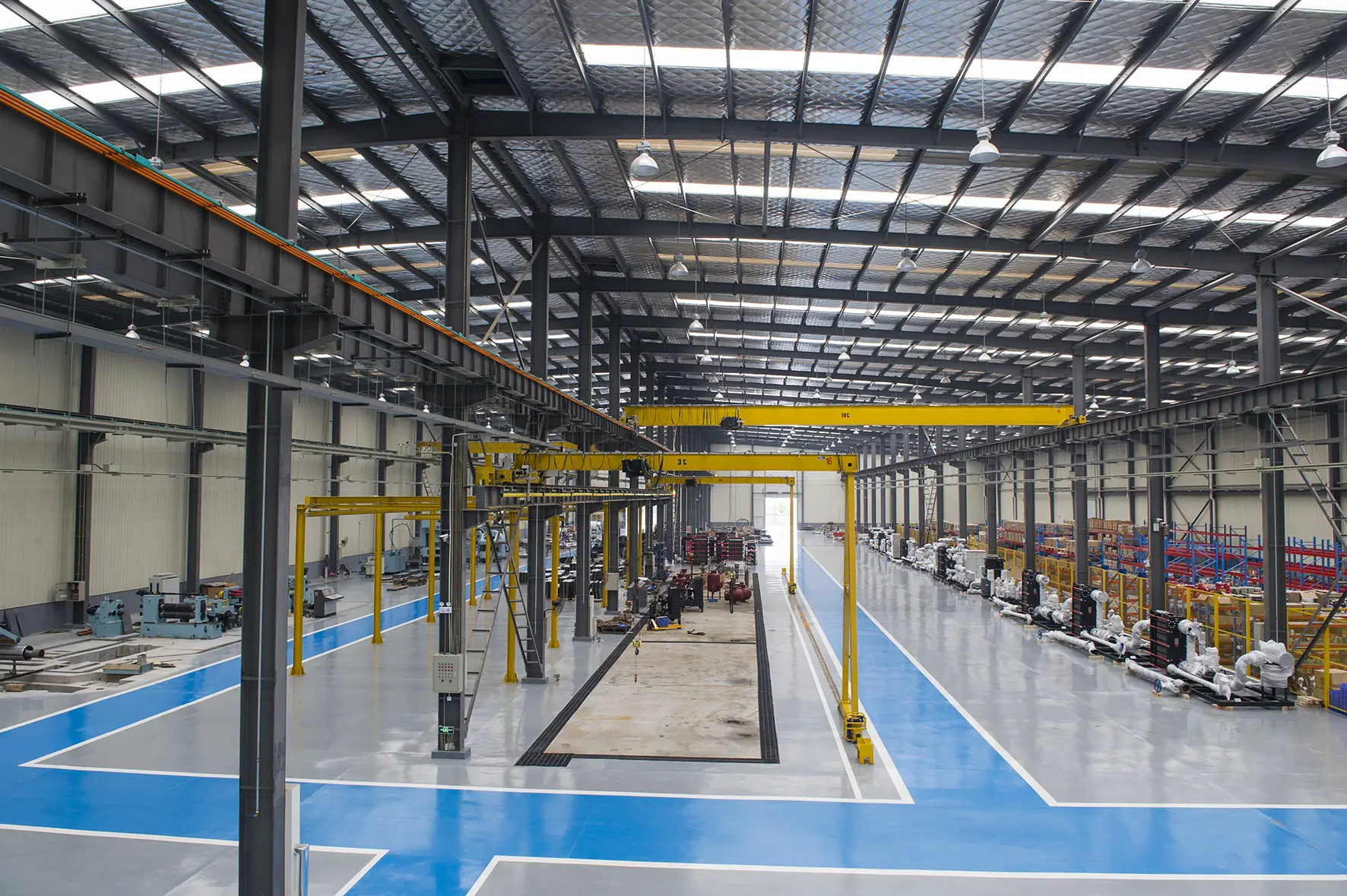
Furthermore, Chinese manufacturers have made massive capital investments in heavy fabrication machinery. Flotte's facilities are equipped with multi-thousand-ton hydraulic plate pressing machines, automated laser-welding lines, and advanced robotic CNC machining centers. This level of automation guarantees that complex gasket grooves and chevron profiles are formed with sub-millimeter precision. These tight tolerances are essential for preventing fluid bypass and maintaining uniform pressure distribution across large plate packs.
By blending these manufacturing capabilities with strict adherence to international quality management guidelines (such as ISO 9001 and pressure vessel codes), Chinese exporters like Flotte deliver products that match or exceed the performance of Western-manufactured alternatives. This combination of competitive pricing, engineering reliability, and rapid scaling makes China the go-to supply hub for global thermal management solutions.
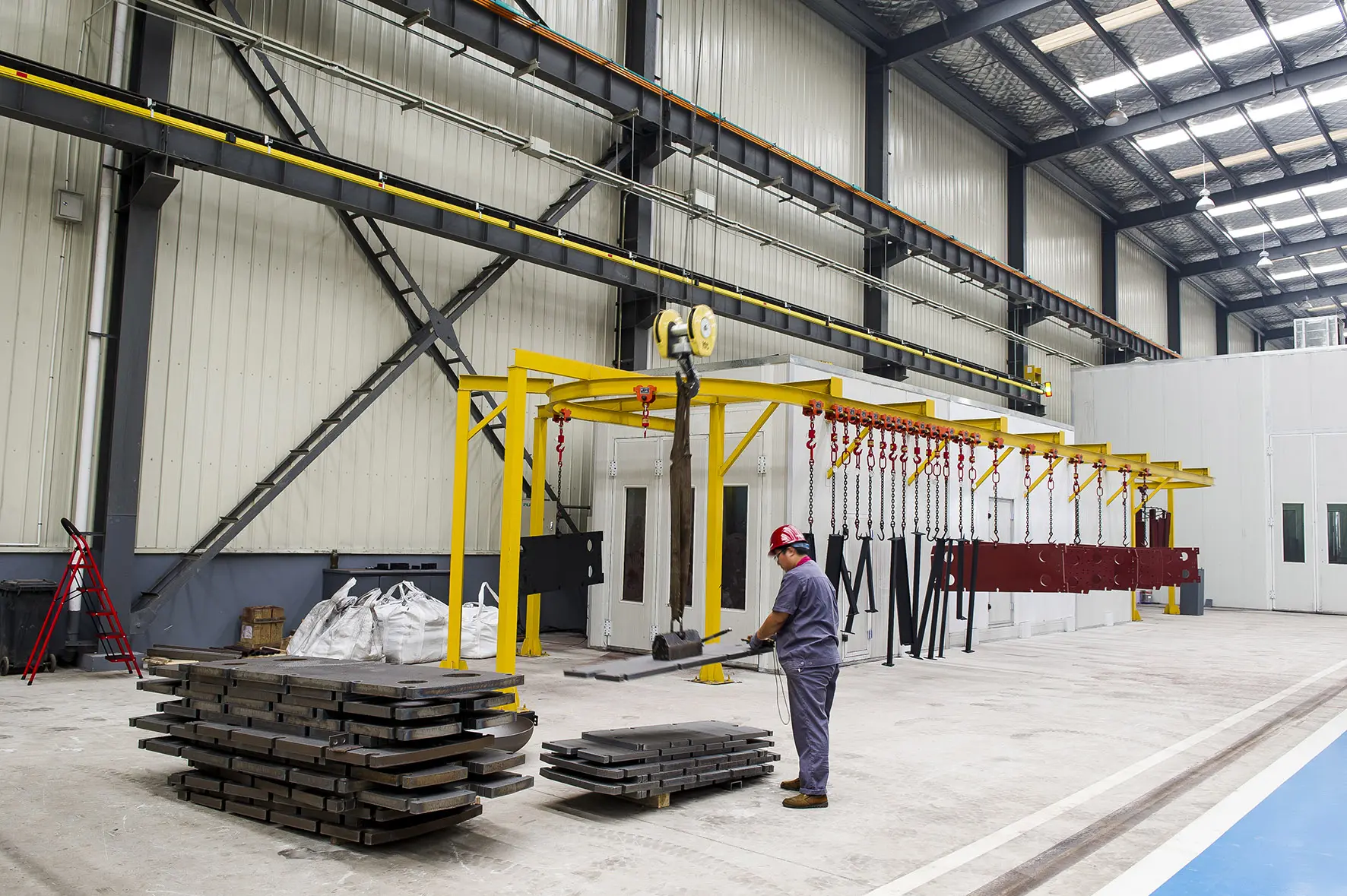
A step-by-step overview of our rigorous production workflow, ensuring maximum thermal efficiency and mechanical durability.
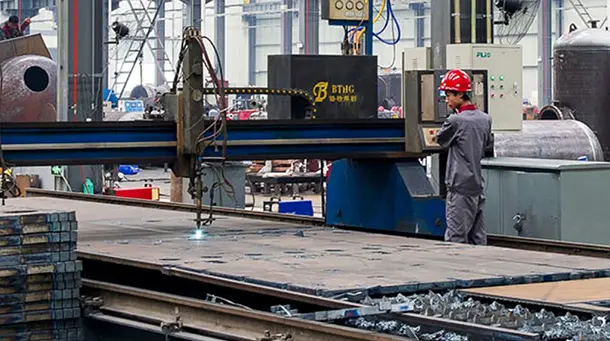
Splint Cutting
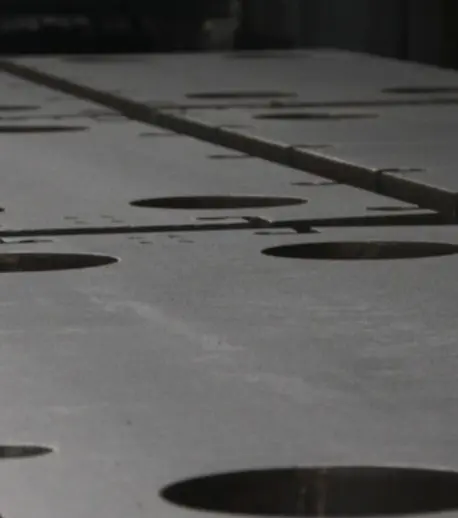
Micro-Forging
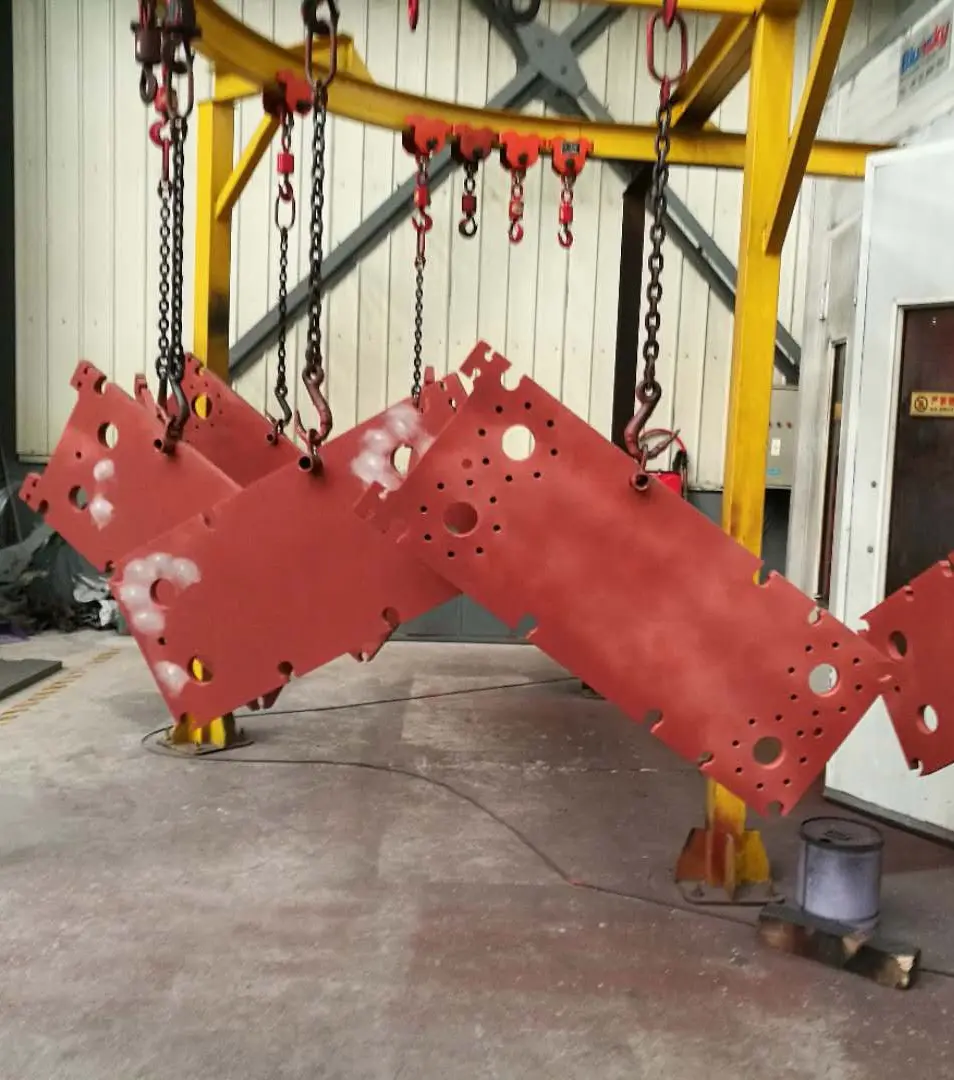
Spray Painting
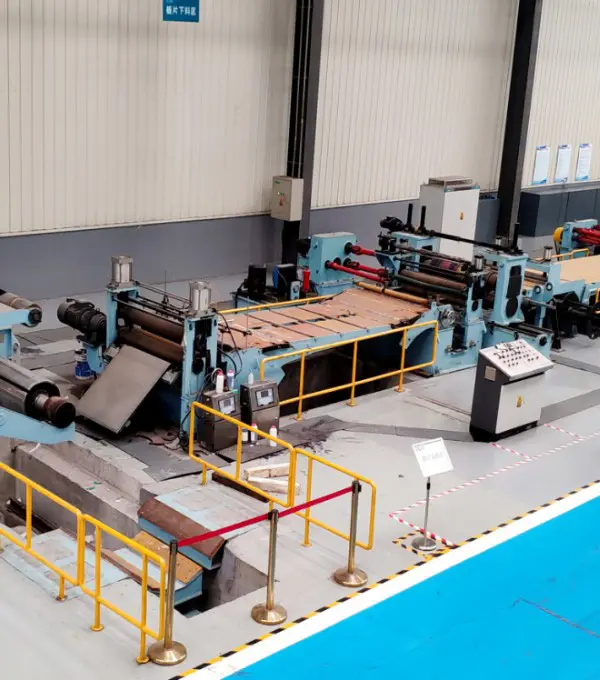
Sheet Cutting & Coding
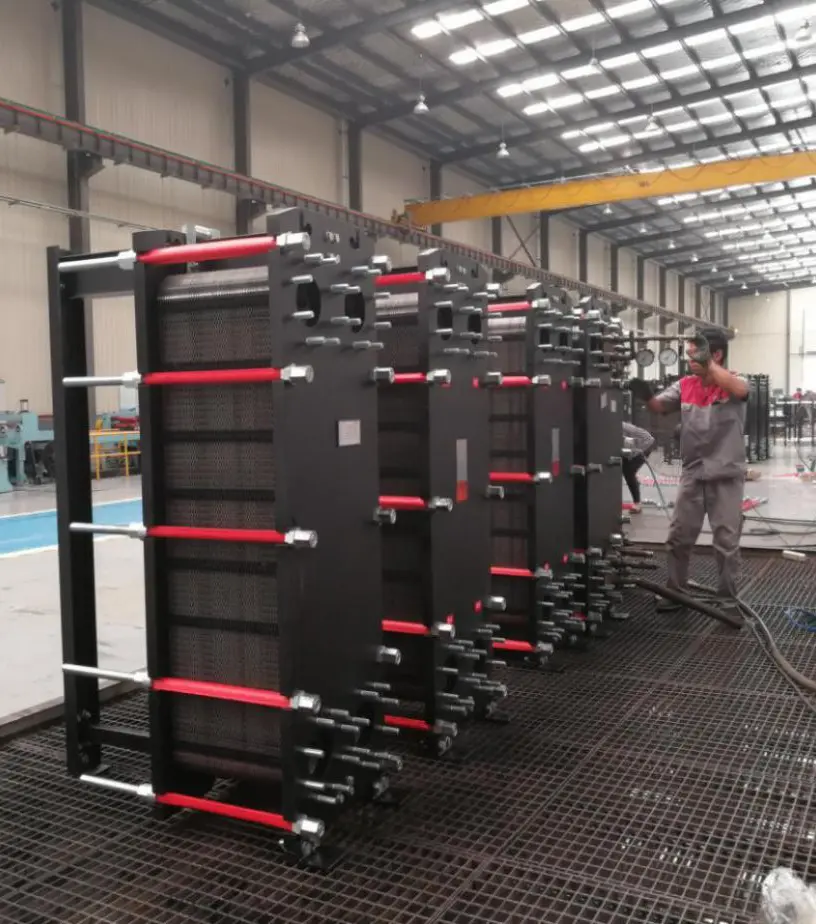
Hydrostatic Testing
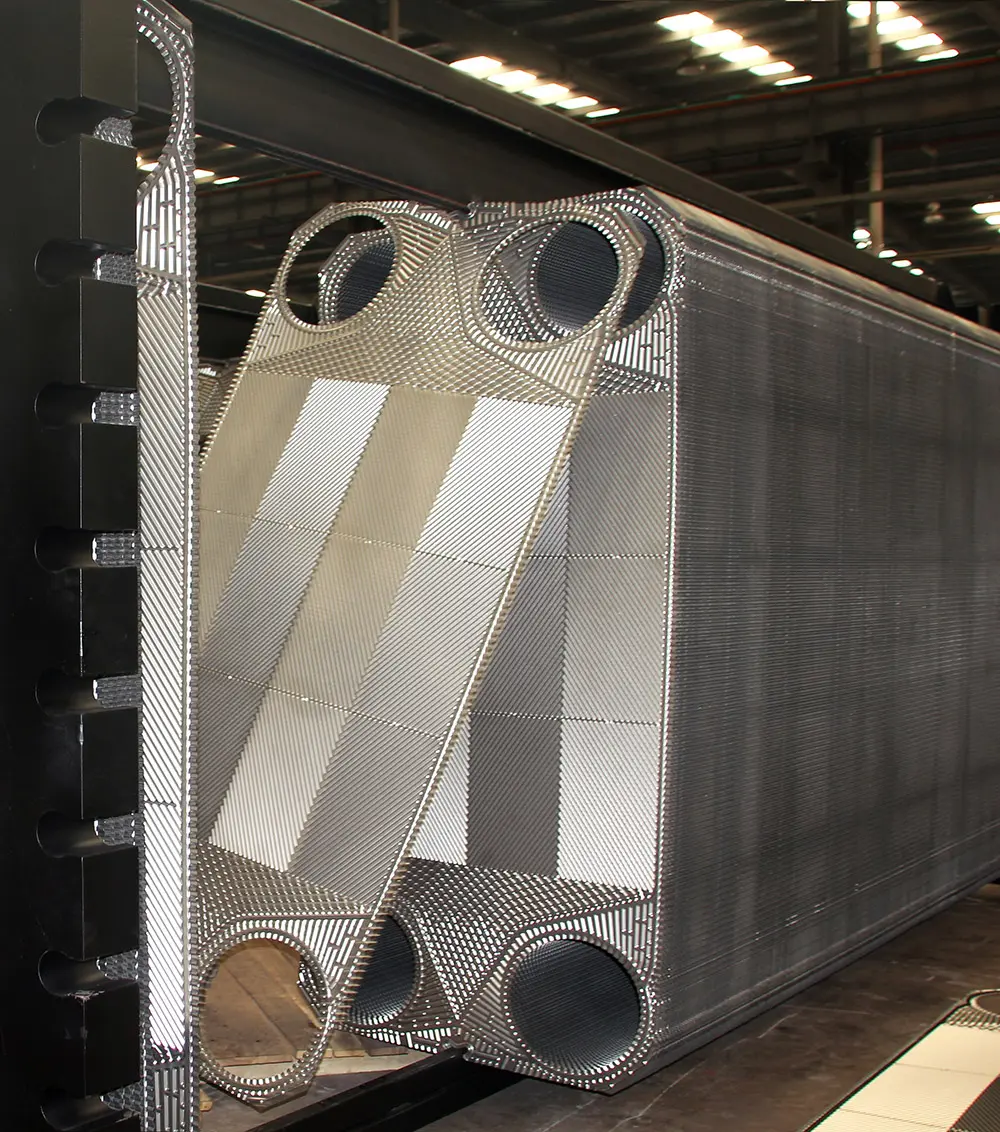
Equipment Assembly
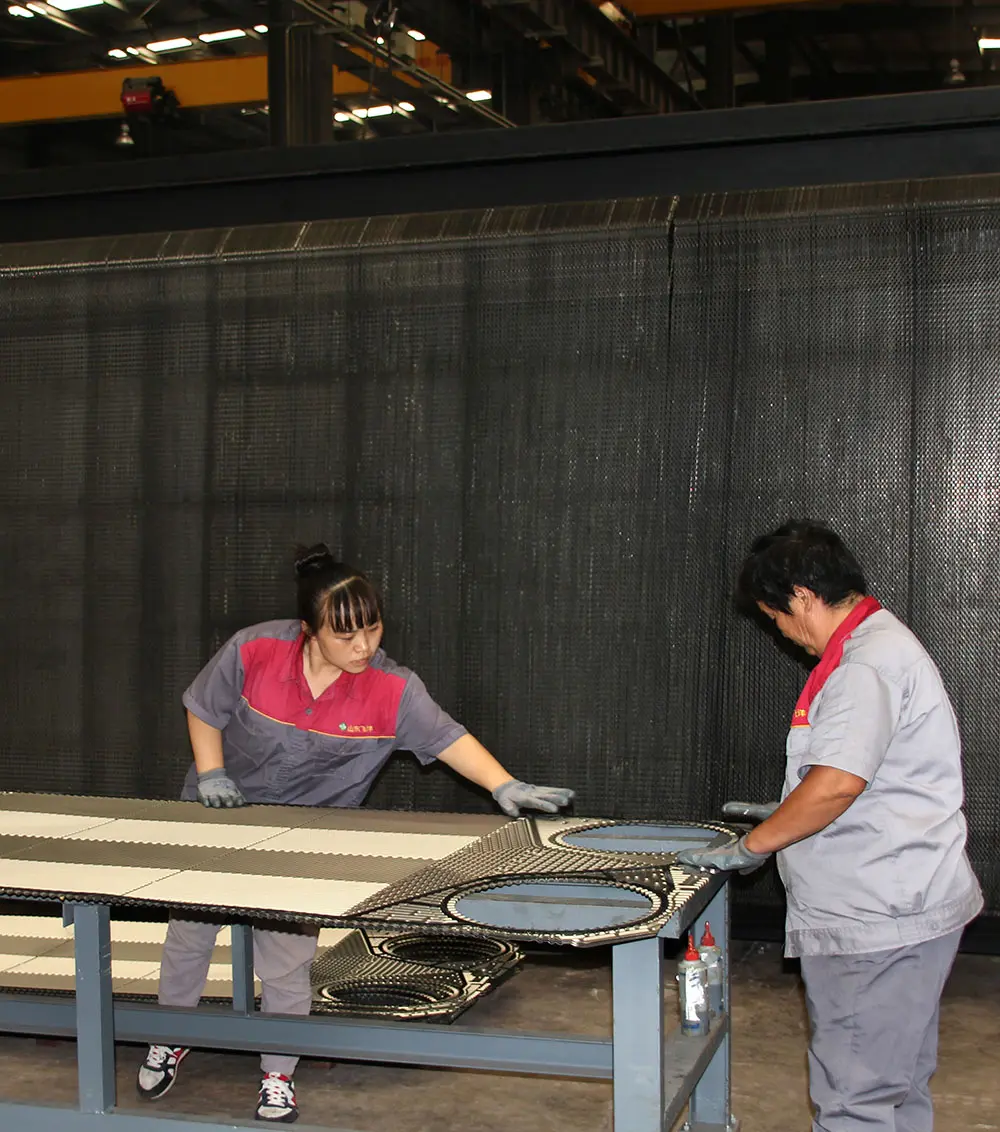
Gasket Integration
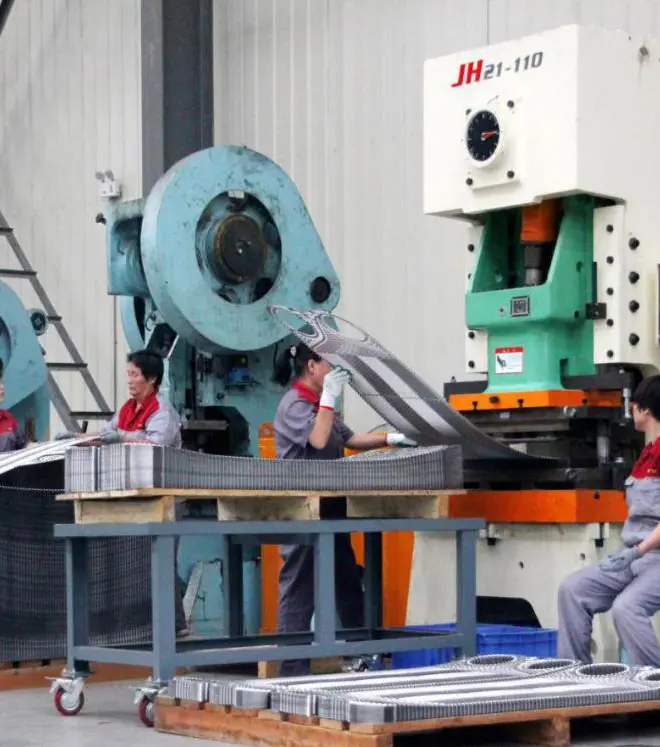
Plate Punching
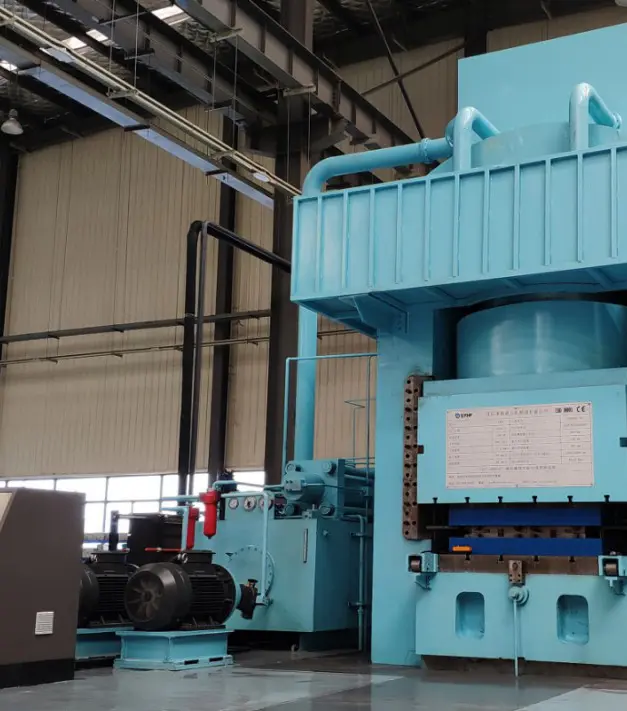
Sheet Stamping Forming
Adhering to the core philosophy of "quality first" and "winning by quality", Flotte has established a complete, multi-layered quality assurance system. We maintain strict control over every stage of production, from direct raw material sourcing through the procurement department to on-site assembly and mechanical calibration.
How specialized heat exchangers solve complex thermodynamic challenges across distinct industrial sectors.
In modern municipal heating systems, plate heat exchangers are the central link between primary high-temperature steam loops and secondary local supply networks. These systems regulate distribution temperatures based on real-time external ambient changes, reducing network thermal losses and ensuring comfortable residential heating throughout colder climates.
Chemical manufacturing demands high resistance to corrosive media and extreme thermal profiles. Utilizing titanium or Hastelloy plate configurations allows factories to handle aggressive reagents safely, reducing downtime caused by stress corrosion cracking or chemical fouling.
In high-rise commercial structures, cooling towers and chiller loops rely on heat exchangers to manage significant pressure differentials. High-pressure rated plate heat exchangers isolate secondary building loops from main supply loops, protecting internal piping and optimizing system energy efficiency.
Operational transparency, regulatory compliance, and raw material validation that define Flotte's industry leadership.
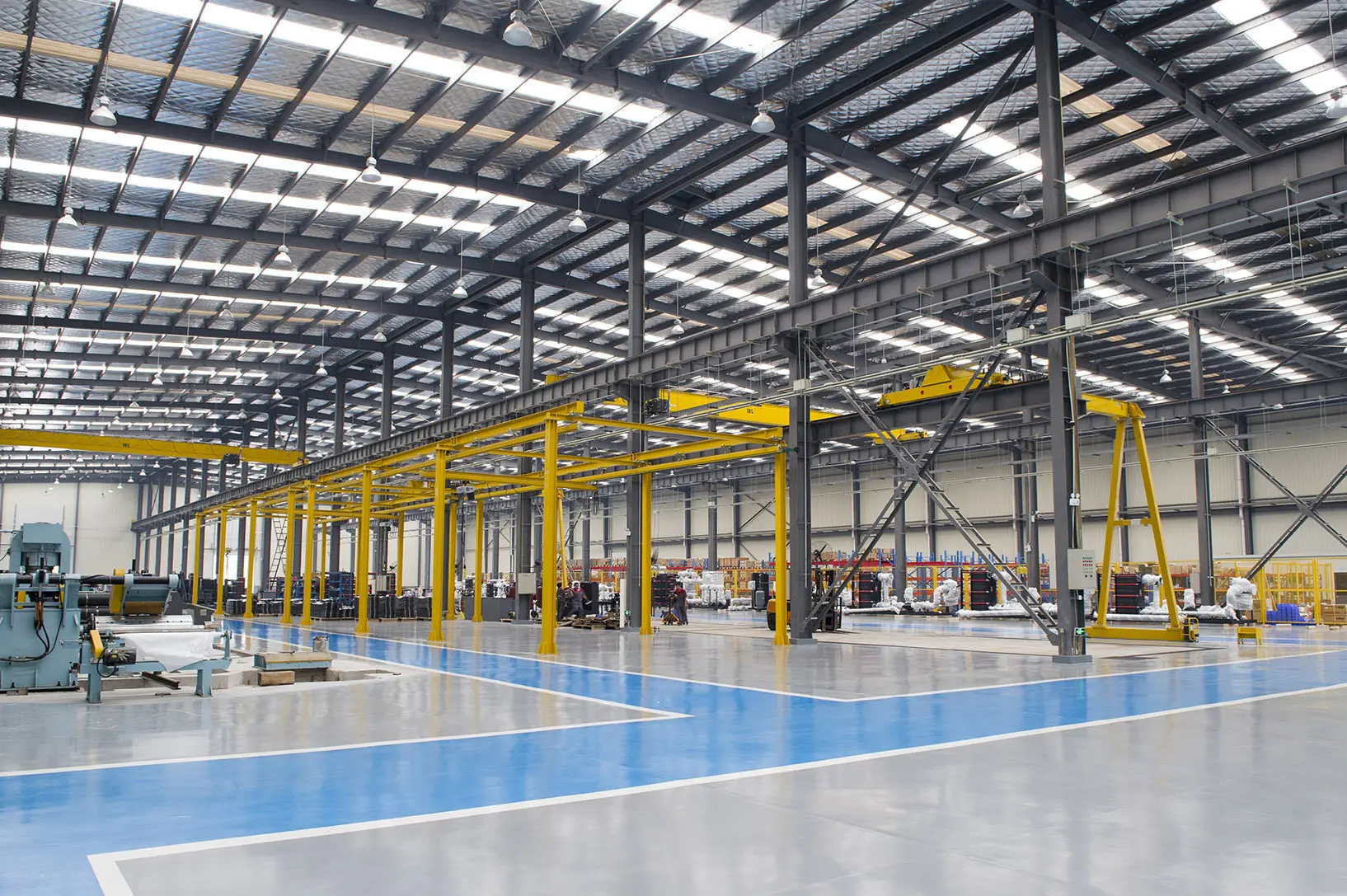
Our modern manufacturing facility operates in strict alignment with the ISO 9001:2015 Quality Management System and pressure vessel quality assurance frameworks. All assembly and production staff are certified technical professionals who undergo continuous skills development. This focus on standard-compliant manufacturing ensures that every finished heat exchanger consistently meets the required performance and safety specifications.
To maintain high durability, the quality of our raw materials is verified at every stage of sourcing. The purchasing department maintains an approved list of vetted suppliers, conducting regular material testing for all stainless steel and titanium components. As a result, our systems are widely utilized by long-term partners in heavy industries, including thermal power generation, municipal engineering, chemical processing, and wastewater treatment.


Answering critical thermodynamic, manufacturing, and operational questions for engineering and purchasing managers.
The superior efficiency of plate heat exchangers (PHEs) is primarily due to their corrugated plate geometry. The channels created by these corrugations induce a high degree of turbulence even at relatively low Reynolds numbers. This turbulence reduces the fluid boundary layer thickness, resulting in a higher overall heat transfer coefficient (U-value). Additionally, PHEs generate true counter-current flow, which allows for a close temperature approach (often less than 1°C), maximizing thermal effectiveness.
For corrosive applications, material selection is critical. While SS316L is suitable for low-chloride and general organic fluids, highly aggressive media (such as seawater or concentrated acids) require premium materials like Titanium (Gr. 1 or Gr. 11), Hastelloy, or Nickel alloys. The thin, protective oxide layer on titanium provides excellent resistance to chloride-induced pitting and crevice corrosion, ensuring long-term operational integrity.
Skid-mounted intelligent units combine heat exchangers, pumps, sensors, and PLC control systems into a single pre-engineered package. This modular approach significantly reduces on-site piping work and installation time. The integrated automation system monitors pressure and temperature changes in real-time, modulating the flow rate to match actual demand. This precise control reduces energy consumption, mitigates thermal shock, and extends the operational life of the equipment.
A multi-effect evaporation (MEE) system optimizes energy consumption by reusing the latent heat of vaporization from preceding stages. Vapor generated in the first effect is used as the heating medium for the second effect, which operates at a lower boiling pressure and temperature. This process continues across multiple stages (effects). As a result, the consumption of fresh primary steam is significantly reduced compared to single-stage evaporation, lowering overall utility costs.
We carry out a comprehensive quality control program that complies with pressure vessel regulations. Every completed heat exchanger undergoes hydrostatic testing at pressures up to 1.5 times the design limit to ensure there is no leakage or structural deformation. For high-temperature and high-pressure configurations, we also perform non-destructive testing (NDT), including ultrasonic, radiographic, and liquid penetrant inspections of critical weld seams.
Preventing scale build-up involves periodic Clean-in-Place (CIP) flushing, which utilizes mild chemical cleaning agents to dissolve scale deposits without dismantling the plate pack. If heavy fouling occurs, the detachable frame allows the plate pack to be opened, enabling manual cleaning with soft brushes. Using a plate scale removal device and installing raw water pre-filtration systems also help prevent particulate deposition.
Membrane concentration systems rely on physical pressure-driven separation (such as reverse osmosis) rather than phase-change evaporation. This allows them to consume significantly less energy than thermal systems when treating low-to-medium concentration liquids. However, for highly saturated solutions or zero-liquid-discharge (ZLD) requirements, a hybrid approach is often best: using membrane systems for initial concentration followed by thermal evaporation (like MEE) for final crystallization.
To size a heat exchanger, our engineering team requires: the hot and cold fluid medium properties (viscosity, density, specific heat), inlet and outlet temperatures, required heat load (kW), allowable pressure drops, and any space or footprint constraints. These parameters are processed through thermal design software to determine the optimal plate geometry, channeling, and heat transfer area.
Explore our specialized modular heat exchangers and intelligent energy-saving solutions for commercial and heavy industrial applications.
 Flotte Energy