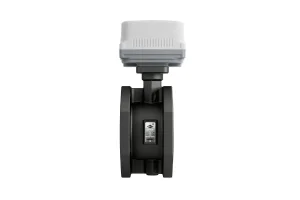
Explore our premium select range of thermal transfer assemblies, intelligent control valves, and concentration systems optimized for global operations.
Uncompromising quality built on three decades of thermal science and heavy machinery design.
Founded in 1995 as Flotte Thermal Engineering and reorganized in 2013 with a robust registered capital of 101 million yuan, Flotte Energy Saving Company stands as a vanguard in water management systems, HVAC components, and integrated water treatment industries. Throughout thirty years of engineering development, we have established ourselves as an industry-leading partner for energy conservation projects across East Asia, Europe, and the Americas.
Our organization is built upon modern production methodologies and rigorous internal standards. By implementing the international ISO 9001:2015 (Quality Management System), ISO 14001:2015 (Environmental Management System), and ISO 45001:2018 (Occupational Health & Safety Management System), we guarantee traceability and structural safety across all our products. Furthermore, Flotte is actively certified by the National Standardization Committee and holds safety registrations issued by the National Boiler and Pressure Vessel Standardization Technical Committee, allowing us to build pressure apparatuses engineered for harsh operating parameters.
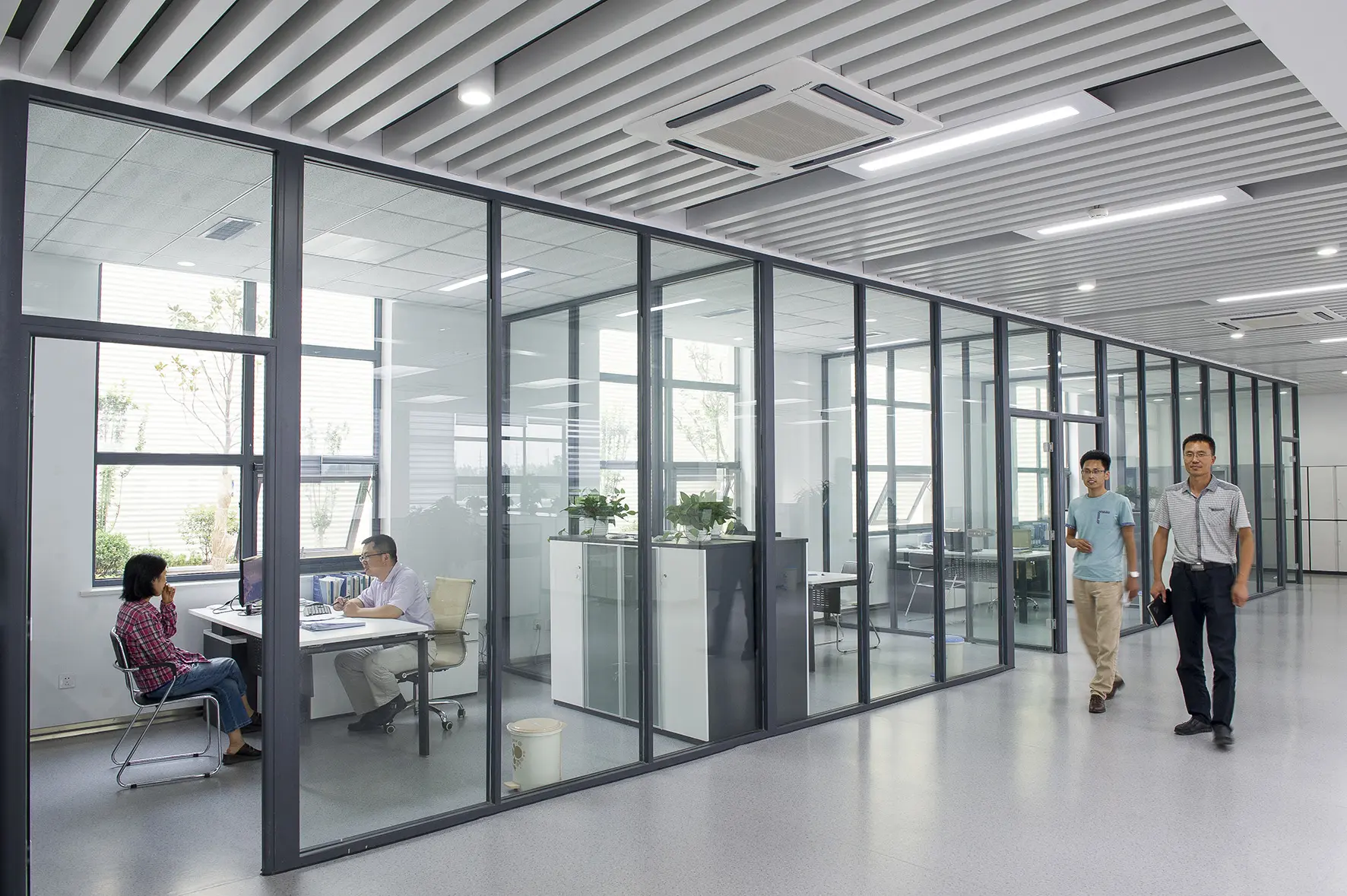
Currently, our R&D center houses advanced laboratories equipped for thermal mapping, hydraulic pressure limits testing, and computational fluid dynamics (CFD) modeling. This enables our experienced designers—many of whom possess over 20 years of active field service—to develop products that resolve the critical thermal pinch-point issues faced by processing units globally.
A rigorous review of modern compact design paradigms, surface area densities, and tomorrow's technological advancements.
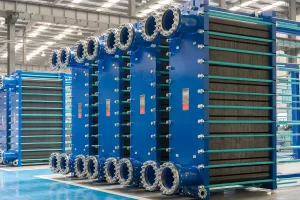
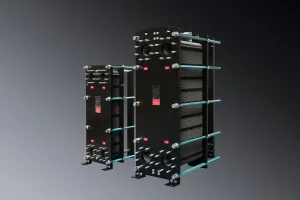
Using chevron corrugation plate geometry, GPHEs pack massive surface area densities (exceeding 700 m²/m³) within minimal floor spaces. The turbulent flow paths maximize thermal conductivity while reducing scaling and fouling risks.
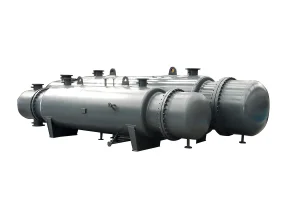
Featuring helical baffles and micro-grooved tubing configurations. These assemblies provide a highly reliable alternative for high-pressure and high-temperature boundaries where plate gaskets might degrade.
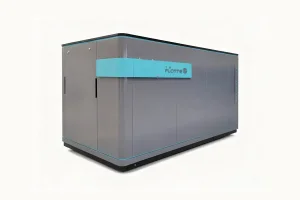
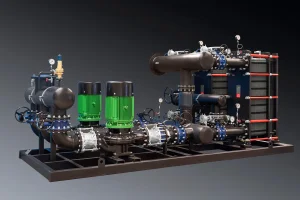
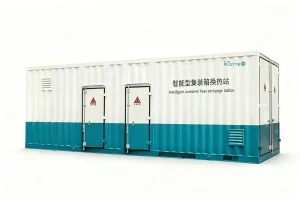
Our pre-engineered heat transfer modules unite expansion tanks, variable-speed pumps, valves, and local control instrumentation into one space-saving framework, reducing installation time by up to 70%.
In classical industrial design, the heat transfer rate ($Q$) is governed by the equation $Q = U \cdot A \cdot \Delta T_{lm}$. Traditionally, increasing $Q$ required expanding the surface area ($A$), resulting in massive shell-and-tube setups. Compact Heat Exchangers optimize the overall heat transfer coefficient ($U$) by inducing localized fluid turbulence. The corrugated chevron patterns on the plates generate small-scale eddies even at low Reynolds numbers, disrupting the thermal boundary layer and accelerating thermal dissipation.
Looking ahead, the engineering roadmap points toward additive manufacturing (3D printed diffusion-bonded microchannels) and the incorporation of sensor technology. Smart heat exchangers will feature integrated digital diagnostic systems that monitor pressure drops ($\Delta P$) and temperature differentials ($\Delta T$) in real time. These automated diagnostics detect scaling early, allowing operations teams to schedule proactive cleaning cycles and prevent sudden shutdowns.
How our vertically integrated production line guarantees dimensional accuracy, leak tightness, and structural durability.
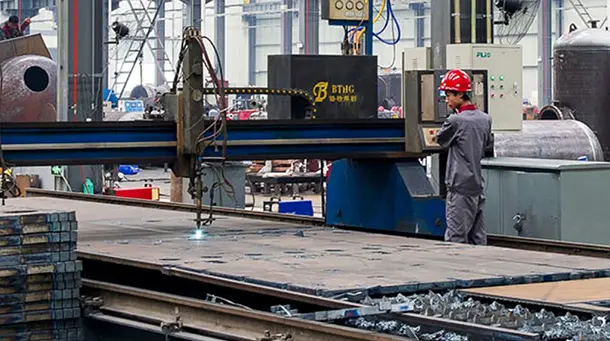
Precision automated profile cutting ensures clean frame dimensions for structural plate alignment.
Strengthens the structural connection hubs to prevent fatigue failure under fluctuating thermal loads.
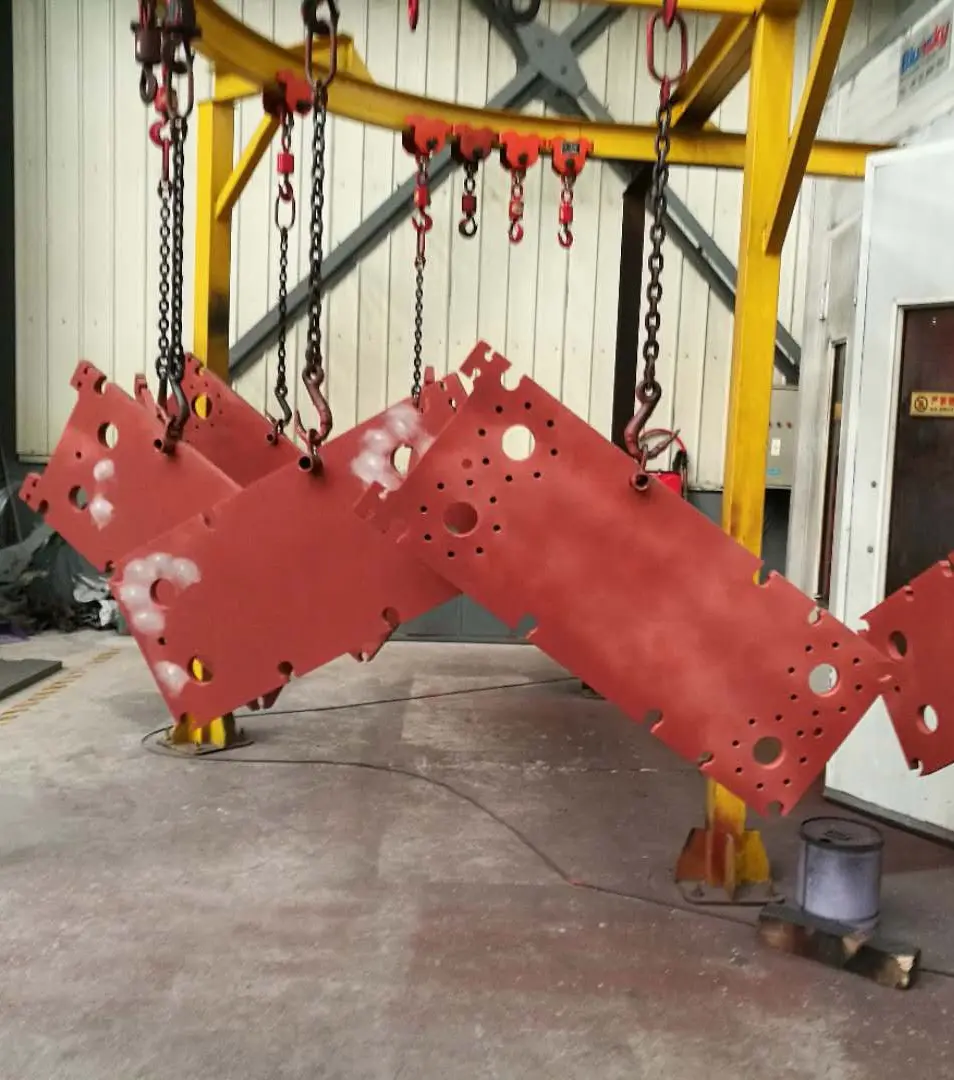
Heavy-duty anti-corrosion primers protect the frame plates from harsh environments.
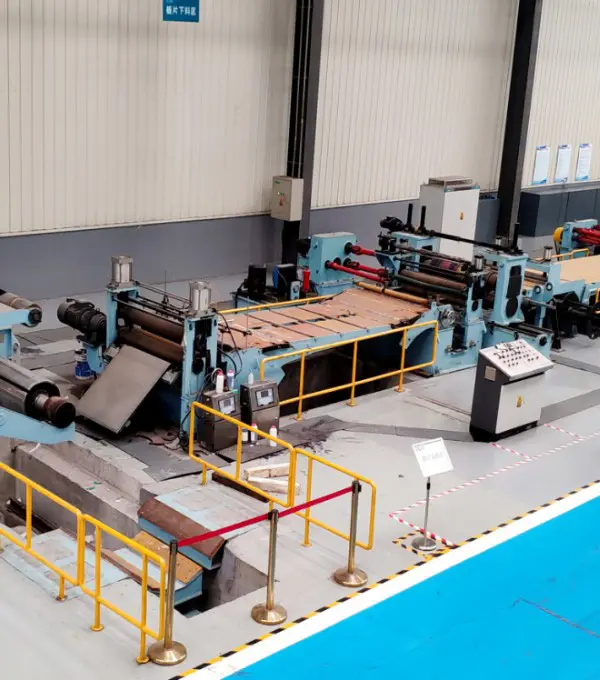
Individual plate numbering guarantees full component traceability back to the raw material heat number.
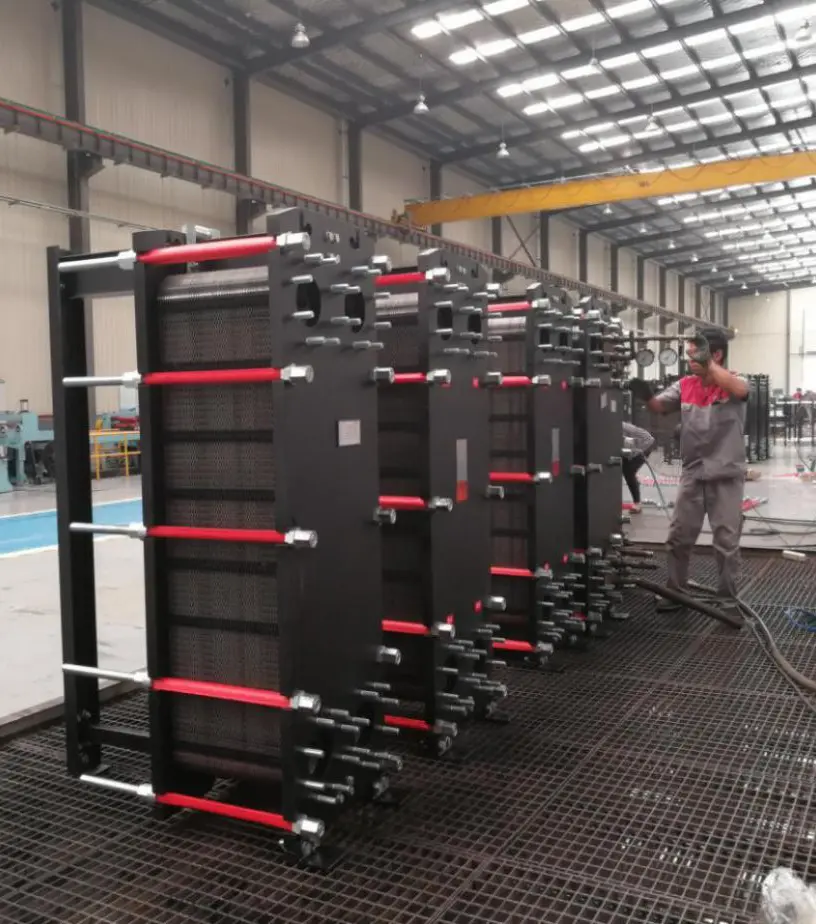
Every assembled heat exchanger undergoes rigorous pressure testing to verify seal integrity.
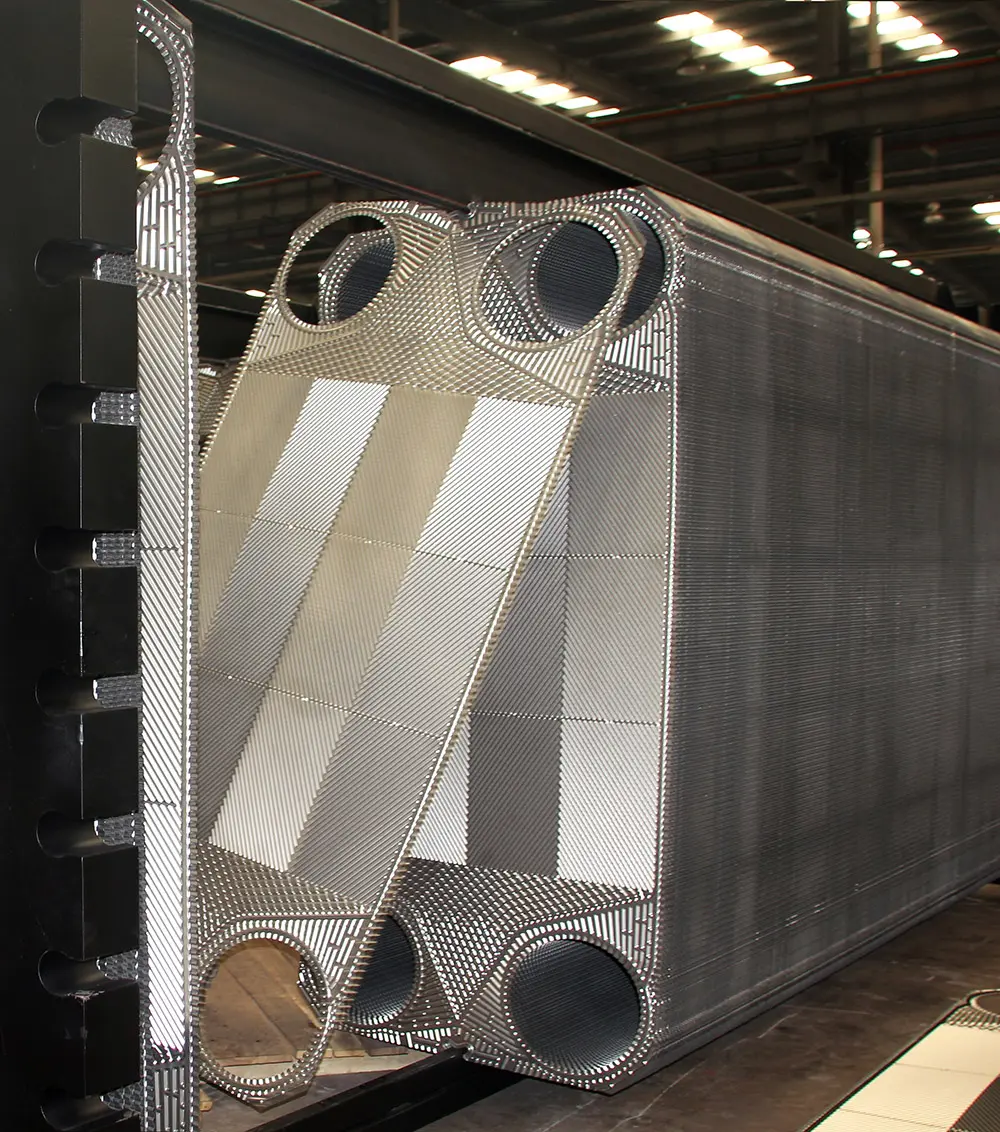
Controlled torque tightening ensures uniform compression of gaskets and plate bundles.
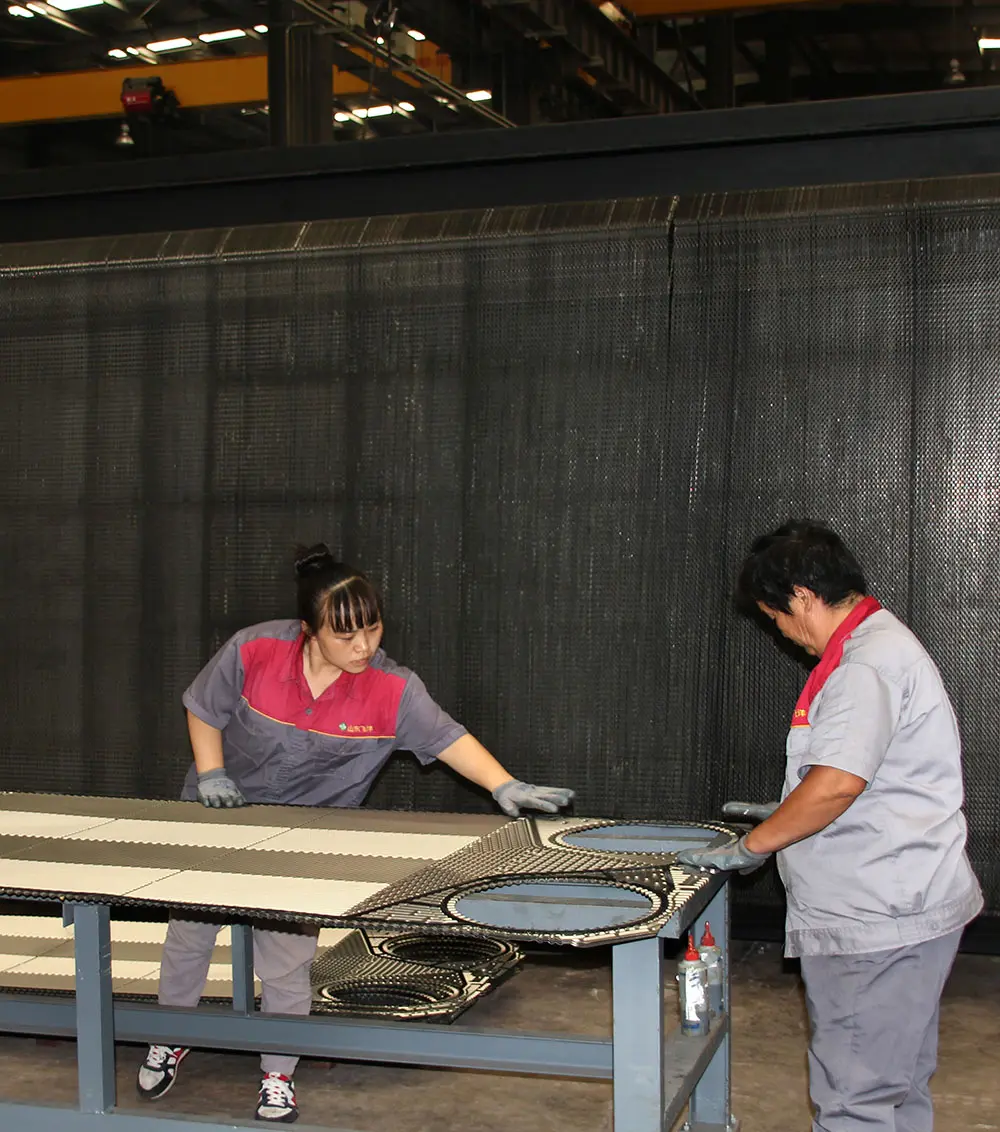
Custom-grooved polymer gaskets are precision-fitted to prevent bypass leakage.
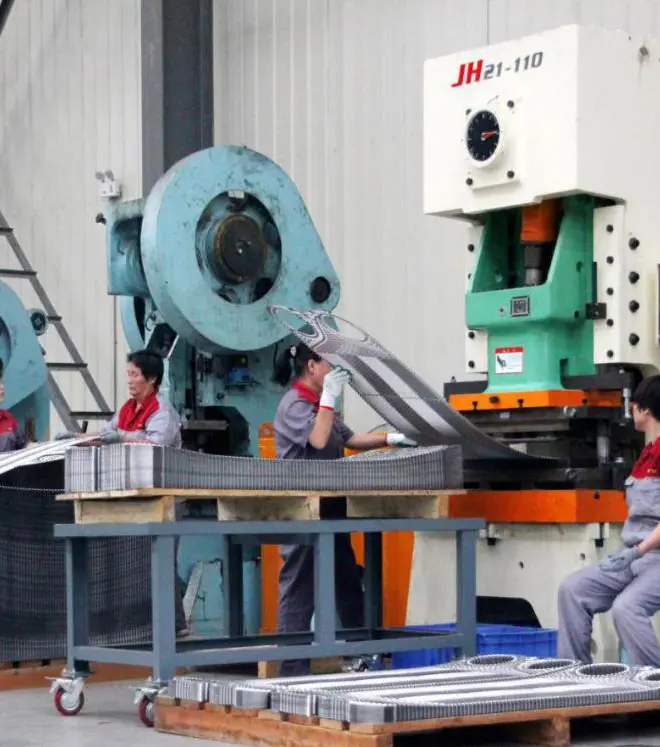
Heavy mechanical presses create exact port hole geometries to prevent bypass flow issues.
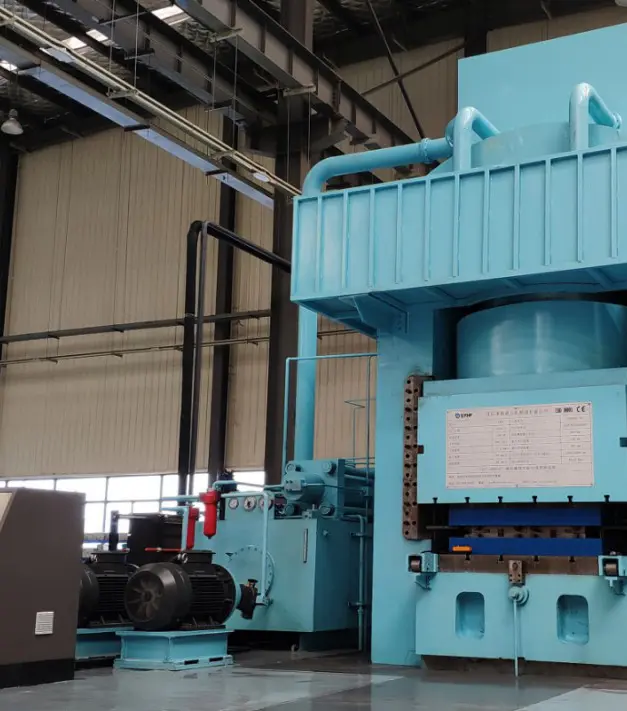
Multi-thousand-ton hydraulic presses form the chevron patterns in stainless steel, titanium, or nickel alloys.
From municipal central heating projects to heavy chemical processes, our solutions are engineered for stability and performance.
Municipal heating networks rely on high-capacity plate heat exchangers to isolate raw utility loop pressures from building systems. Our detachable plate heat exchangers are built to handle wide municipal temperature swings. Installed at key pressure regulating and distribution stations, they optimize heating profiles across large residential and commercial developments, reducing thermal transport losses.
Green building projects require tight approach temperatures (difference between the entering cold fluid and leaving hot fluid). Our HVAC-optimized heat transfer units deliver close 1°C approach windows. Working alongside secondary-network balance valves, they regulate flow rates to match building occupancy, reducing HVAC pump energy draw by up to 35%.
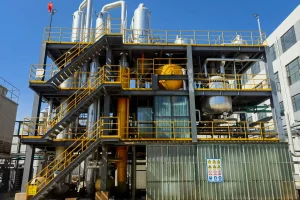
Corrosive processes demand robust chemical resistance. In evaporation and concentration units, our titanium and Hastelloy plate exchangers withstand high-concentration chlorides and organic solvents. By pairing these with our Multi-Effect Evaporation (MEE) technology, plants recycle latent vapor heat, reducing steam consumption compared to single-effect units.
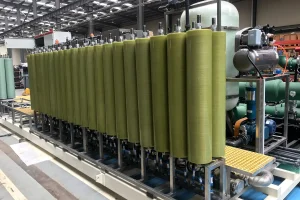
For industrial wastewater cleanup and desalination, our Membrane Concentration Systems deliver high recovery rates. These systems pretreat raw wastewater by separating dissolved minerals from the permeate. This setup lightens the load on downstream evaporators, cutting the overall capital expense (CAPEX) and operating expense (OPEX) of Zero Liquid Discharge operations.
Reducing supply chain friction with international approvals, robust logistics, and technical field support.
Global procurement teams face challenges such as customs delays, compliance mismatches, and poor field communication. Flotte addresses these risks with a dedicated export division and local compliance protocols. We coordinate sea, rail, and air freight logistics to ensure on-time delivery to project sites, with export-grade packaging that prevents corrosion during transport.
For design and engineering integration, we provide comprehensive 3D CAD modeling, BIM files, and detail drawings. This simplifies inclusion in major process plant blueprints. Each unit ships with complete documentation packages, including raw material heat certificates, hydrotest logs, weld-map details, and localized user manuals.
We maintain an inventory of standard replacement plates, EPDM/NBR gaskets, and port liners. This allows us to dispatch parts quickly to reduce unscheduled downtime. Additionally, our field-engineering teams provide virtual commissioning support and on-site troubleshooting globally.
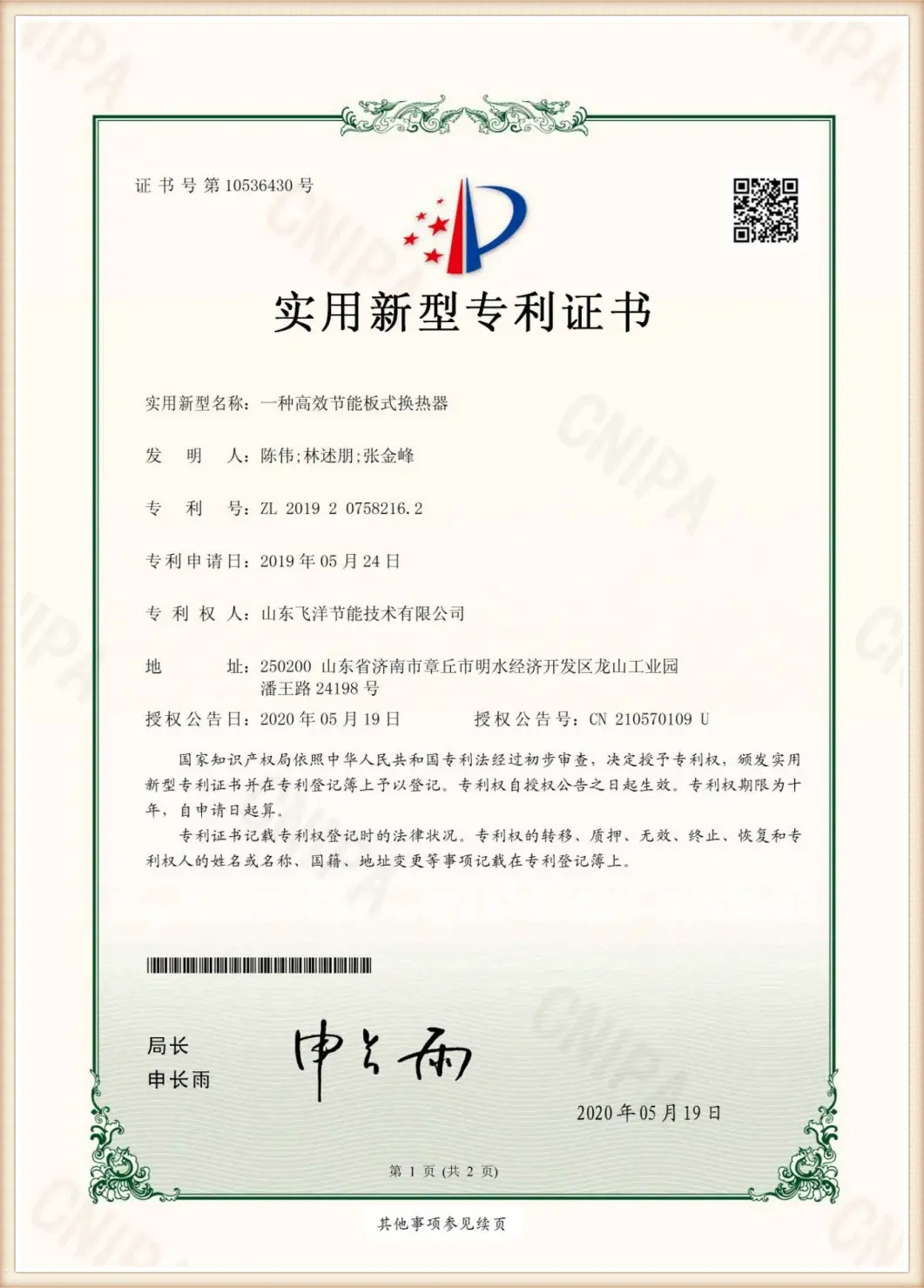
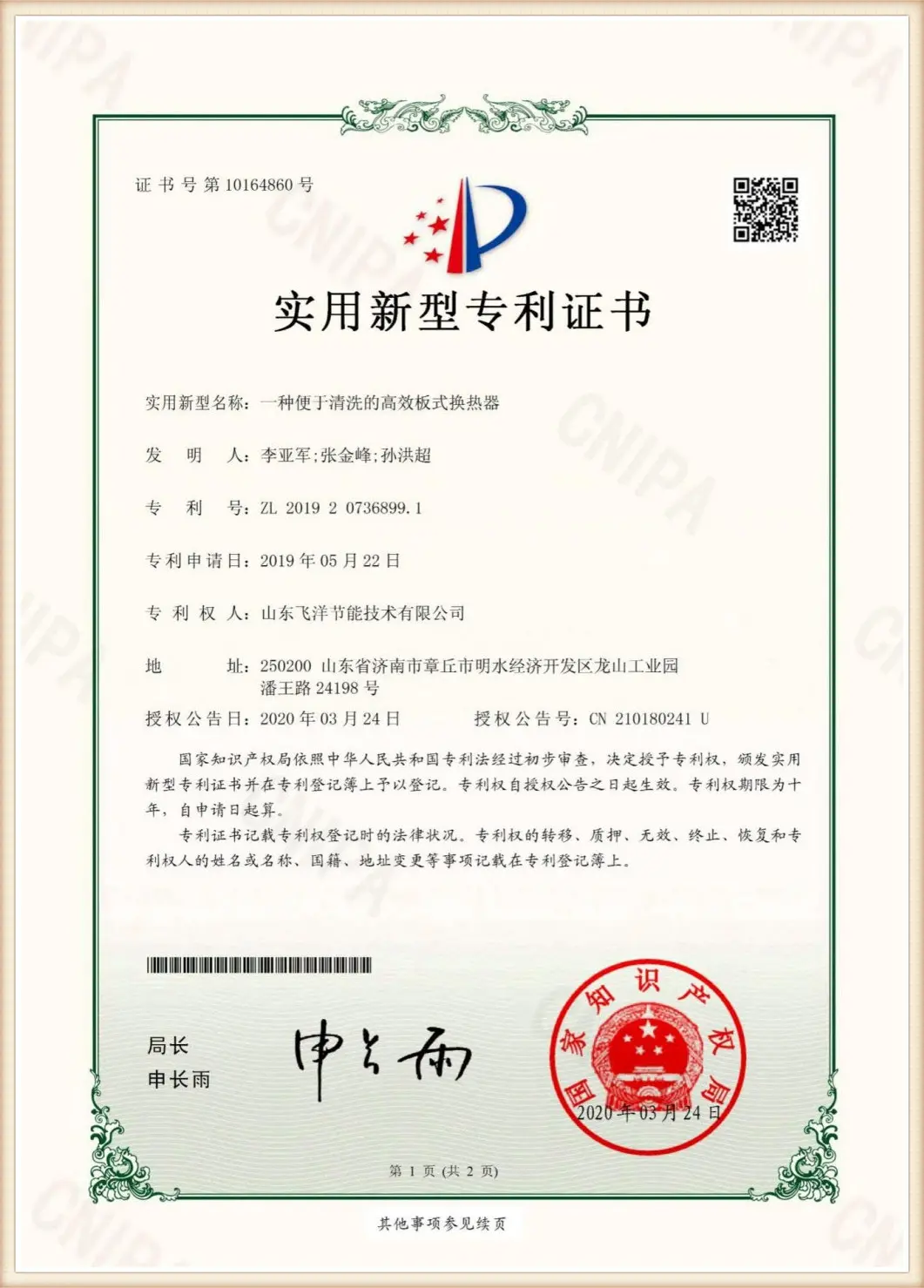
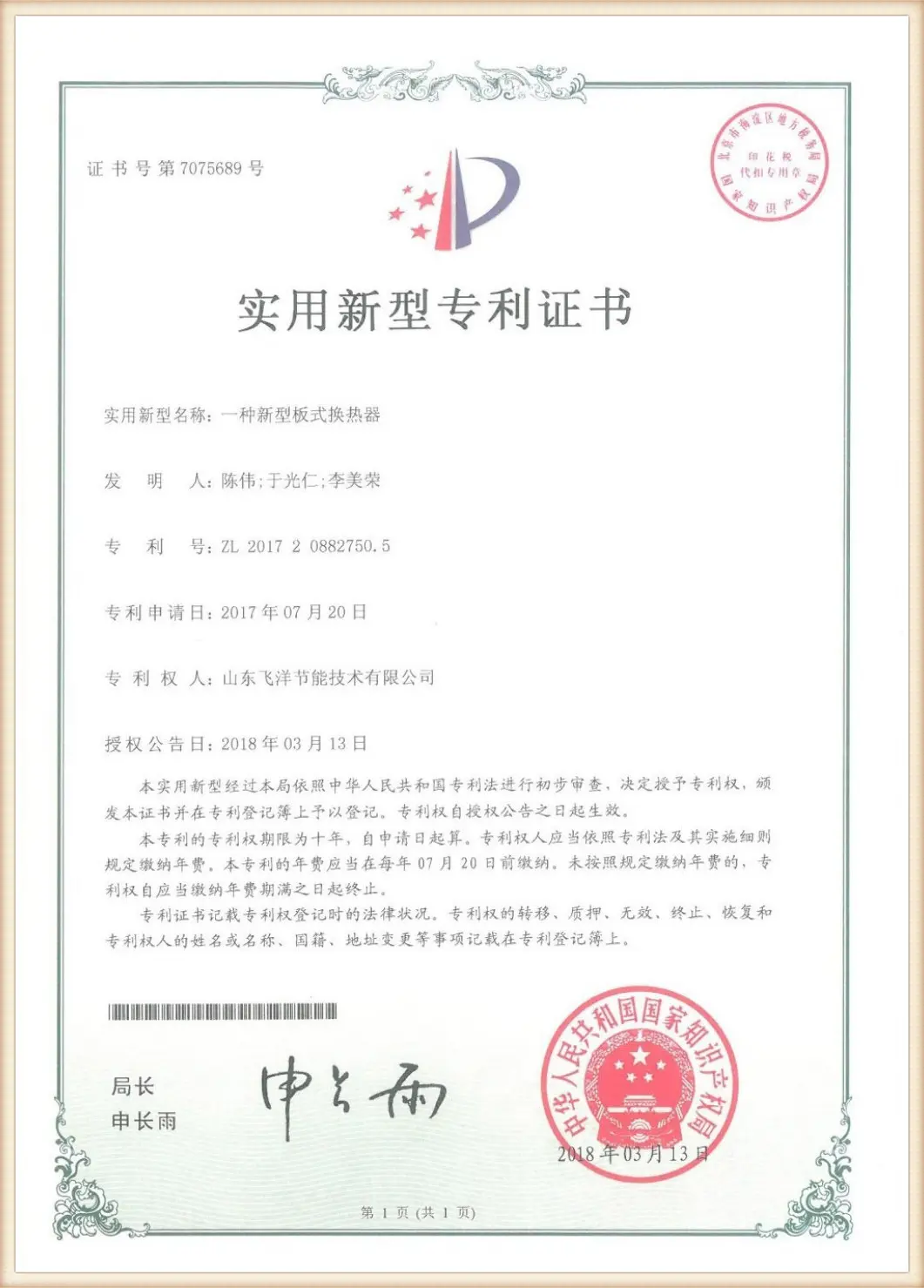
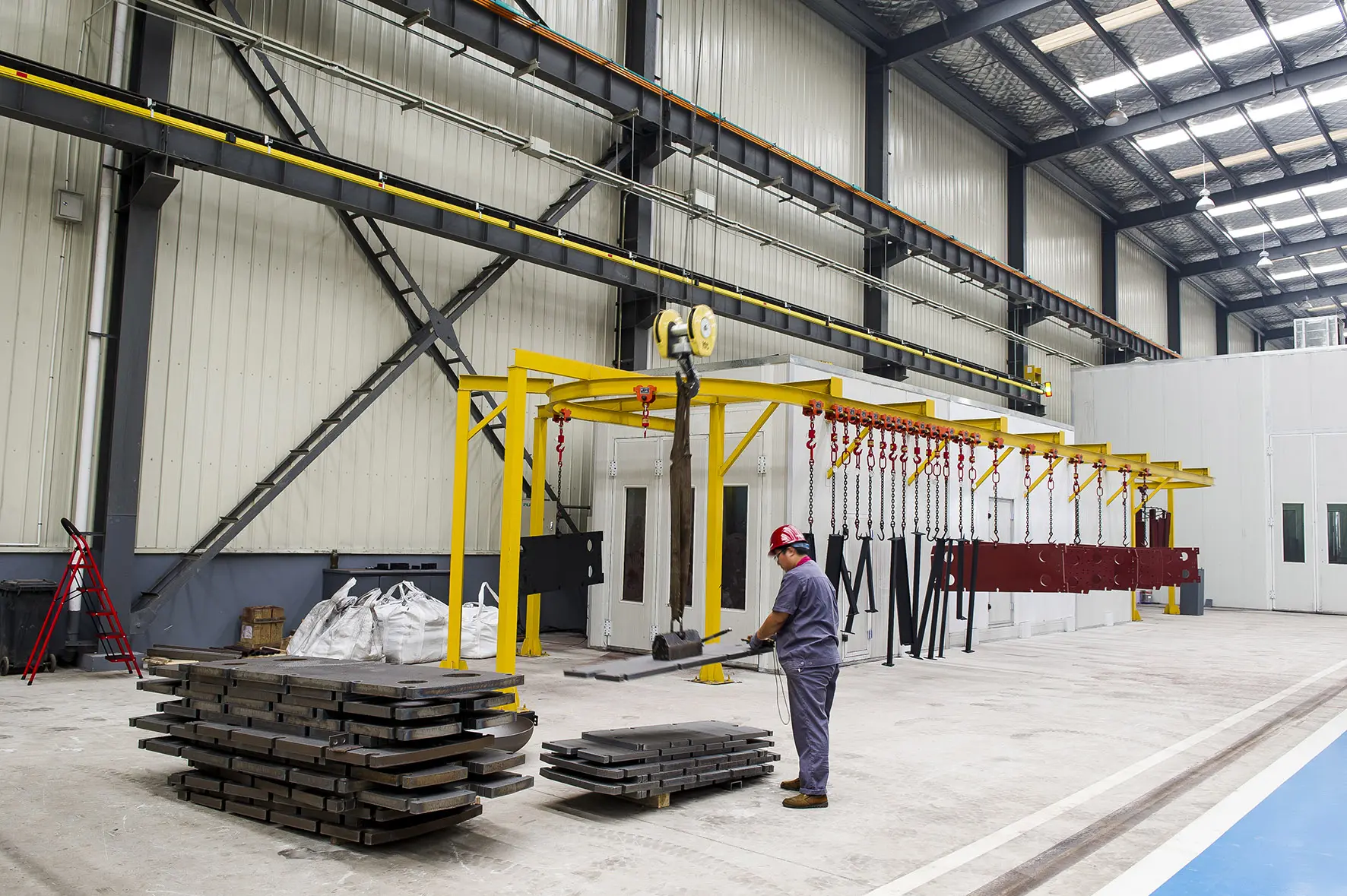
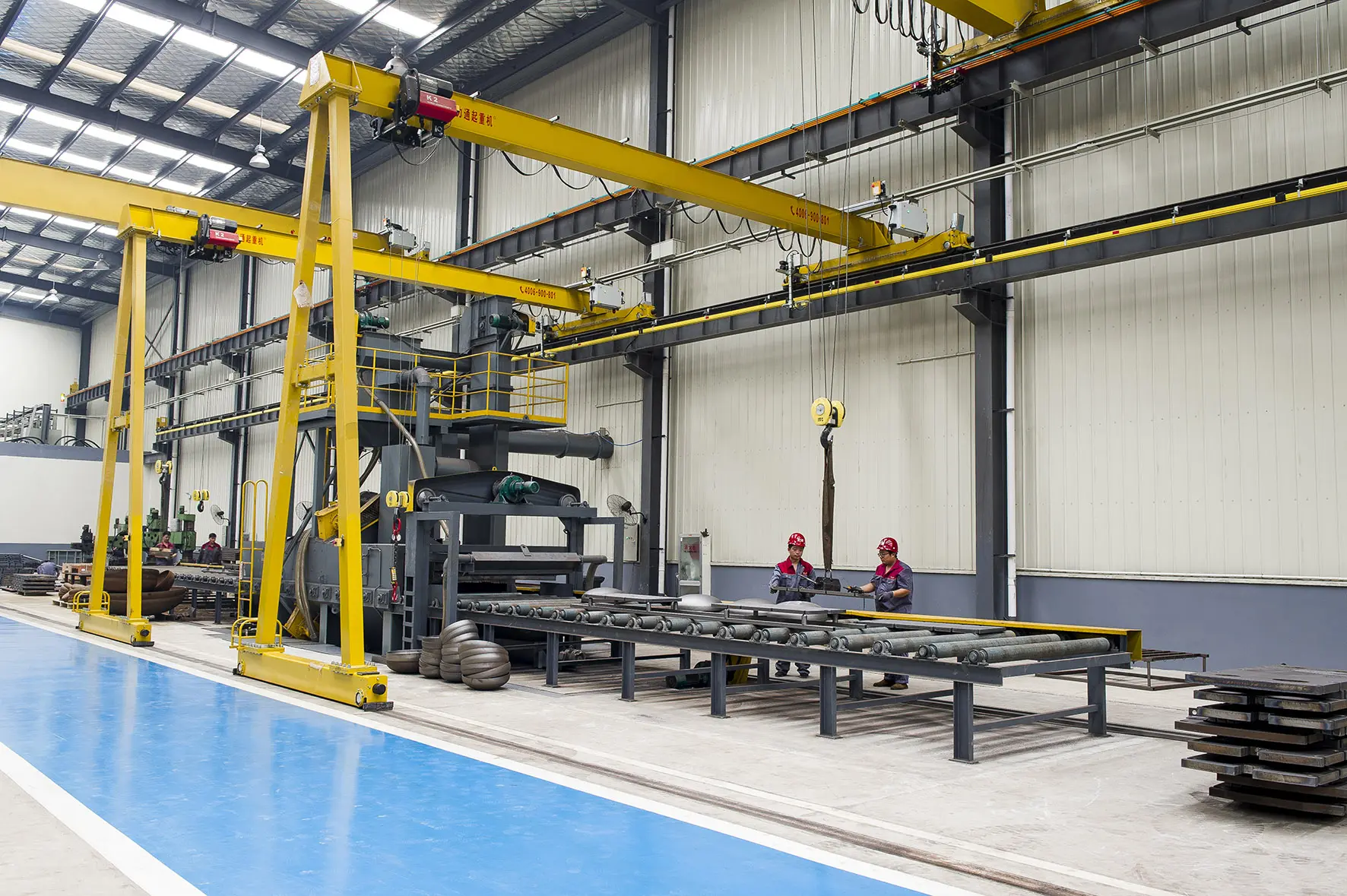
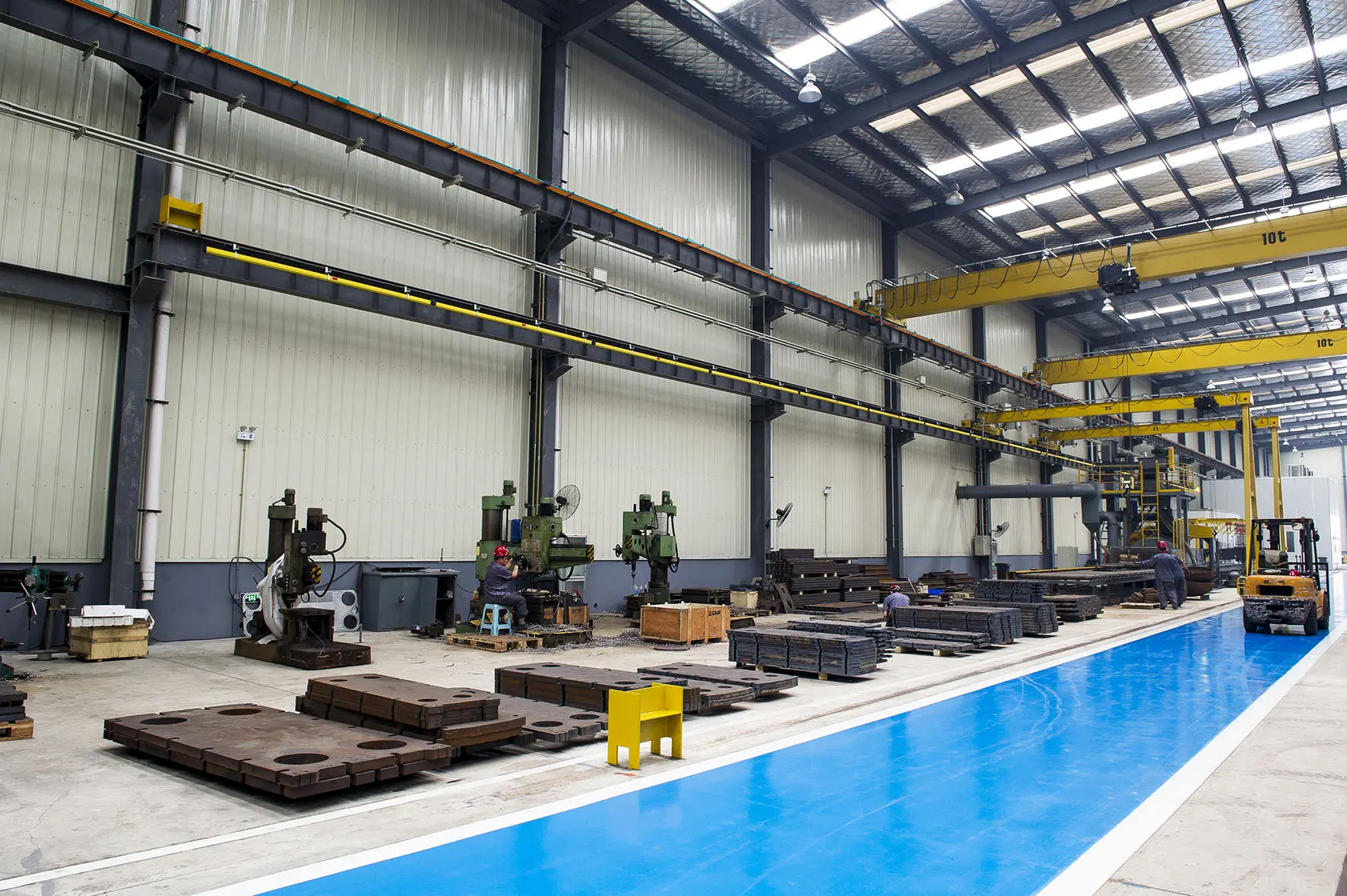
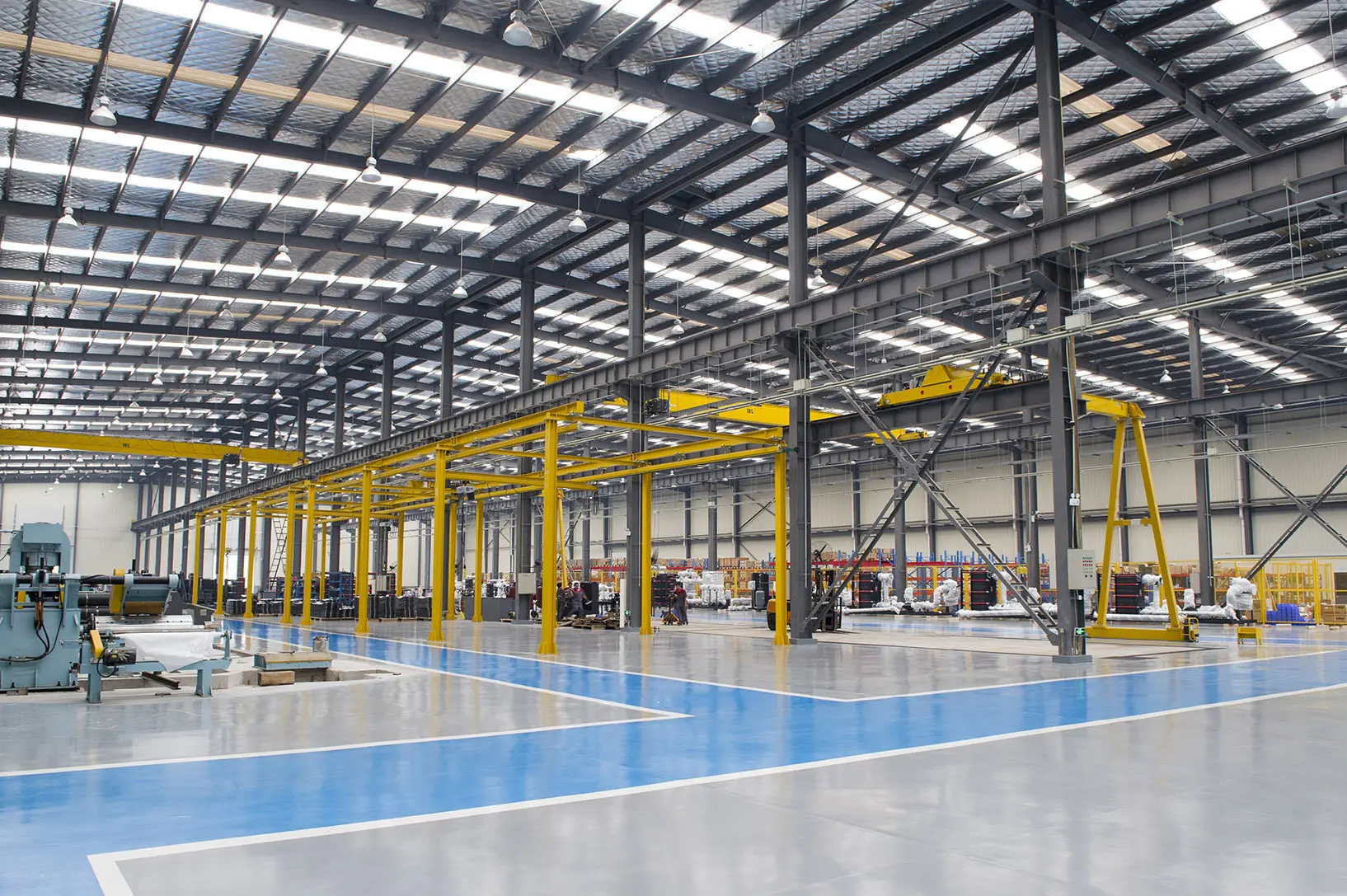
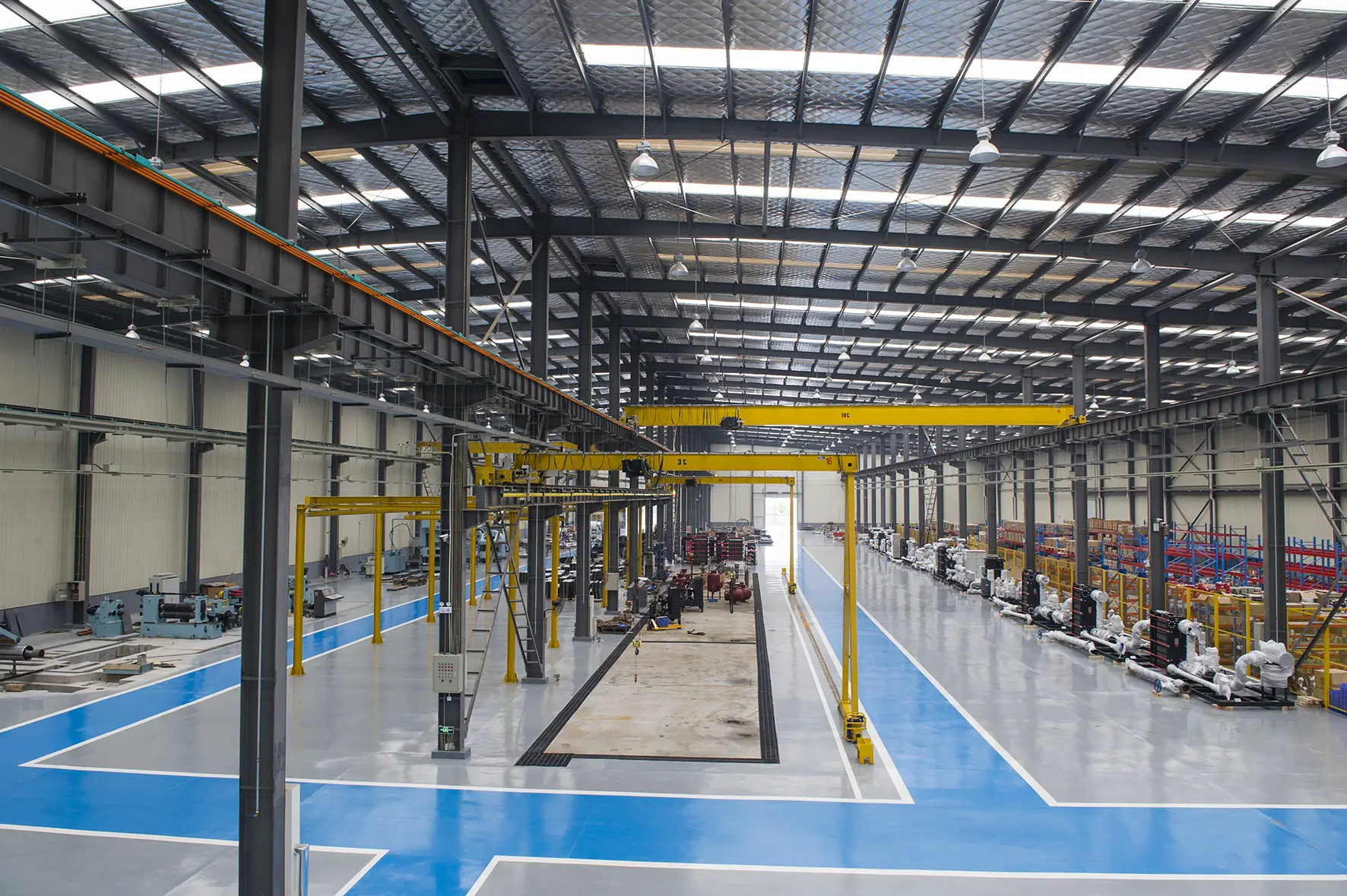
Proof of performance: Our third-party test reports, patent certifications, and heavy manufacturing workshops.
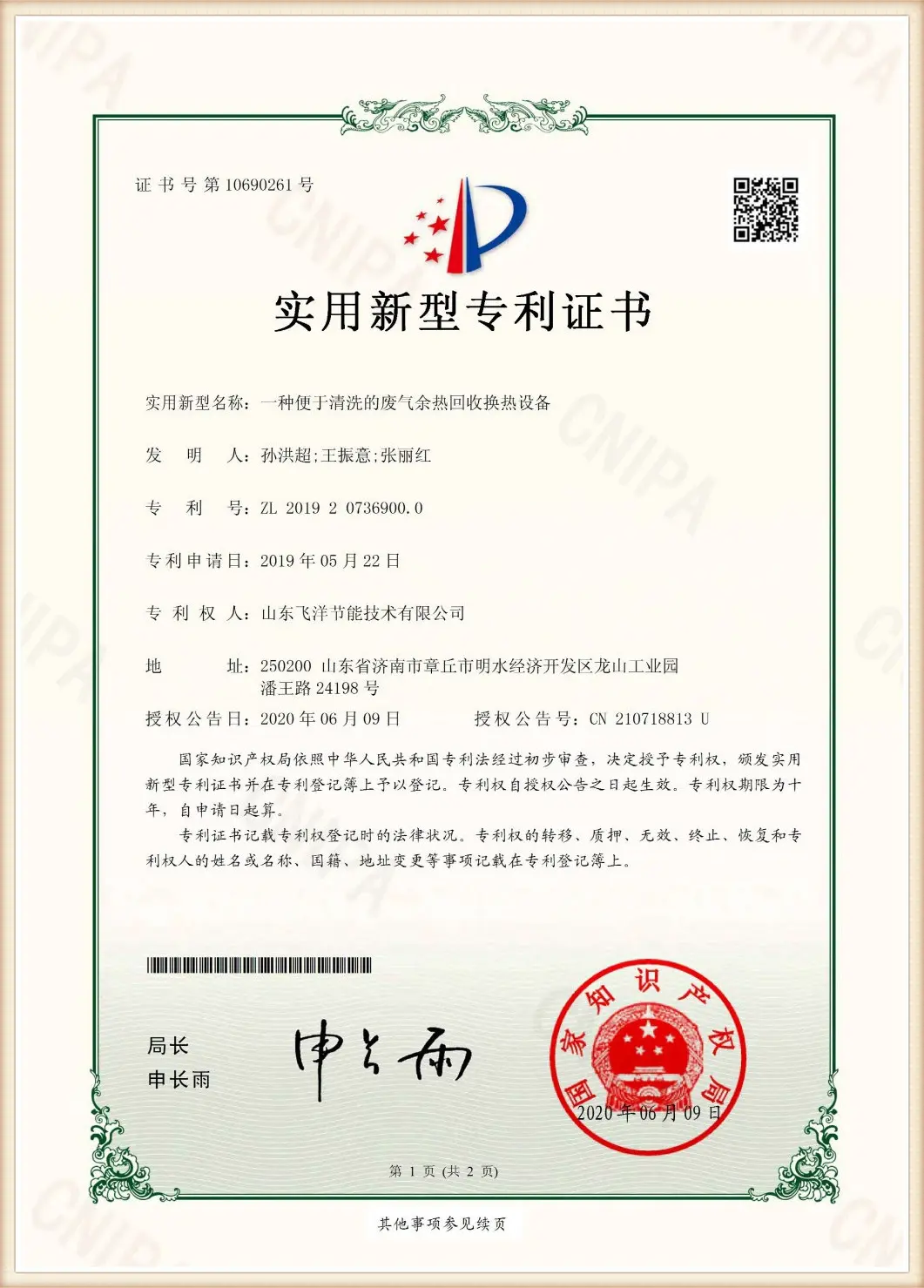
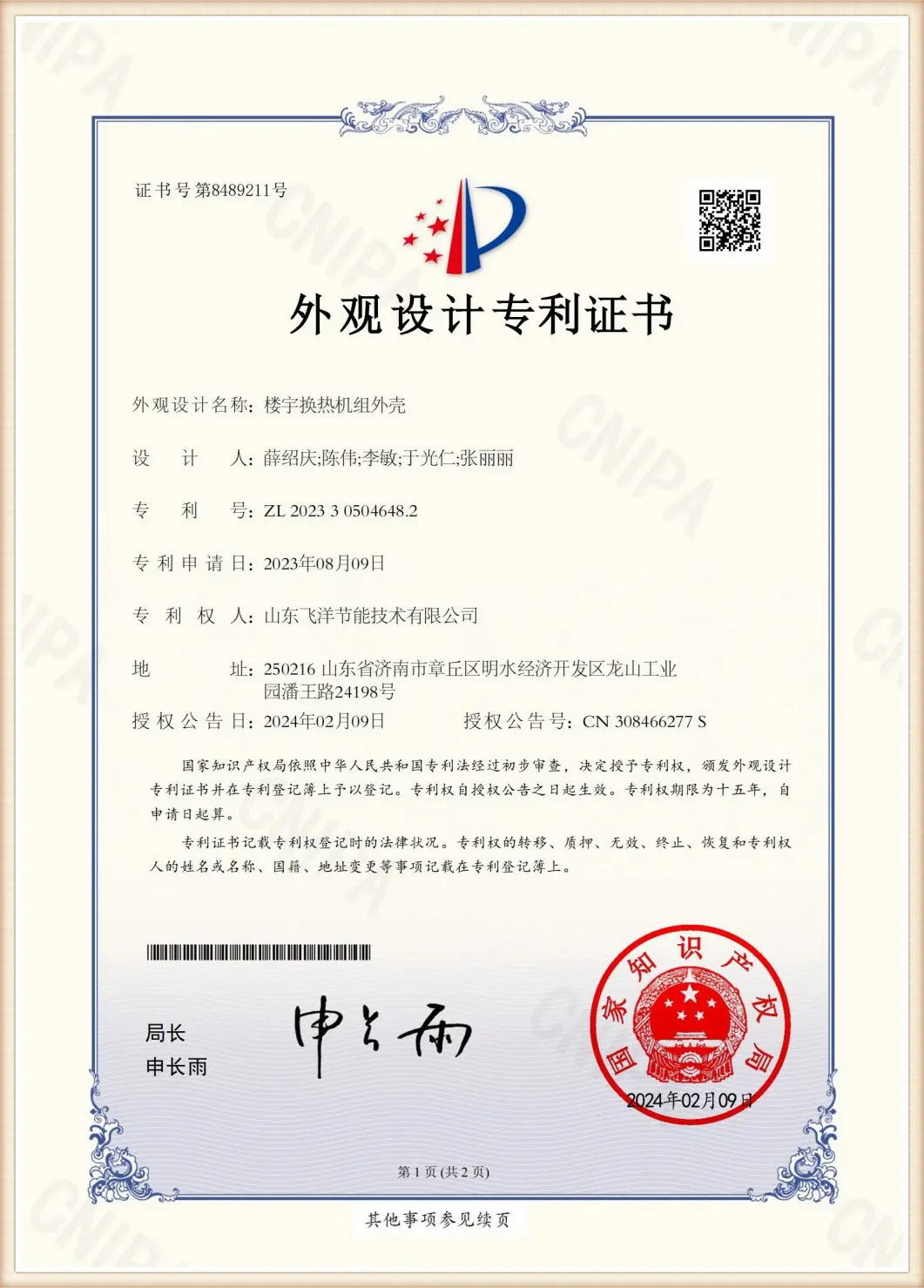
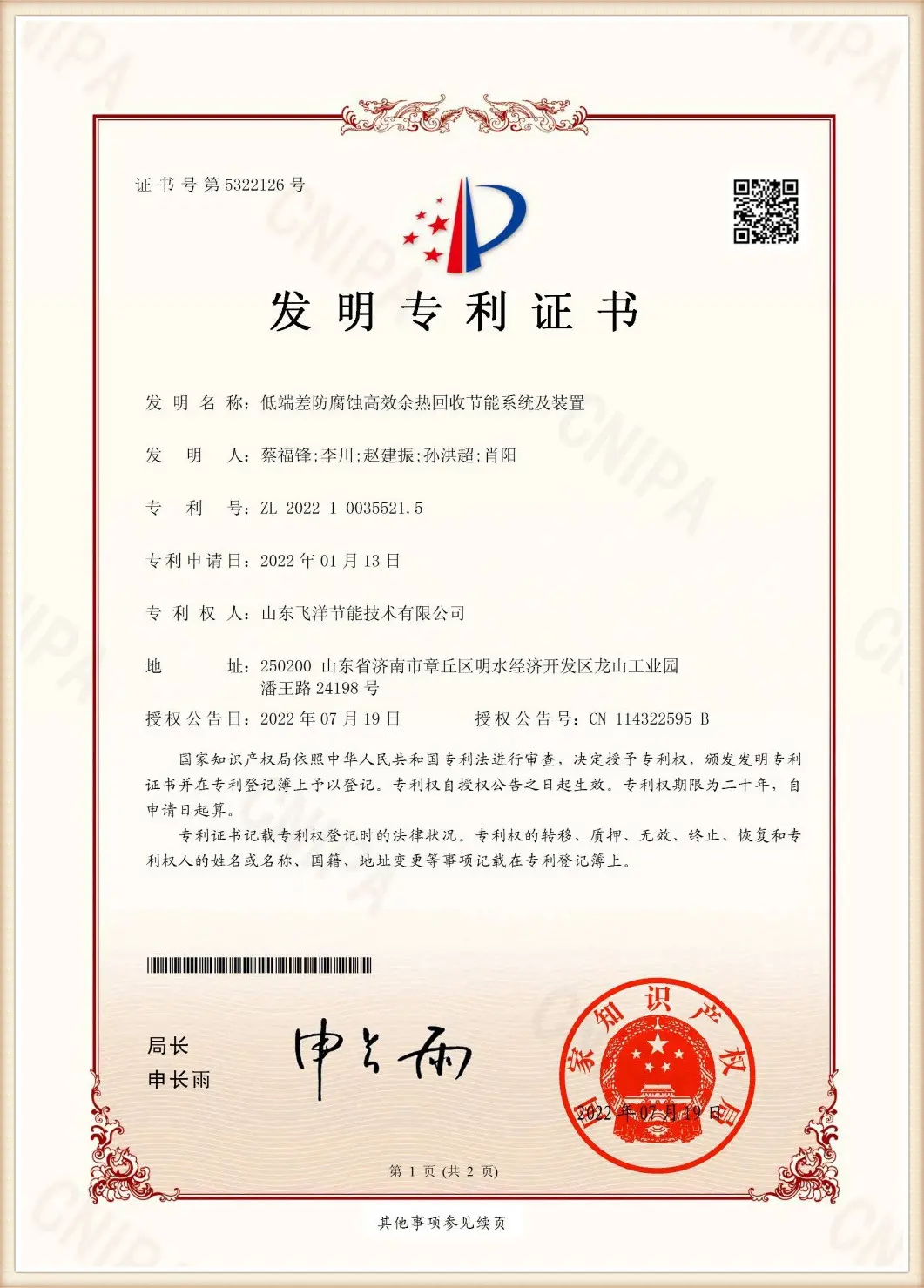
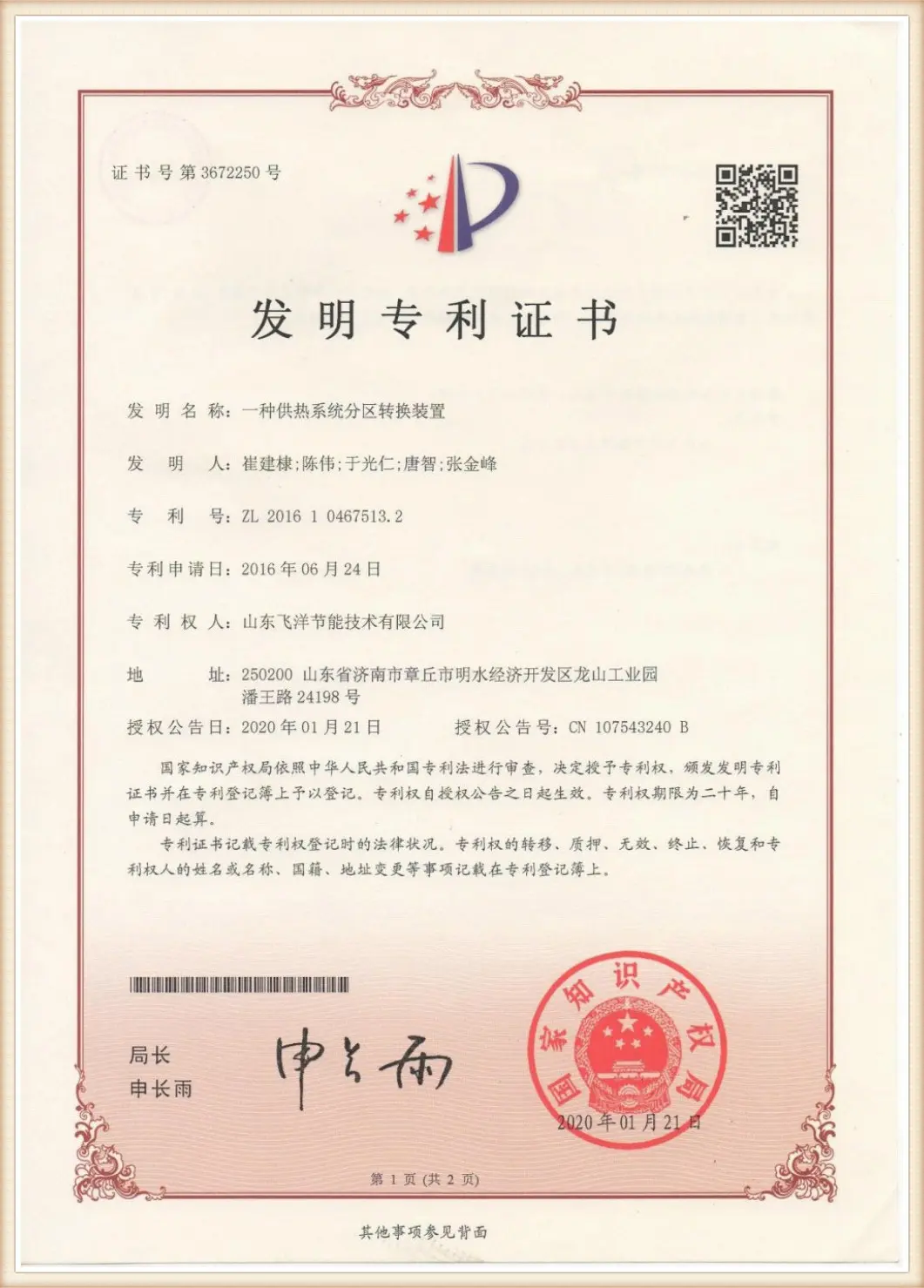
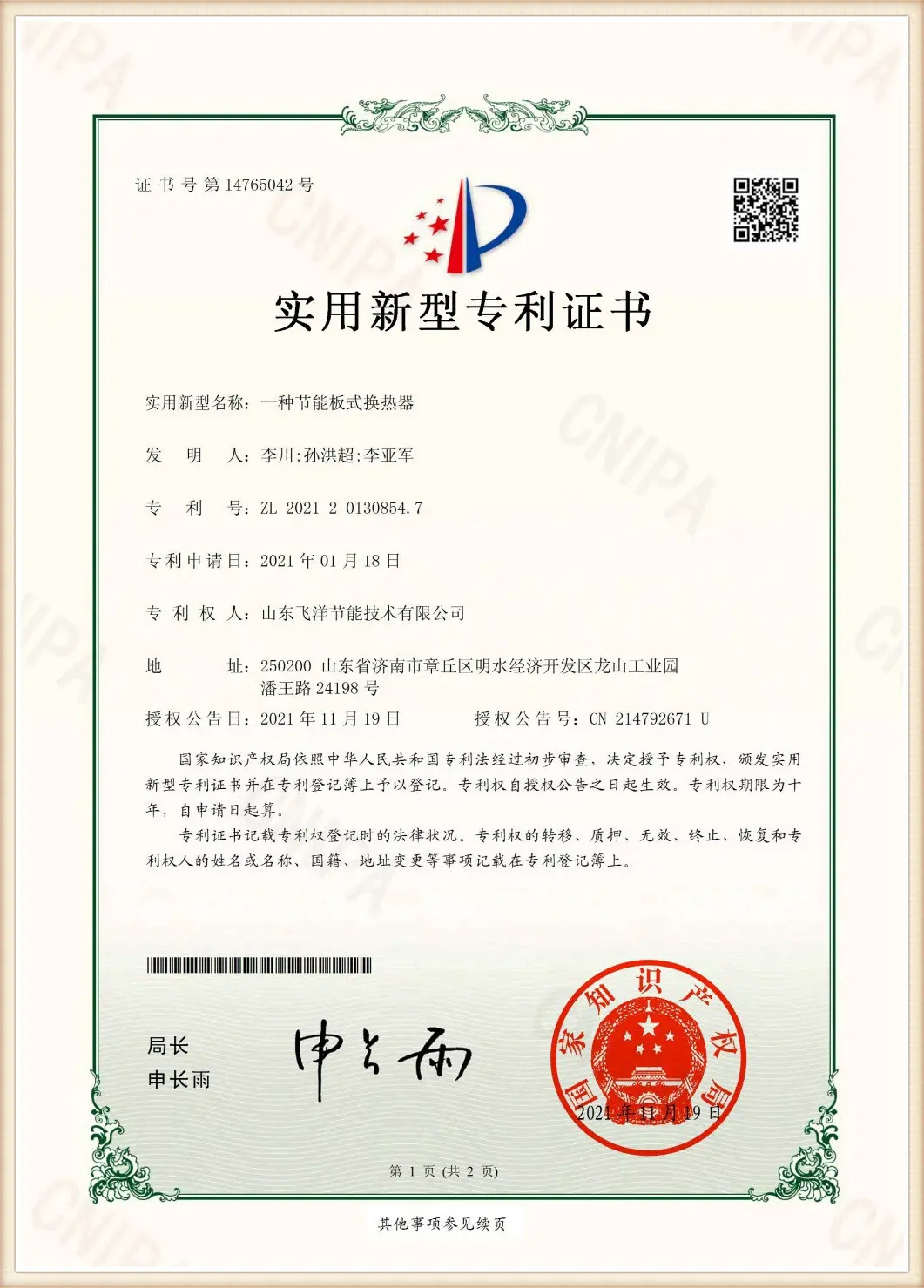


Detailed technical answers to common queries from procurement managers and thermal system engineers.
The chevron angle (corrugation pattern angle relative to the flow direction) defines the thermal performance of a plate. A high chevron angle (e.g., 60°) creates high turbulence, resulting in high heat transfer coefficients ($U$) but also a higher pressure drop ($\Delta P$). A low chevron angle (e.g., 30°) offers lower pressure drop but reduced heat transfer performance. Modern compact heat exchangers mix both plate styles in a single bundle to match specific thermal and hydraulic needs.
For general water-to-water applications, 304 or 316L Stainless Steel is standard. For fluids with high chloride content (like seawater), Titanium Grade 1 offers excellent corrosion resistance. For highly aggressive acids, high-temperature caustic solutions, or organic chemicals, specialized materials such as Hastelloy C-276, Nickel 200, or copper-nickel alloys are used.
Standard configurations (such as standard size gasketed plate exchangers) typically ship in 2 to 4 weeks. Fully customized pressure vessels that require ASME certification, non-destructive testing (NDT), or complex metallurgy generally have a lead time of 8 to 12 weeks. This includes detailed drawing reviews and material testing phases.
All Flotte units comply with international pressure vessel guidelines, including the ASME Section VIII Division 1 and European PED codes. Every unit undergoes strict hydrostatic pressure testing at 1.3 to 1.5 times the design working pressure. We document these tests with certified records to ensure safety under thermal cycles and system pressure spikes.
For gasketed plate units, our removable plate designs allow for quick mechanical cleaning by loosening the compression bolts. For closed or welded systems, Clean-in-Place (CIP) systems flush scaling removal chemicals through the unit. Our patented scale-removal systems help mitigate scale buildup, extending the intervals between manual cleanings.
Yes. Our smart heat exchange units and unit balance valves include integrated sensors and controllers. These components support standard industrial communication protocols, such as Modbus RTU/TCP, BACnet, and Profibus. This allows operators to easily connect them to existing SCADA or Distributed Control Systems (DCS).
Complete your design requirements with our advanced evaporative systems, modular heat exchangers, and shell & tube configurations.
 Flotte Energy