Explore our engineering-grade heat transfer solutions designed to meet high efficiency and performance thresholds.
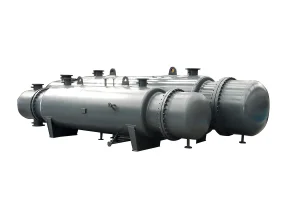
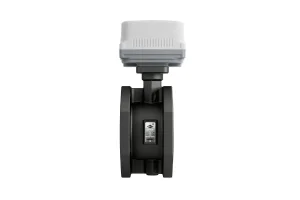
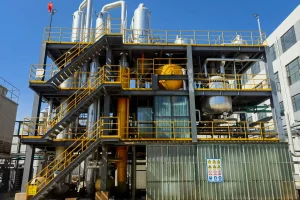
Flotte Energy Saving Company, established in 2013 with a registered capital of 101 million yuan, trace its lineage to the pioneering Flotte Thermal Engineering founded back in 1995. Built on three decades of robust technical research, Flotte is committed to delivering smart water systems, next-generation HVAC solutions, and high-efficiency water treatment equipment.
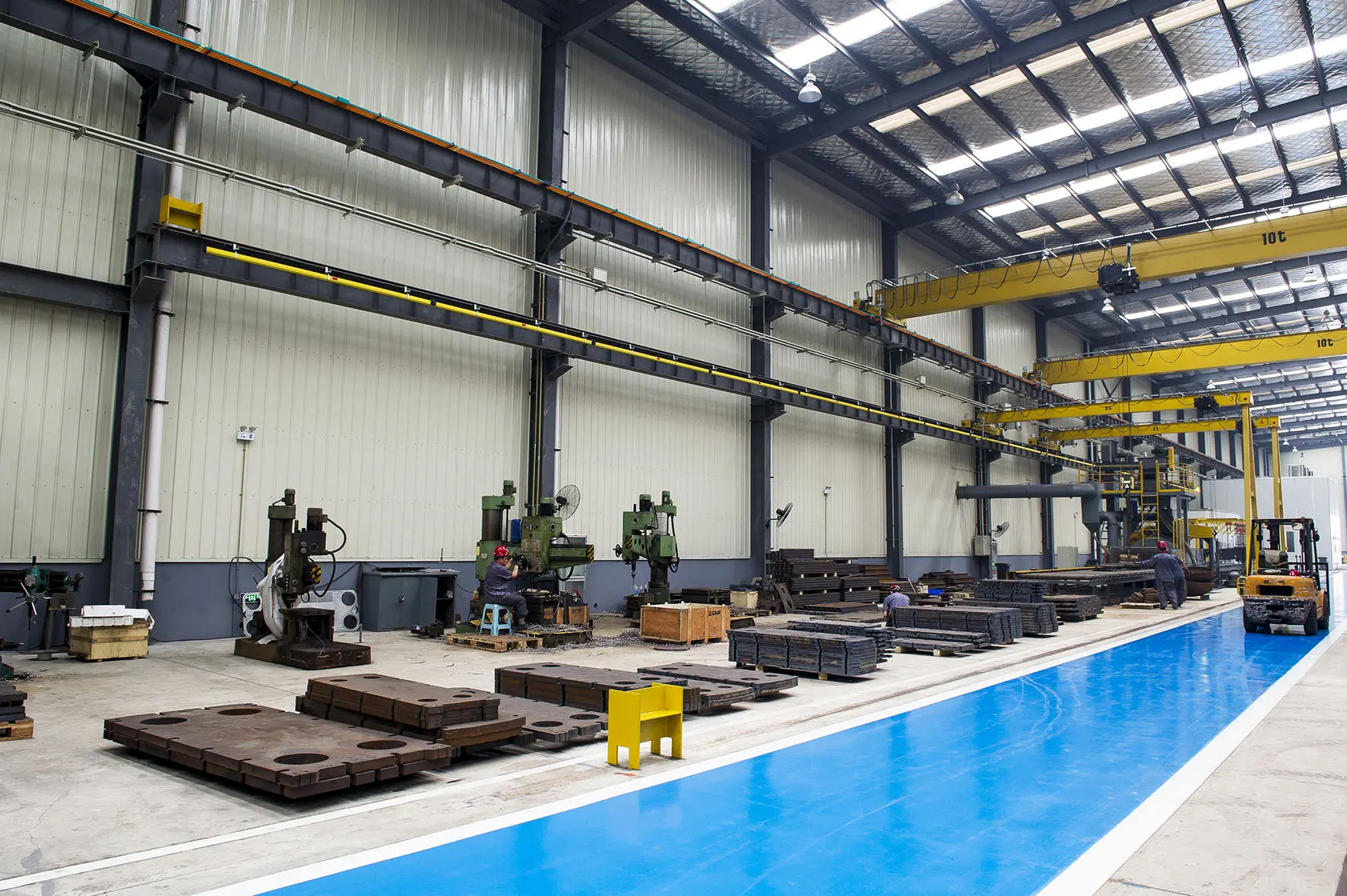
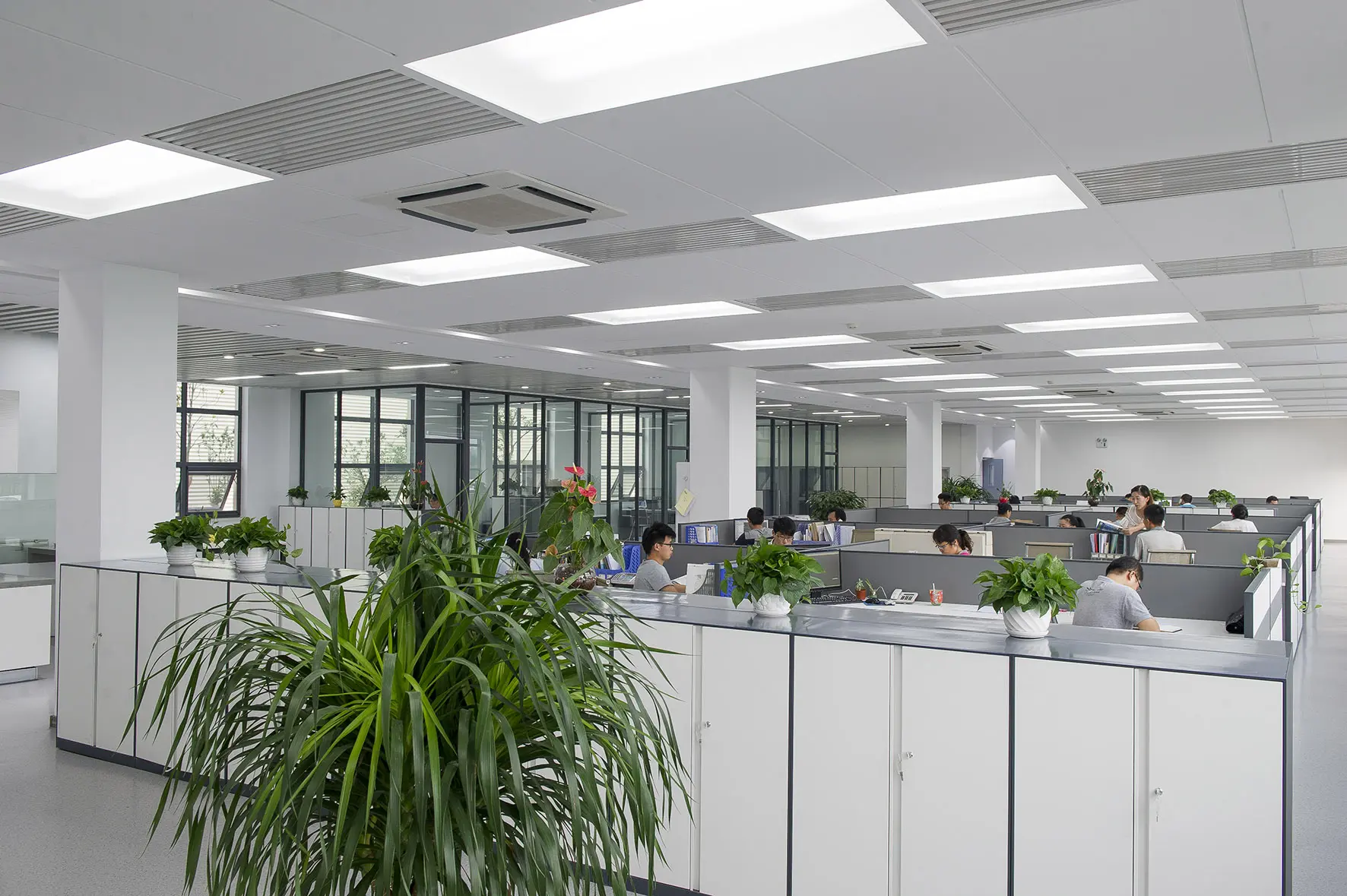
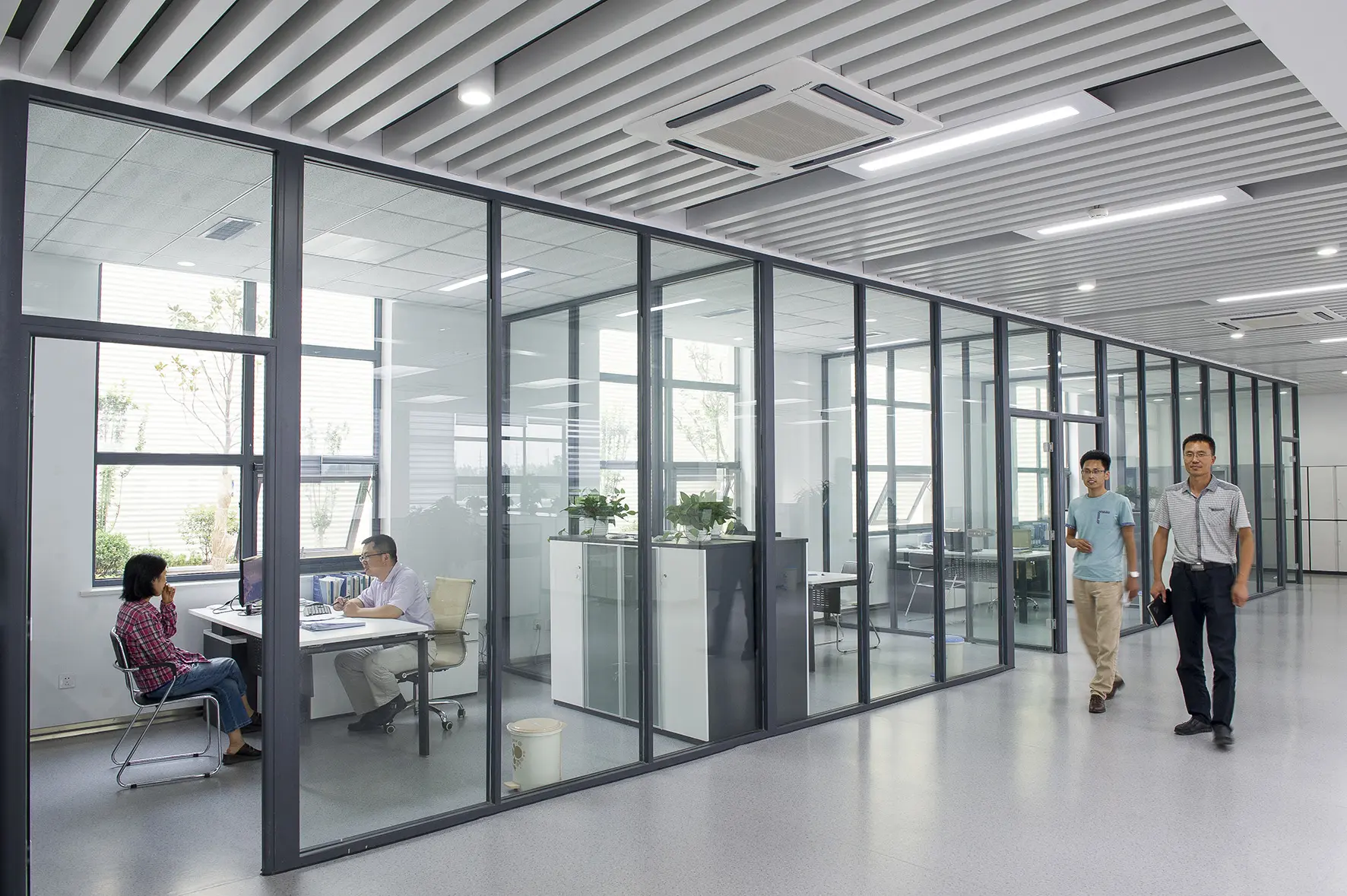
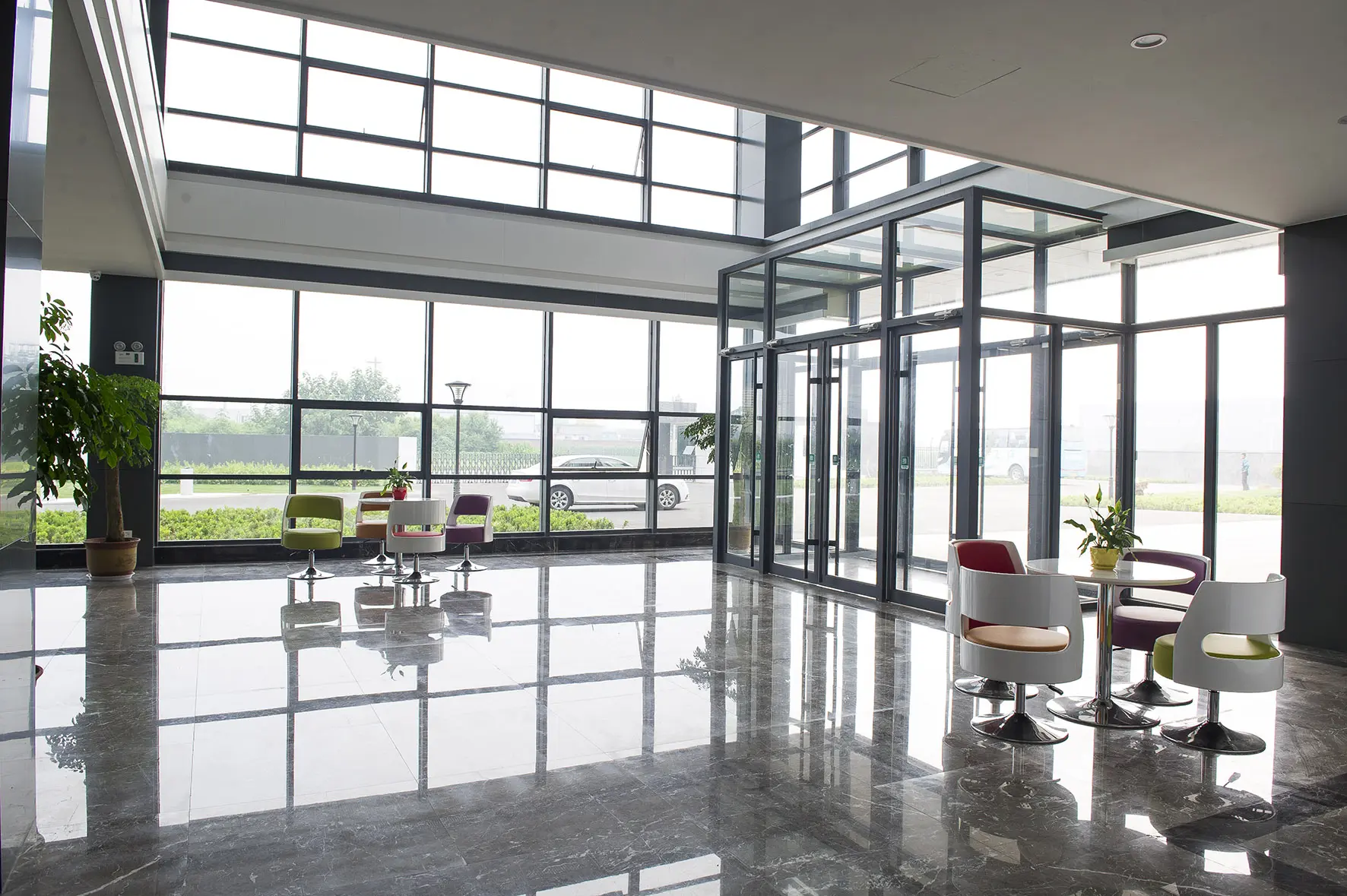
We operate from our state-of-the-art 70,000 square meter plant, supported by over 300 highly trained employees. Our operational system integrates cutting-edge engineering processes to supply roughly 4,500 thermal control and water systems annually, helping worldwide enterprises transition to low-carbon industrial models.
An in-depth whitepaper analysis on modern thermal transfer technologies and industrial applications.
Global climate policies and strict ESG indicators force energy-intensive sectors (chemical processing, steel, food and beverage, municipal heating) to minimize carbon footprints. Standard thermal infrastructure must be upgraded with plate heat exchangers to recover lost heat and minimize operating costs.
Modern cities are adopting high-density district heating and cooling networks. Efficient networks utilize thermal exchange units to separate high-pressure municipal loops from regional consumer interfaces, maintaining consistent delivery pressure and optimal fluid temperature across building arrays.
Processing aggressive chemicals, high-viscosity food liquids, or saline industrial wastewater requires highly resilient materials. Modern heat exchanger mechanisms employ titanium, nickel alloys, and high-performance elastomers to guarantee system integrity in highly challenging operations.
Modern heat exchanger development focuses on maximizing surface heat transfer coefficients while minimizing flow resistance. Key innovations include:
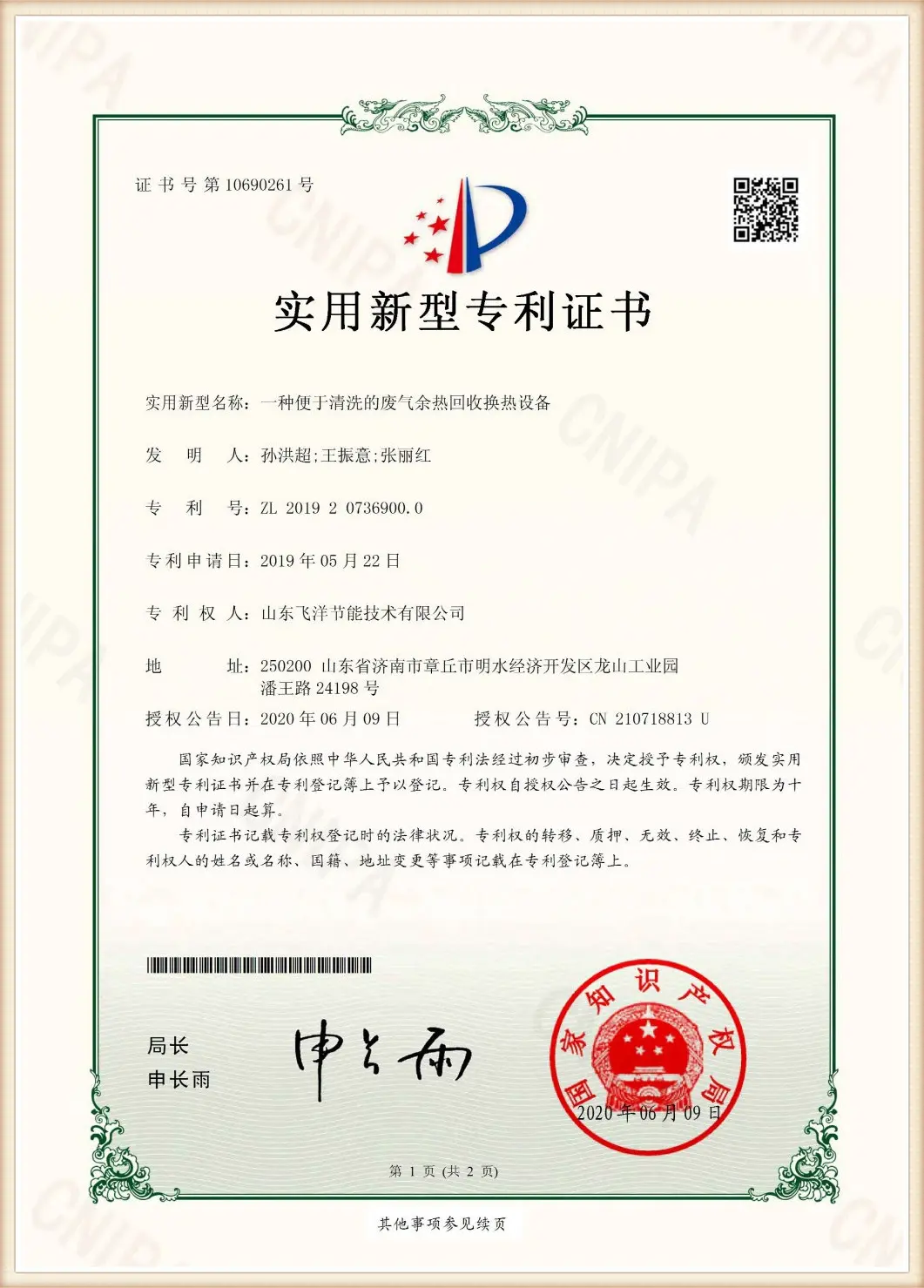
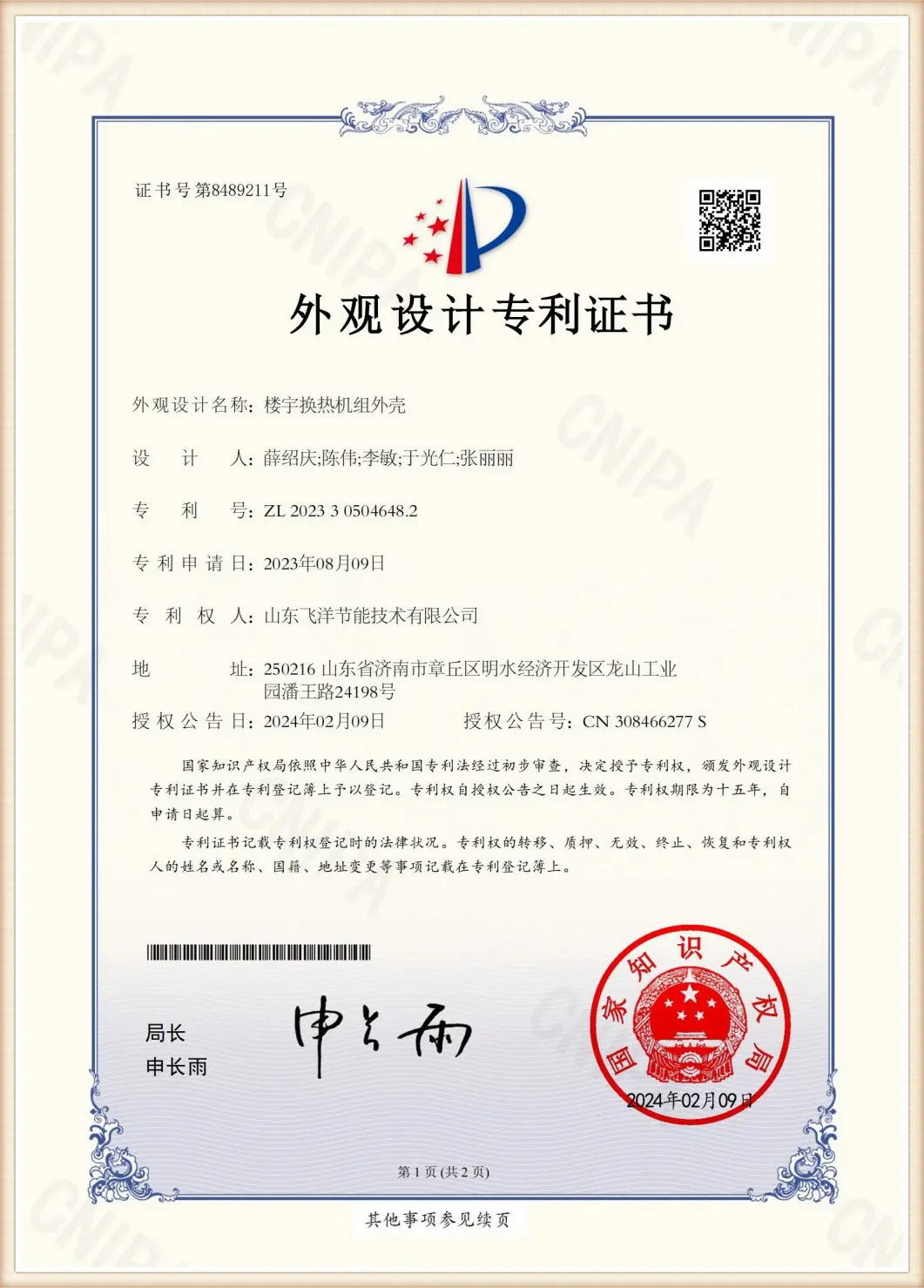
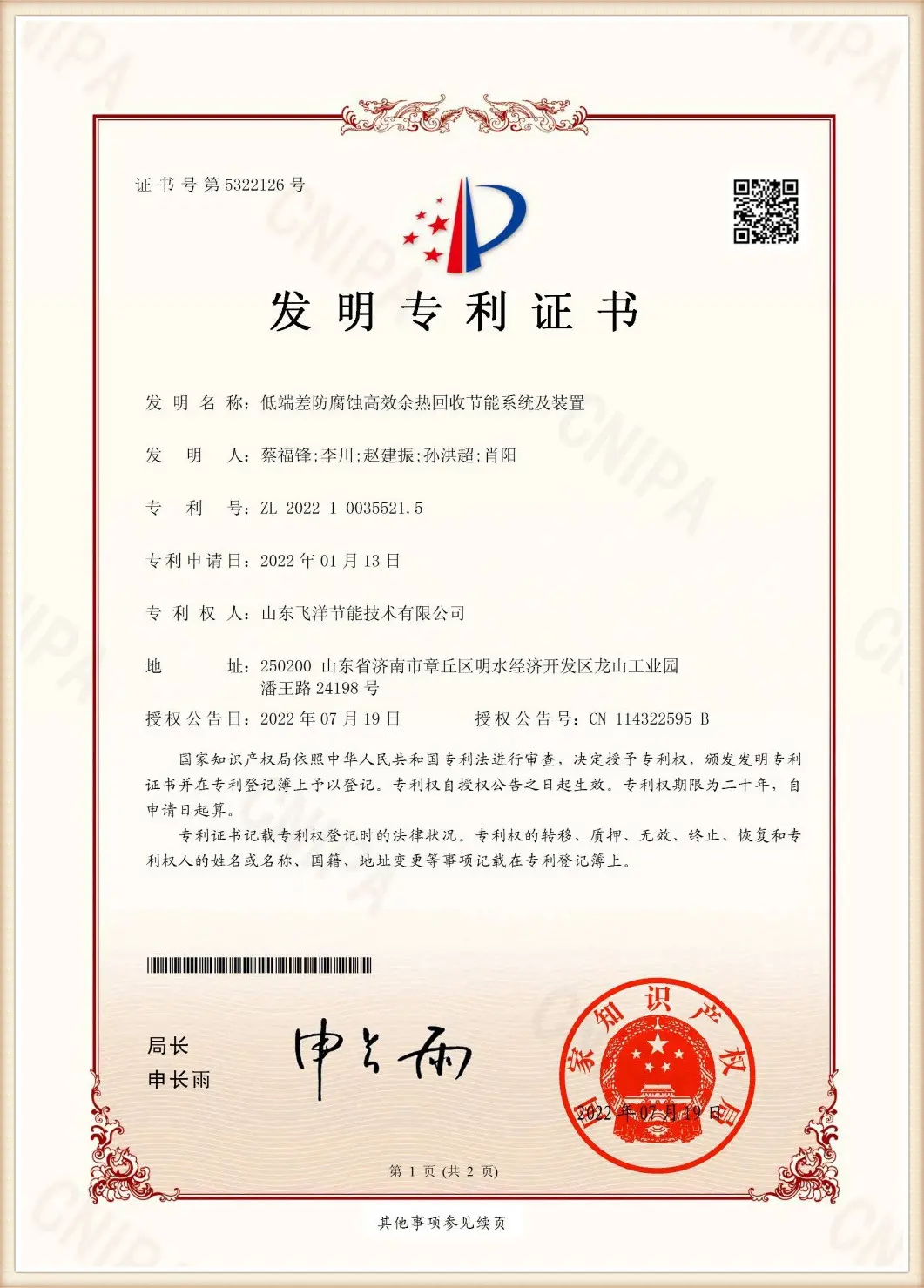
Flotte products comply with major global boiler and pressure vessel requirements (ISO9001, ISO14001, ISO45001, and domestic safety registries).
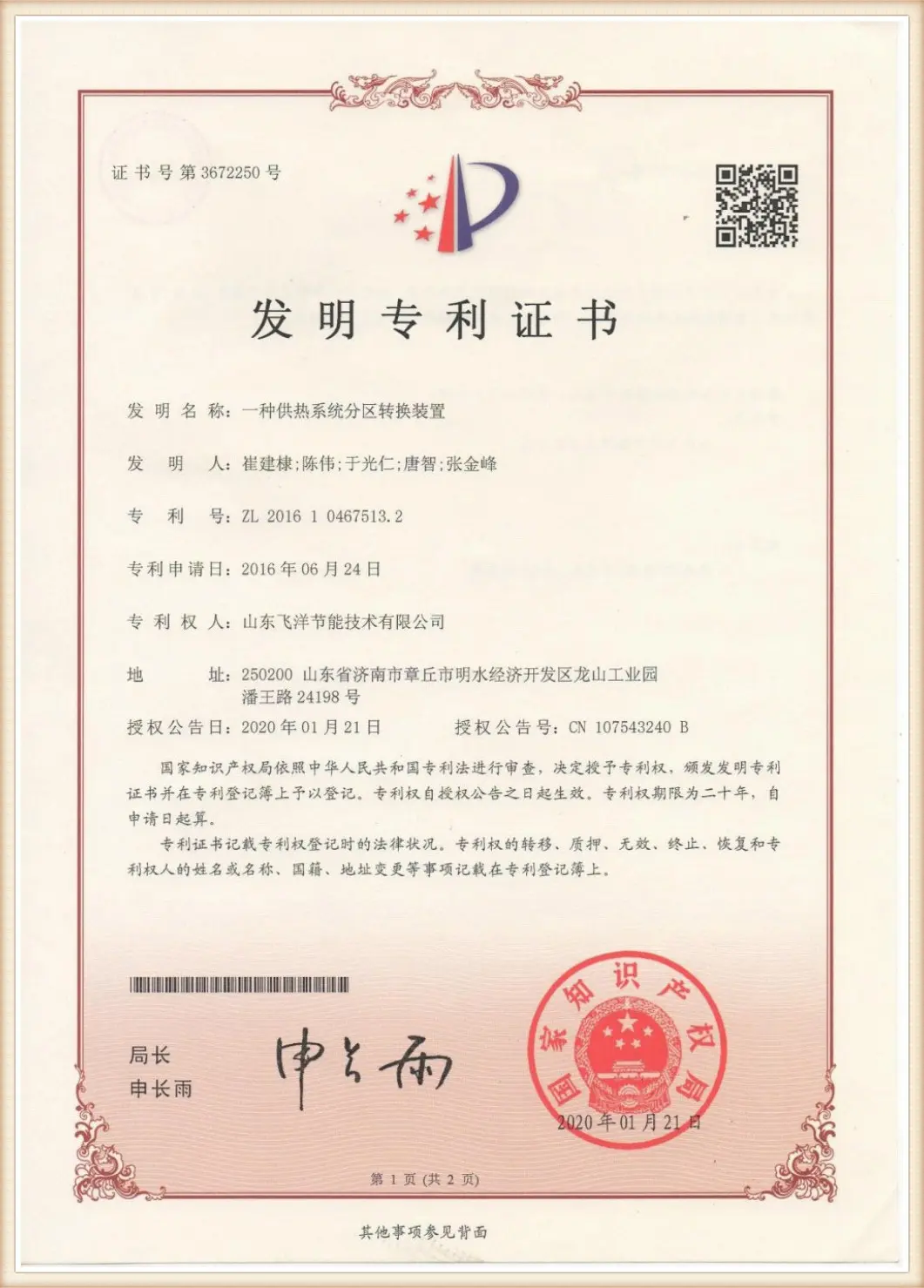
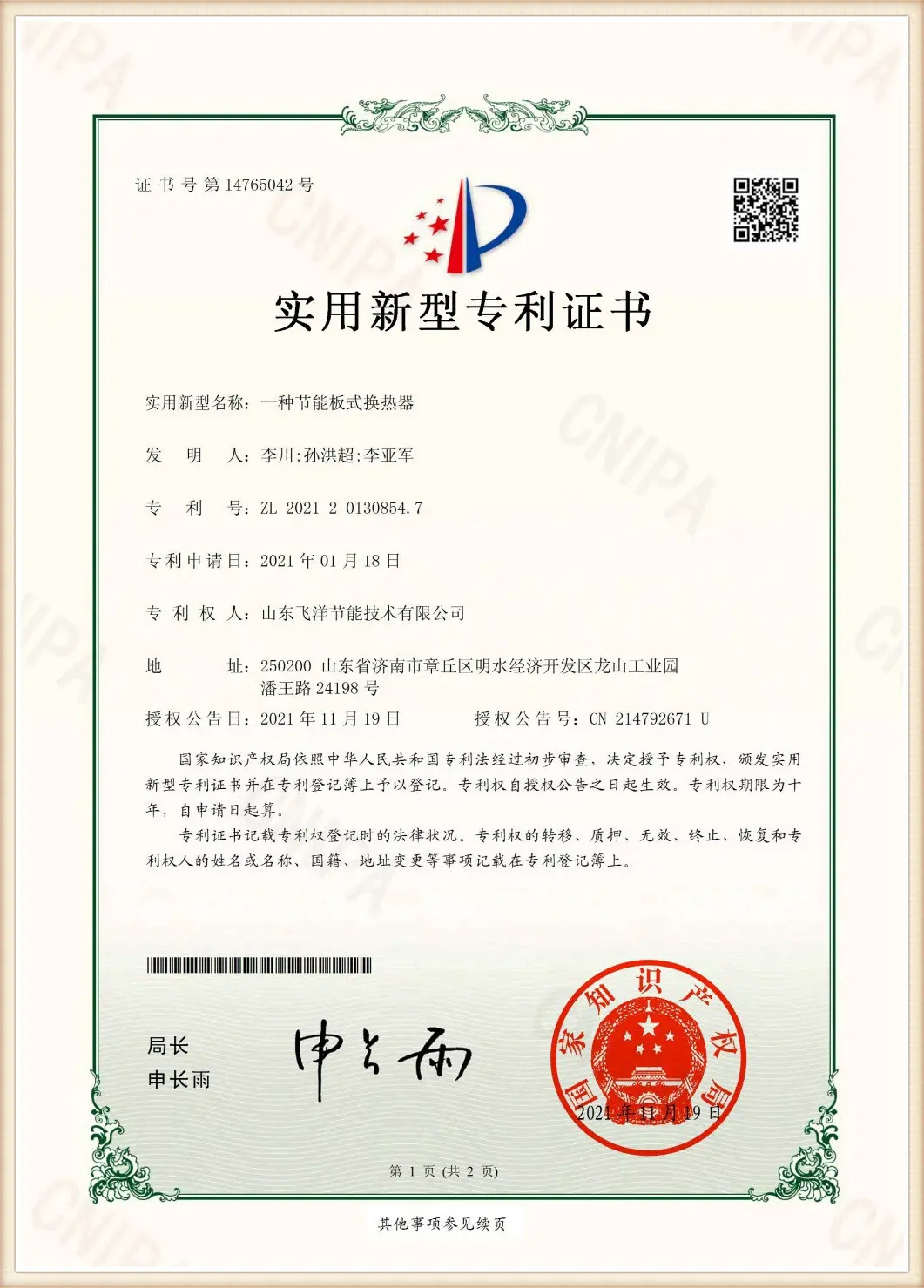
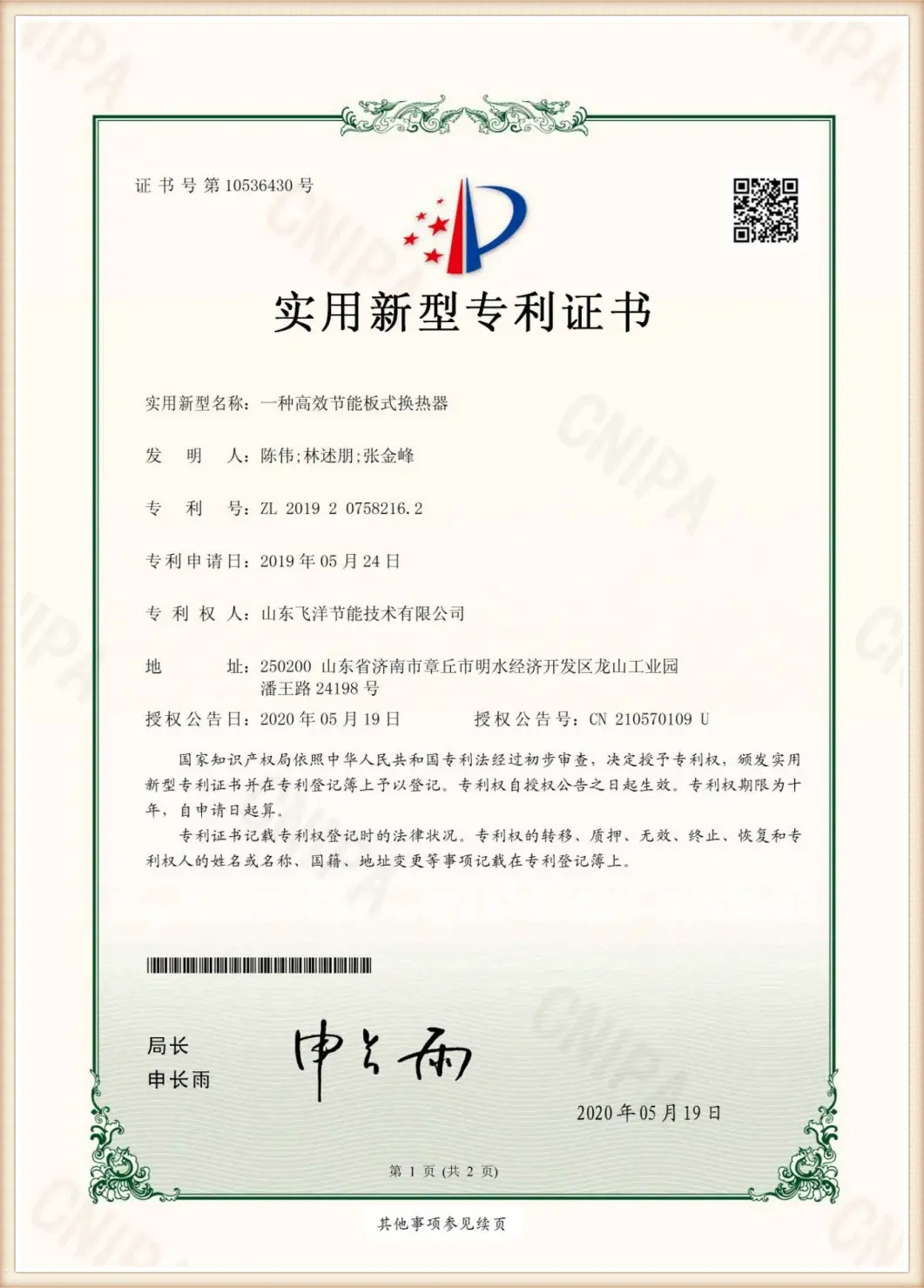
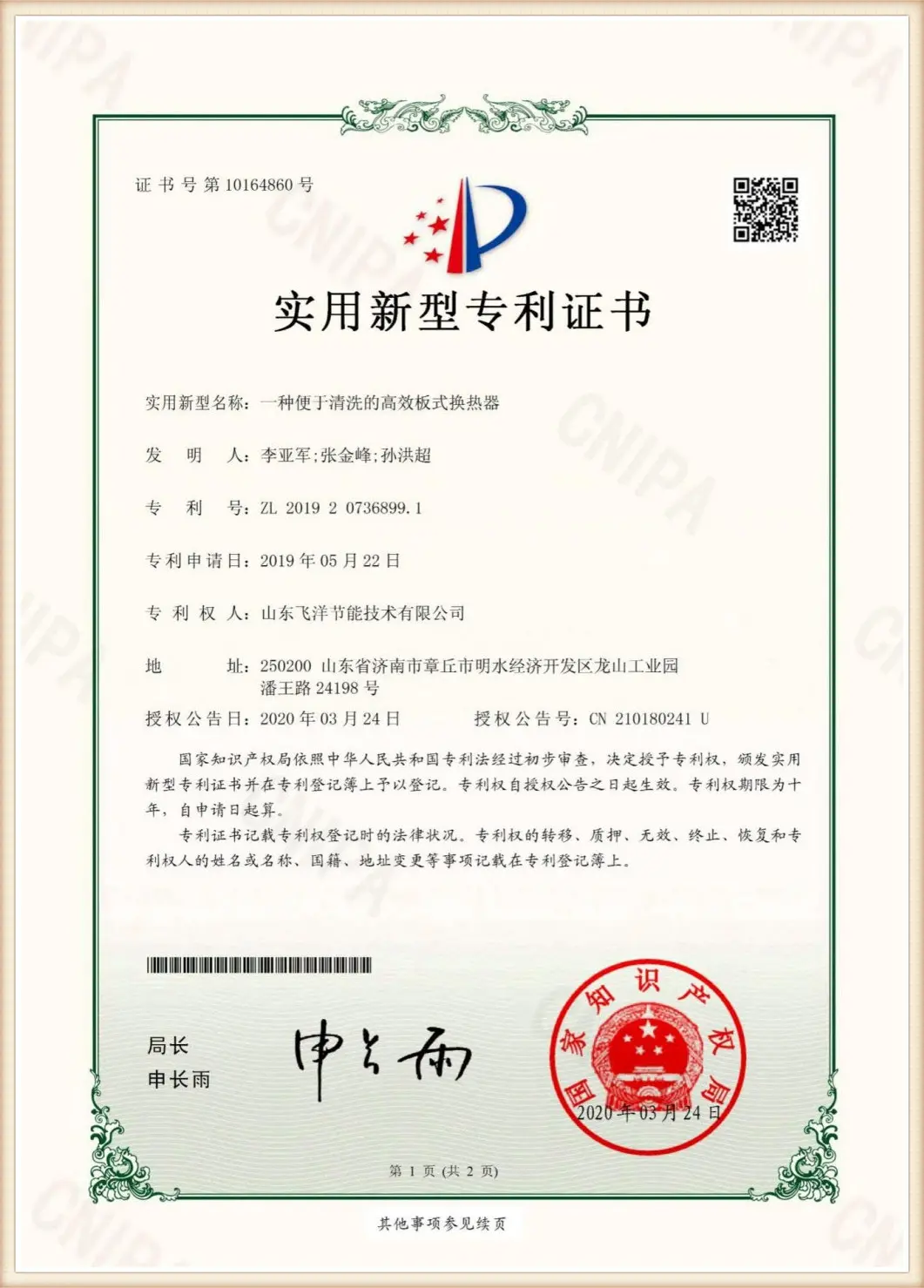
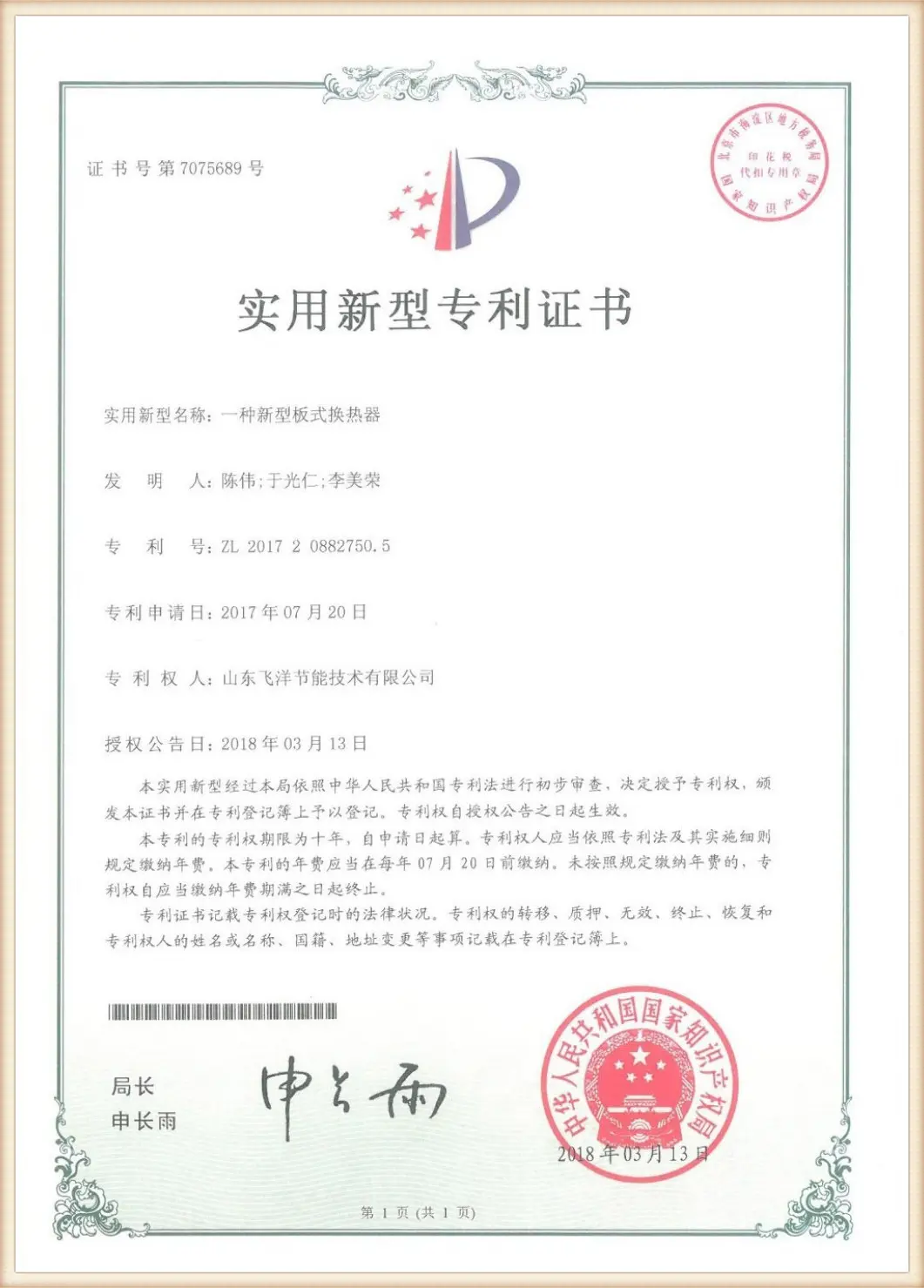
How Flotte integrates precision manufacturing and raw material logistics to deliver high-quality components globally.
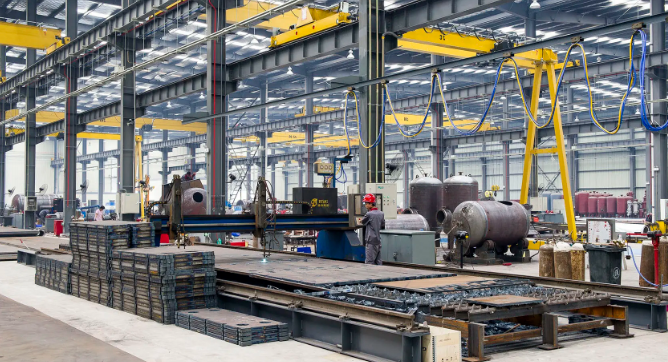
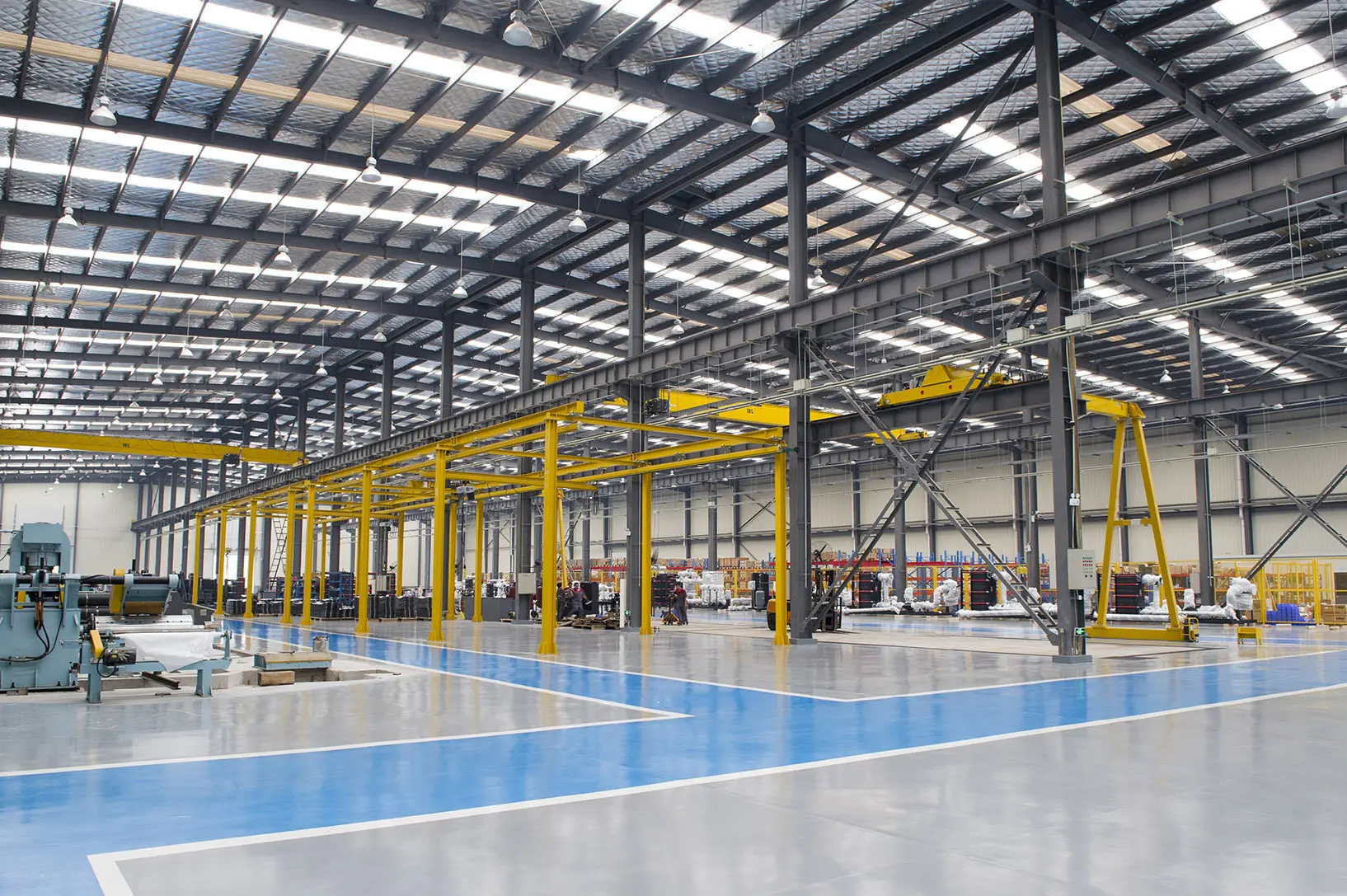
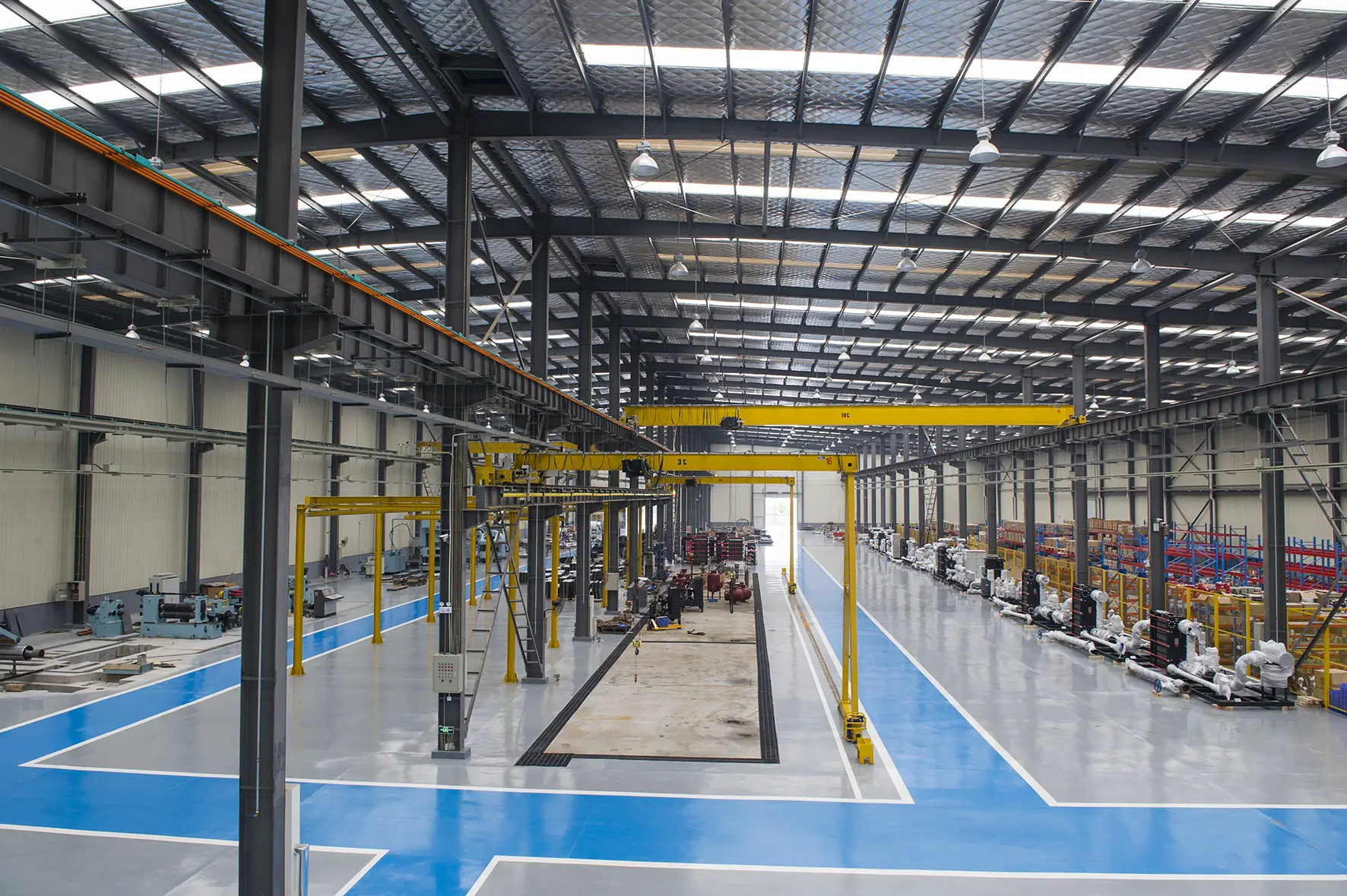
In high-performance industrial supply chains, reliability is built on consistent execution. Flotte's Factory 4.0 model leverages advanced automated production to control every stage of manufacturing—from plate stamping to automated testing.
By using direct-sourcing agreements for key materials (including high-grade stainless steel AISI 304, AISI 316L, and titanium alloys), we protect our clients against global raw material price swings and guarantee consistent material chemistry. Our production line runs under strict ISO 9001:2015 frameworks, ensuring every completed plate and frame is tested under pressure levels exceeding standard operational parameters.
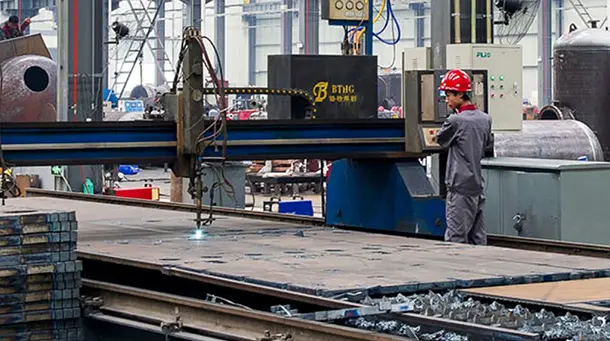
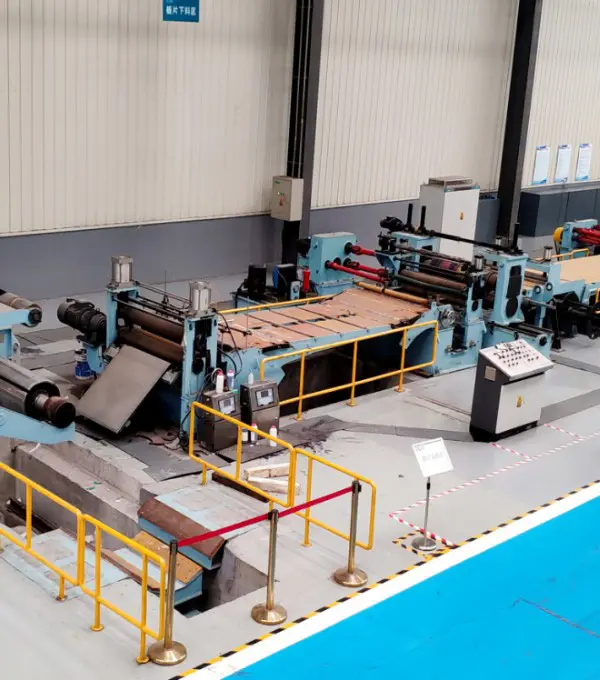
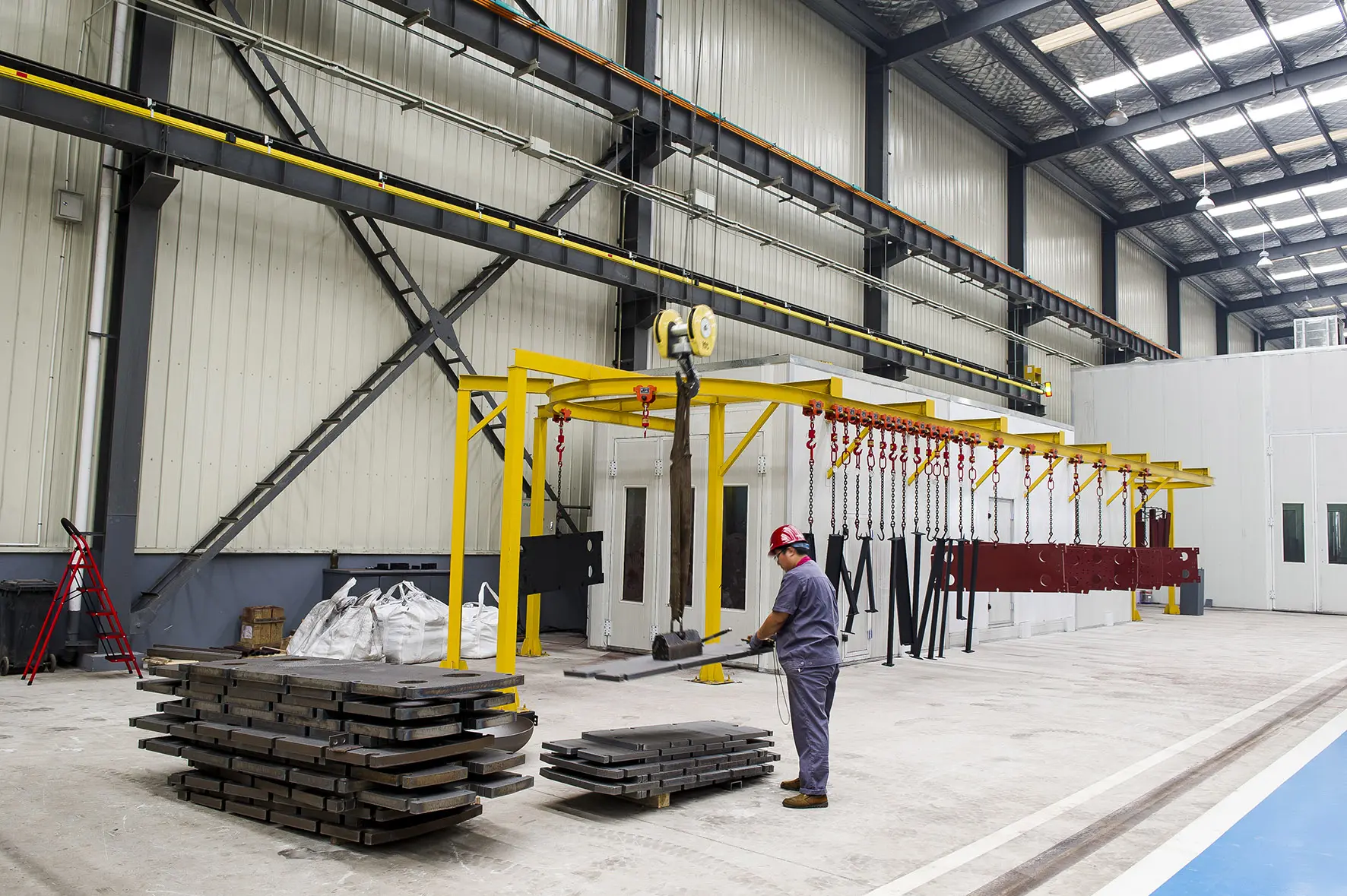
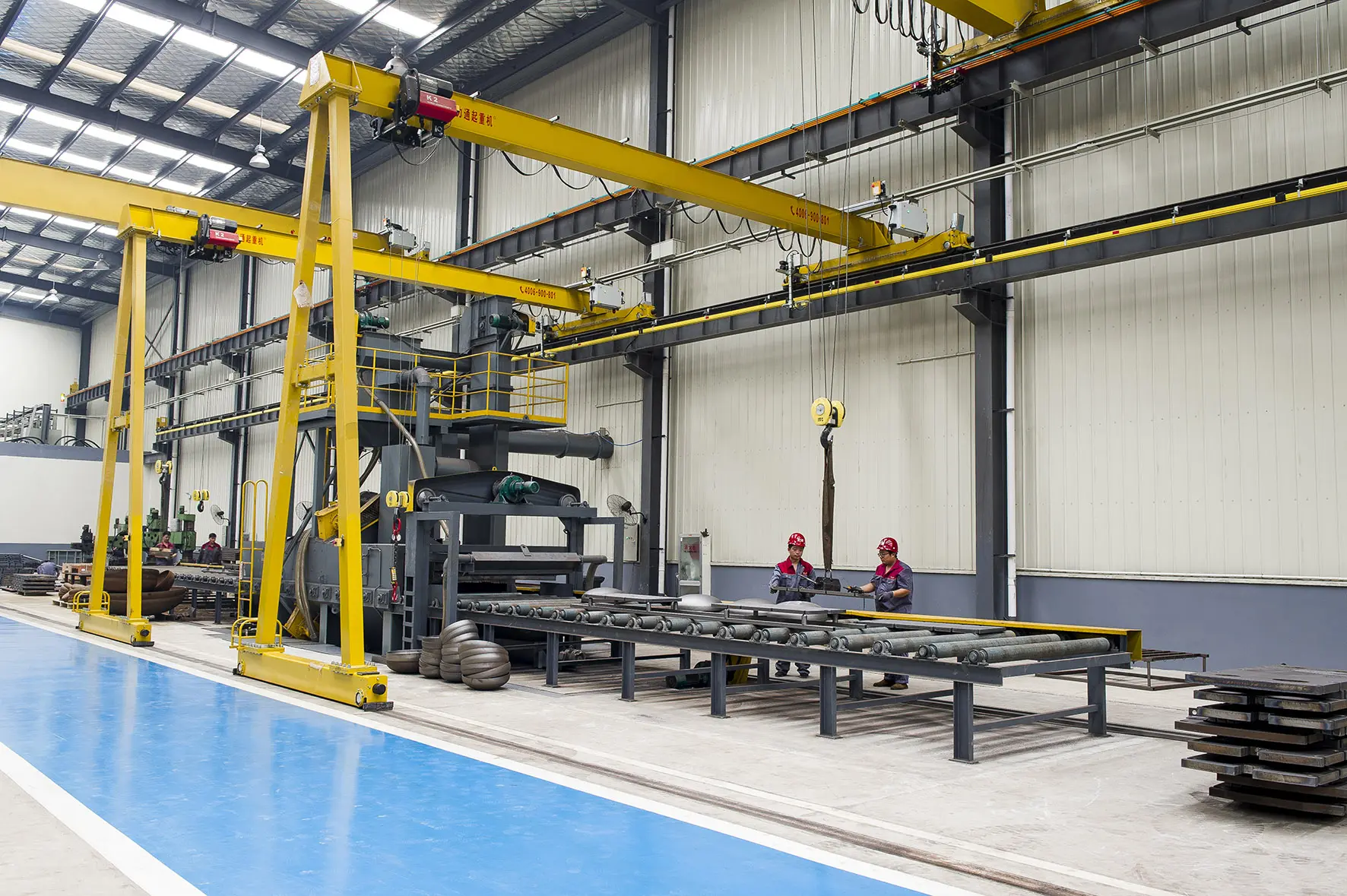
Heavy-duty CNC cutting systems process thick structural carbon steel plates to form strong frame clamping plates.
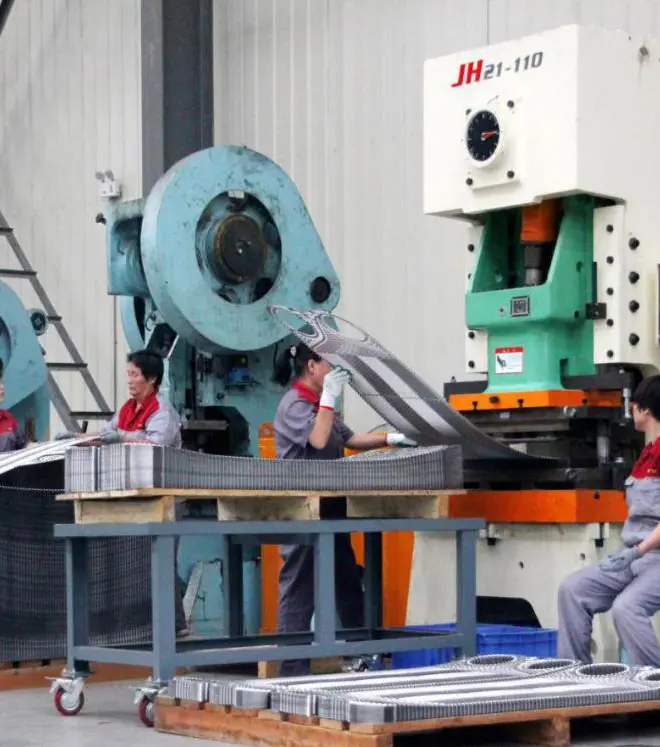
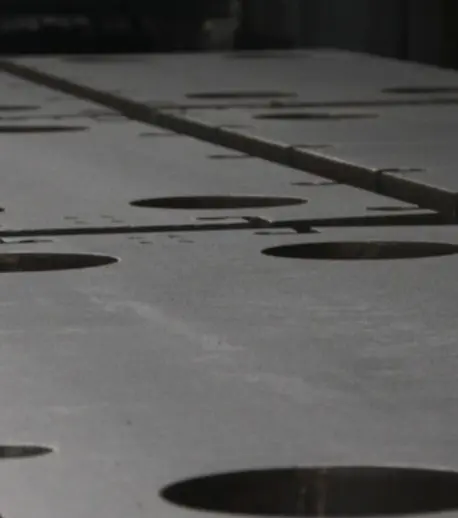
Precise CNC equipment stamps port holes in stainless steel or titanium sheets to ensure perfect seal alignment.
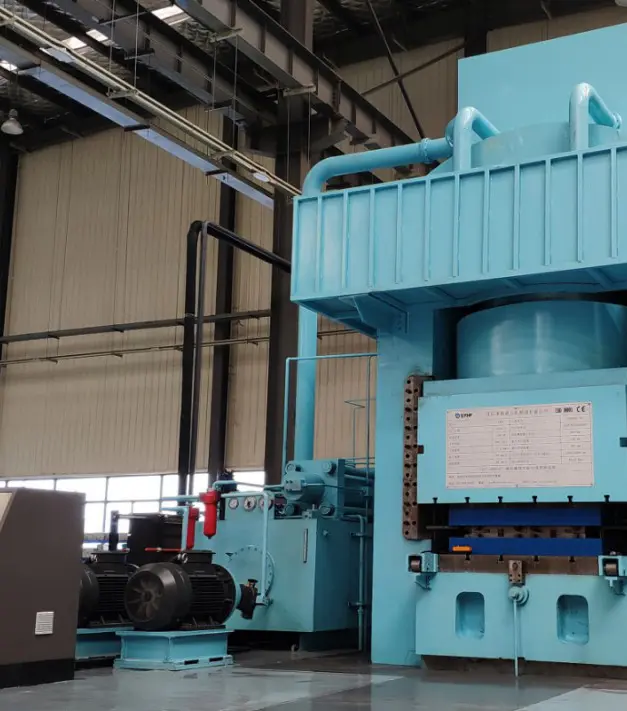
Heavy hydraulic presses shape plates in a single run, creating precise chevron patterns for efficient flow turbulence.
Specialized treatments strengthen structural joints, improving plate fatigue resistance and pressure tolerance.
Laser edge trimming finishes the plates before automated systems apply matrix codes for full lifetime traceability.
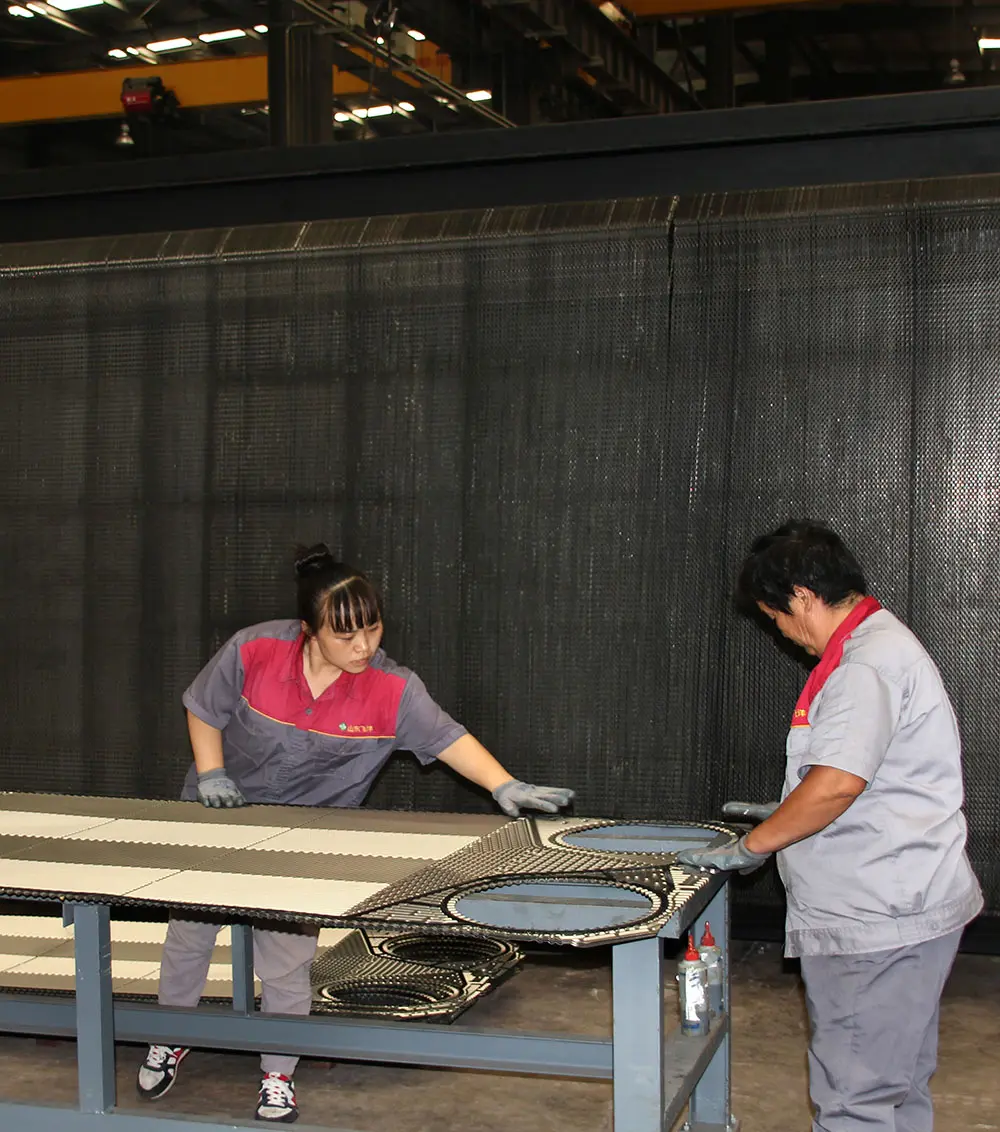
EPDM, NBR, or Viton gaskets are precision glued or clipped to plates, ensuring strong sealing against fluid cross-contamination.
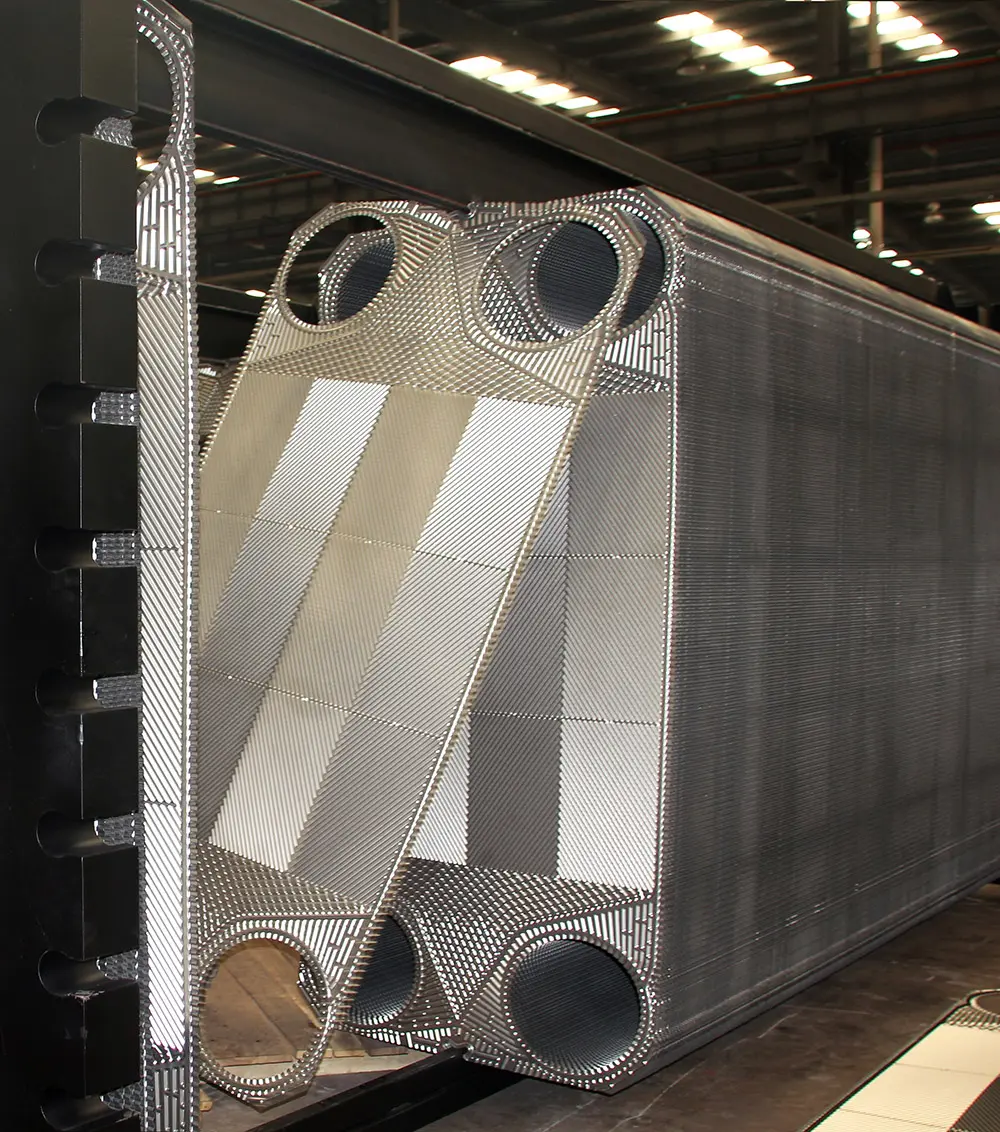
Assembling plate packs, guide bars, and support columns, followed by uniform compression to nominal assembly dimensions.
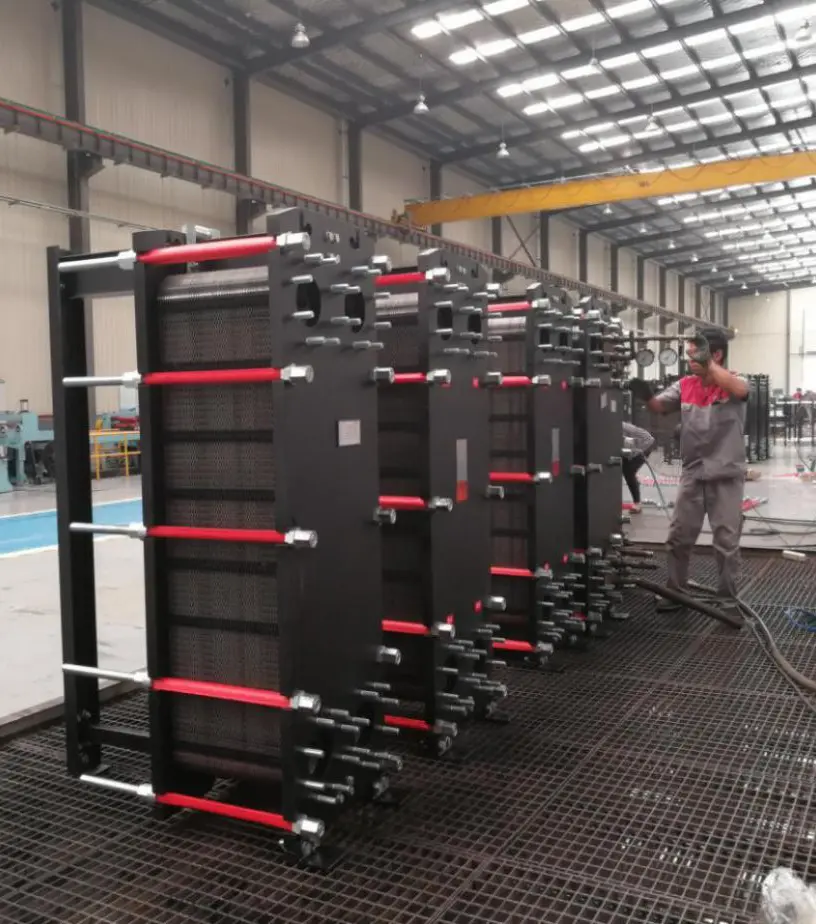
Every unit undergoes strict hydrostatic testing at 1.25x to 1.5x design pressure to confirm seal and material integrity.
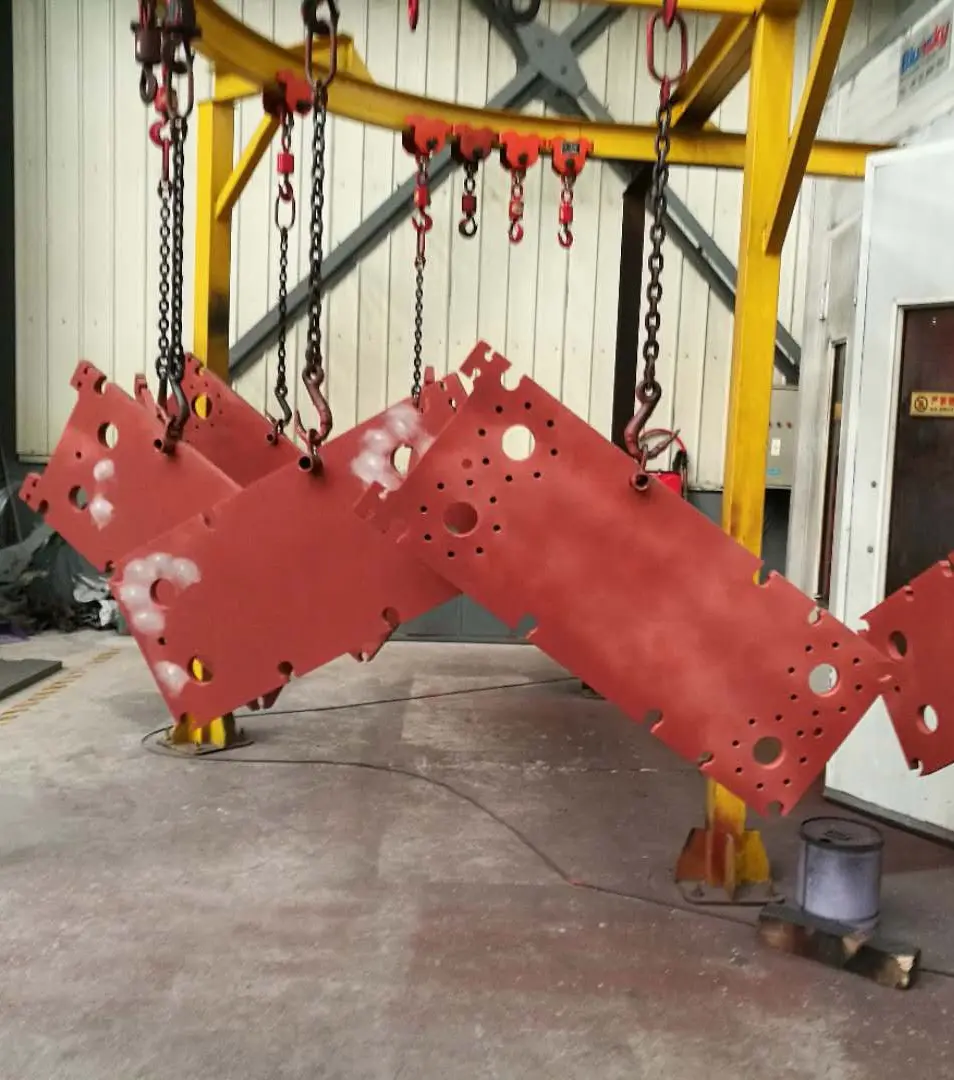
Anti-corrosion coatings are applied to the frames to protect the system in humid or challenging industrial environments.
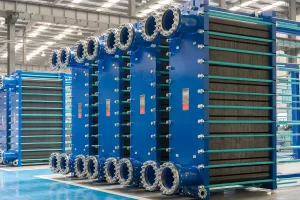
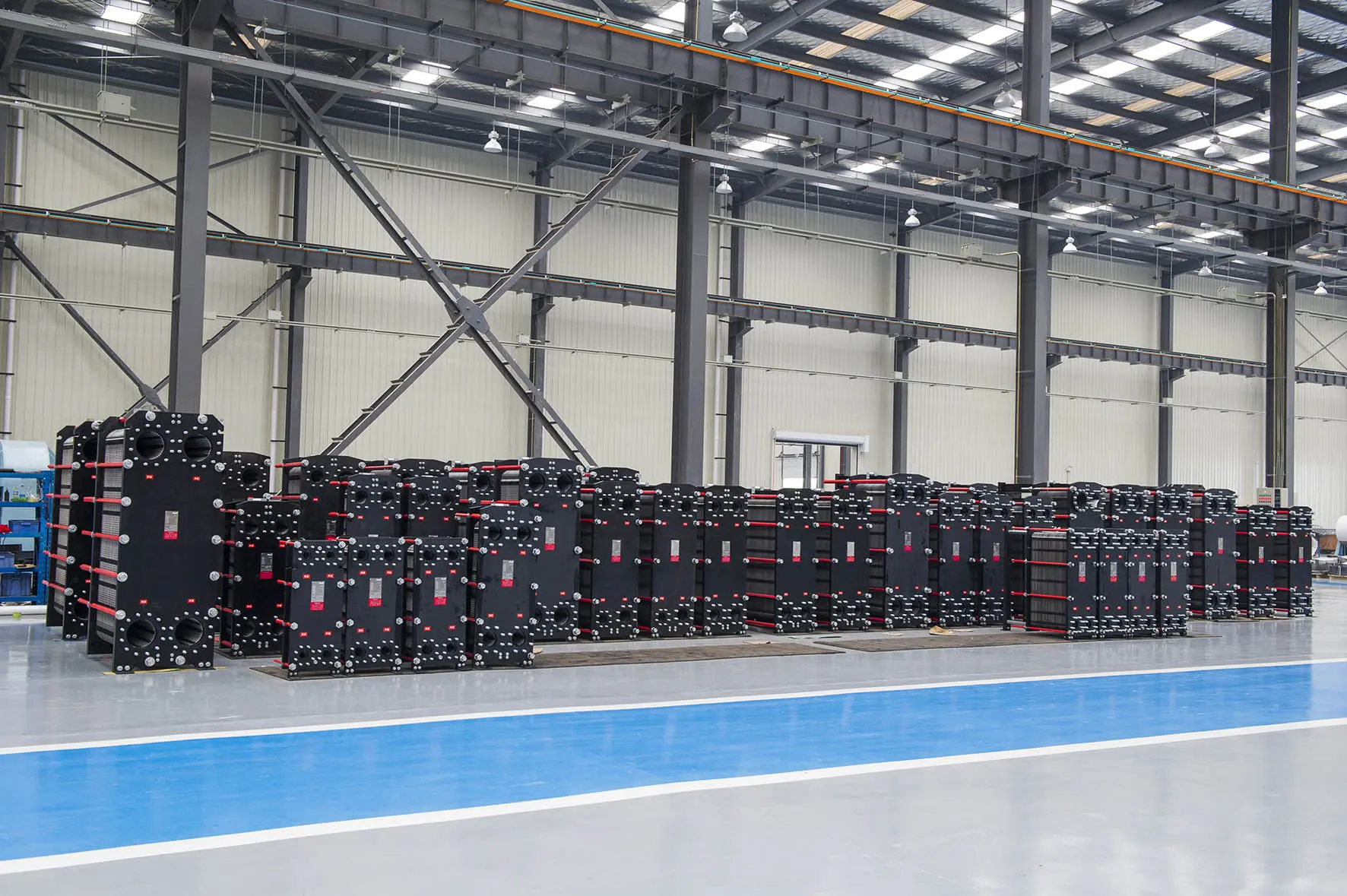
Inside the modern facility of Flotte, where engineering expertise meets scalable industrial production.
How we tailor heat exchanger setups for specific climates, fluid profiles, and operating pressures.
In cold regions, centralized municipal district heating serves as essential infrastructure. Detachable plate heat exchangers act as isolation barriers between high-temperature primary energy networks and secondary residential piping. By maintaining accurate LMTD (Log Mean Temperature Difference) limits, these configurations transfer energy with minimal heat loss, protecting local loops from high pressure surges.
Processing aggressive fluids requires specialized alloys. Flotte's Multi-Effect Evaporation Systems (MEE) and Membrane Concentration Systems are designed to treat high-salinity industrial wastewater and recovery streams. Using titanium or Hastelloy plates prevents stress corrosion cracking, helping plants meet strict waste-free water recycling mandates.
Modern commercial buildings demand precision temperature control. Integrating secondary network intelligent valves and balance devices with heat exchange setups allows operators to monitor hydraulic pressure dynamically. This prevents uneven heating across different floors and zones, lowering HVAC electrical consumption by up to 22%.
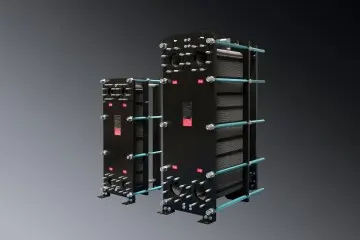
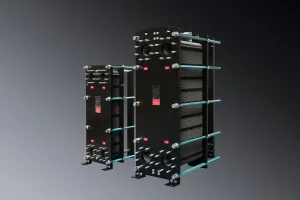
Features compact structures, high heat-transfer coefficients, and modular configurations that allow easy capacity expansion.
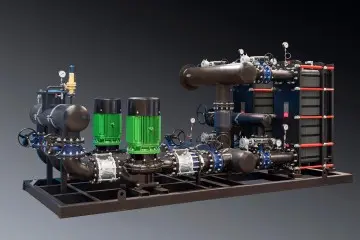
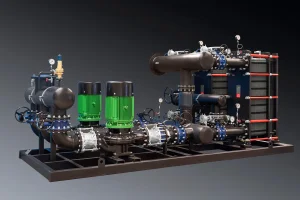
Fully skid-mounted, factory-tested systems containing integrated pumps, smart valves, controllers, and heat exchangers.
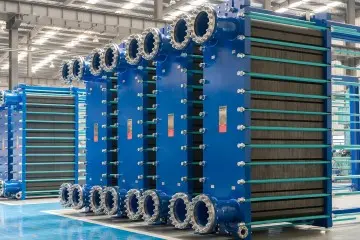
Specifically engineered setups designed to isolate central municipal pipelines from municipal heating distributions.
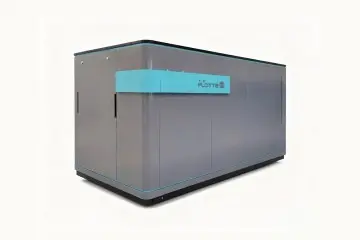
Engineered for high-rise commercial structures requiring stable hydraulic decoupling and precise zonal control.
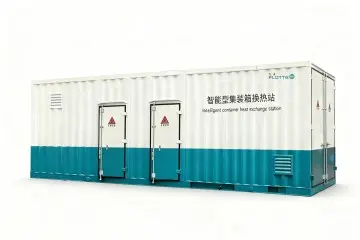
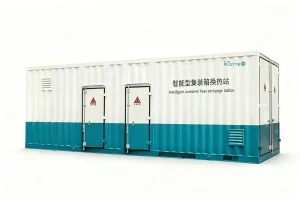
Weatherproof, enclosed heat exchange stations suitable for outdoor installations in regional distribution grids.
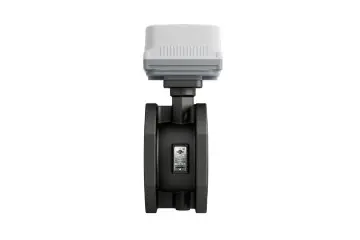
Smart, motorized valves that balance water flow dynamically based on real-time temperature feedback.

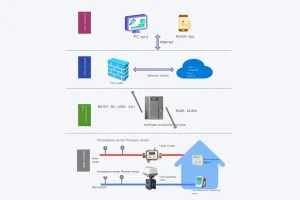
IoT-based telemetry hardware designed to monitor building heating data for optimization algorithms.
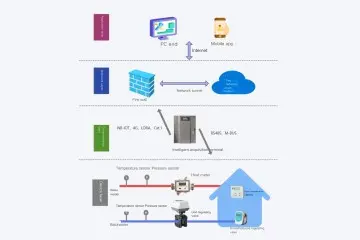
Central management software that monitors and balances flow rates across entire urban heating networks.
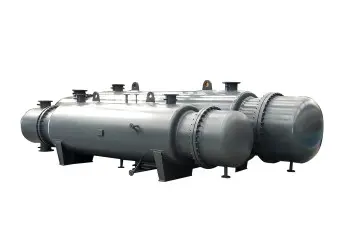
Robust, durable solutions built to handle high temperatures, extreme pressures, and heavy thermal shocks.
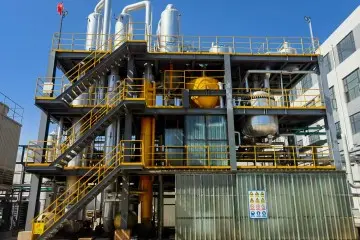
Energy-efficient distillation systems designed for wastewater concentration and chemical processing loops.
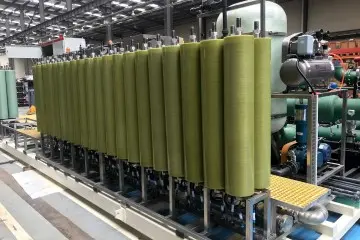
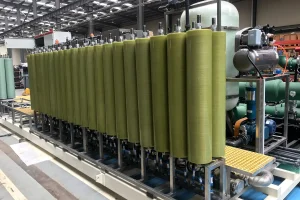
Advanced cross-flow filtration technology engineered for desalination, recovery, and wastewater treatment.
In-depth technical answers from Flotte's senior engineers to assist you with system selection and design.
Plate heat exchangers (PHEs) provide significantly higher thermal efficiency—up to three times higher than shell and tube configurations. The corrugated plate pattern generates turbulent flow at lower velocities, enhancing heat transfer and reducing the required surface area. Additionally, PHEs feature a smaller footprint and are easy to disassemble for cleaning or expansion, whereas shell and tube models require dedicated space for tube bundle removal and maintenance.
For standard non-corrosive liquids or municipal HVAC loops, AISI 304 or AISI 316L stainless steel provides reliable service. In applications handling aggressive chlorides, acids, or sea water, titanium (ASTM B265 Grade 1) or nickel alloys (Hastelloy) are required. These specialized materials resist pitting, crevice corrosion, and stress corrosion cracking in high-temperature environments.
Gasket selection depends on operating temperatures and chemical compatibility. Nitrile Rubber (NBR) is suitable for water-to-water and oil systems below 110°C. Ethylene Propylene Diene Monomer (EPDM) offers excellent resistance to steam, water, and glycol systems up to 150°C. For aggressive chemical processing or higher operating temperatures, Viton (FKM) gaskets are recommended to prevent premature degradation and leaks.
An intelligent unit balance valve controls flow rates across different heating or cooling zones. By continuously adjusting the valve position based on pressure and temperature sensor data, it maintains balanced flow across the system, preventing over-heating in closer loops and under-heating in distant ones, which helps optimize overall system energy consumption.
Membrane Concentration Systems utilize physical pressure-driven membranes (such as reverse osmosis or nanofiltration) to separate water from dissolved minerals without phase change, making them highly energy-efficient for low to medium concentrations. Multi-Effect Evaporators (MEE) use thermal boiling across sequential chambers to concentrate highly saturated wastewater streams, making them ideal for heavy industrial zero-liquid discharge (ZLD) plants.
Flotte implements an ISO 9001:2015 certified quality management system. Plate raw materials undergo spectrometer testing to confirm chemical composition, and stamped plates are checked for thickness consistency. Once assembled, every heat exchanger undergoes hydrostatic testing at pressures up to 1.5 times the design limit to guarantee sealing and mechanical performance before shipment.
Heavy duty evaporators, membrane systems, and industrial monitoring accessories for global distribution.
 Flotte Energy