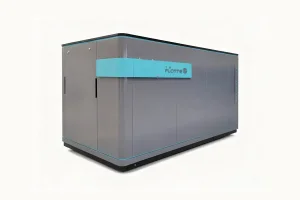
Direct supply to the New Zealand market with optimized technical standards conforming to regional engineering compliance.
New Zealand is actively implementing aggressive climate change mitigation policies, steering its industrial economy toward low-carbon and highly efficient energy systems. Backed by the government's Government Investment in Decarbonising Industry (GIDI) Fund, there is a mounting, structural shift to replace fossil-fueled process heat with advanced heat pumps, geothermal energy recovery, and state-of-the-art heat exchange networks.
Key economic pillars, particularly the massive dairy processing sector, horticulture, commercial building operations, and food manufacturing, require heavy thermal regulation. Traditional boilers are rapidly being phased out. To remain competitive and comply with local environmental standards, businesses in regions like Waikato, Canterbury, and Auckland are integrating optimized heat exchange units that ensure minimal thermal footprint and maximum fluid utility efficiency.
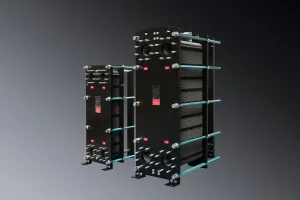
Moreover, the integration of geothermal energy—abundant in the Taupō Volcanic Zone—poses unique challenges due to fluid chemistry. High mineral contents and scaling potential mandate heavy-duty, cleanable, and highly resilient detachable plate heat exchangers fabricated with premium titanium or duplex stainless-steel plate materials.
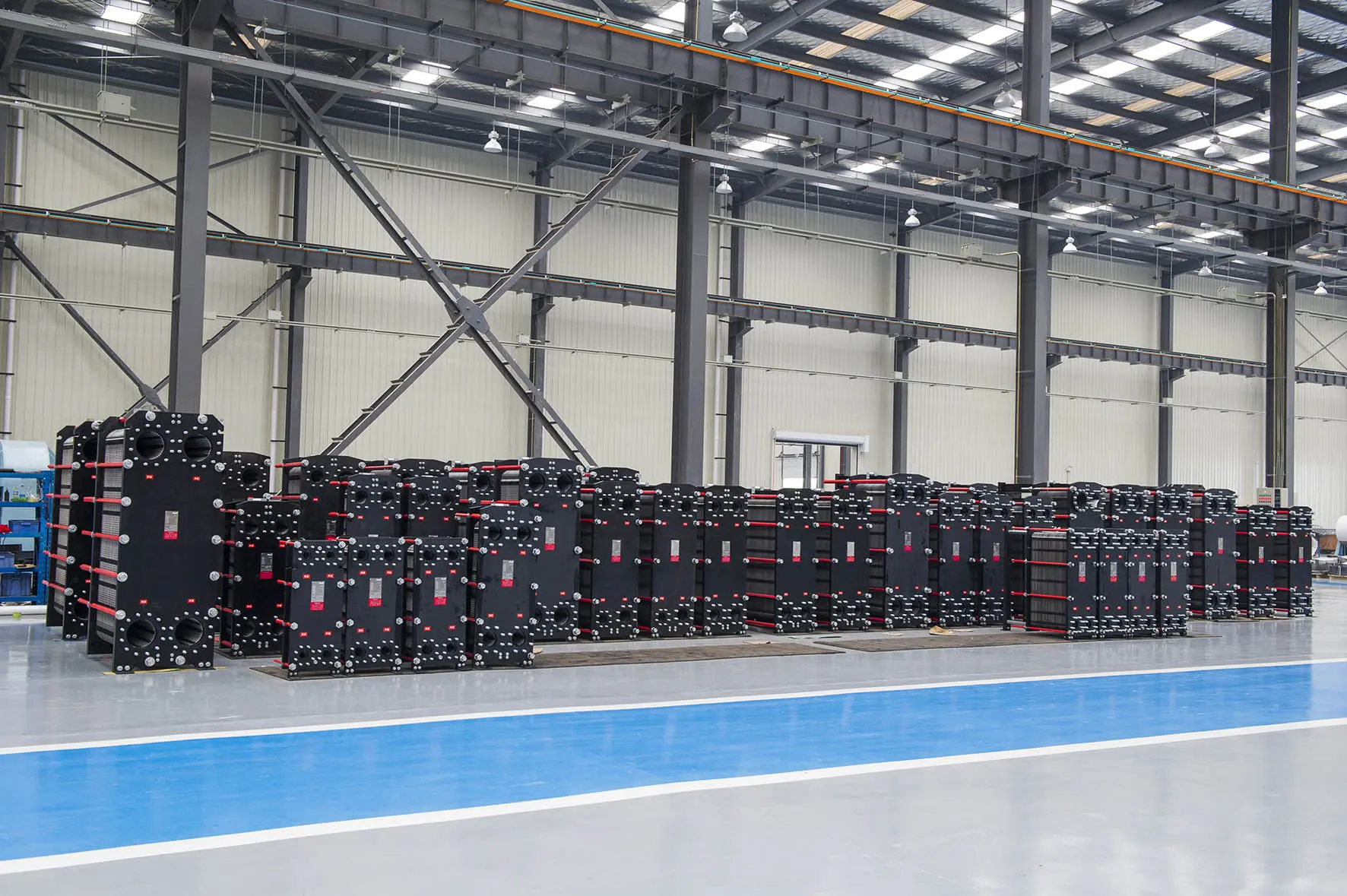
Analyzing key variables driving global fluid dynamics and commercial HVAC process requirements.
Global manufacturers are shifting away from direct combustion processes toward closed-loop heat recovery. Utilizing high-efficiency plate and shell-and-tube heat exchangers allows plants to capture waste heat from exhaust lines and wastewater, recycling it into pre-heating processes to slash fuel consumption by up to 40%.
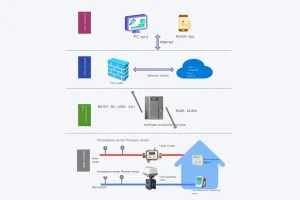
Modern thermal infrastructure is no longer static. Remote intelligent monitoring systems track flow rates, differential pressure, and heat load variations in real-time. This provides protective predictive maintenance warnings to prevent downtime and fouling in remote applications, which is essential for New Zealand's distributed energy infrastructure.
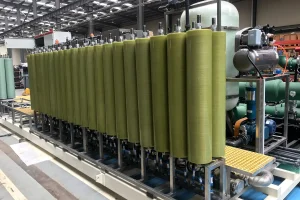
As water access regulations tighten globally, membrane concentration and multi-effect evaporation technologies are taking center stage. Industrial facilities are adopting zero liquid discharge (ZLD) practices, concentrating process solutions and recovering high-purity water to establish circular water networks.
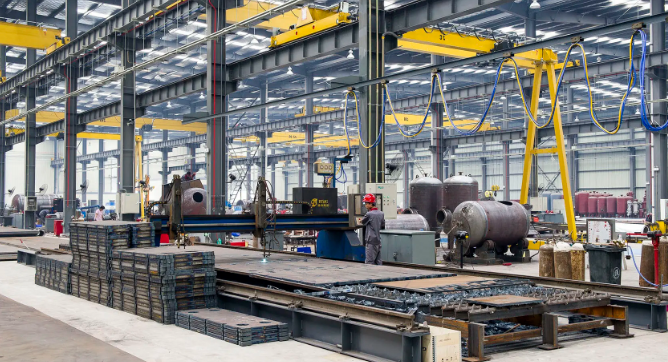
China's thermal engineering sector has evolved from baseline component assembly to leading global innovation in Industry 4.0 smart manufacturing. Utilizing advanced production logistics, highly automated plate stamping lines, automated robotic welding, and rigorous non-destructive testing (NDT), Chinese factories produce premium-grade thermal systems with unmatched precision and speed.
Flotte Energy Saving Company represents the peak of this manufacturing capability. With a solid capital backing of 101 million yuan and drawing from a 30-year legacy of engineering innovation since 1995, Flotte manages the entire value chain in-house. From raw sheet metal stamping under heavy hydraulic presses to automated water pressure testing and precise plate assembly, every step is rigorously monitored under ISO 9001:2015, ISO 14001, and ISO 45001 frameworks.
This domestic integration guarantees supply chain resilience. While other global manufacturers face extended delivery lead times for specialized alloys (such as Hastelloy, Titanium, or 316L Stainless Steel), Flotte's strategic inventory management and large-scale manufacturing output (producing over 4,500 integrated heat exchange units annually) ensure continuous project delivery timelines for overseas clients, especially in remote regions like New Zealand.
Explore our highly-acclaimed heat exchangers, evaporator setups, and pressure management components.
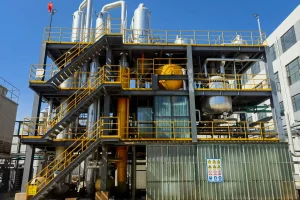
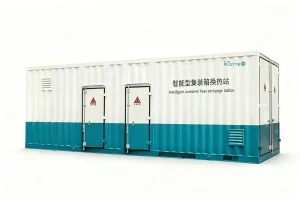
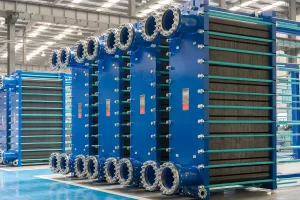
How our thermal solutions directly optimize operations across the primary and commercial industries of New Zealand.
New Zealand is a global powerhouse in dairy exports. Spray drying, pasteurization, and whey separation demand massive heat resources. By integrating Flotte's Multi-Effect Evaporation Systems and Membrane Concentration Systems, processors can achieve up to 50% steam utilization efficiency gains, drastically cutting carbon emissions while concentrating high-value dairy solids.
In geothermal-rich zones like Rotorua and Taupō, high mineral and silica content in raw brine causes rapid fouling in standard heat exchangers. Flotte's detachable plate heat exchangers are specifically configured with advanced high-theta plate geometries and chemical-resistant gasket compounds, allowing quick mechanical servicing and high heat-transfer coefficient performance.
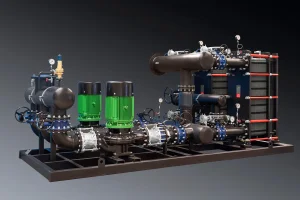
For high-rise office towers and commercial developments in Auckland and Wellington, optimizing HVAC performance is key to achieving high Green Star ratings. The installation of Flotte's Modular Integrated Box-Type Heat Exchanger Units and Intelligent Balancing Valves allows accurate hydronic balancing, significantly reducing pumping power consumption and ensuring thermal comfort.
A global leader in thermal engineering and fluid control since 1995.
Flotte Energy Saving Company, established in 2013 with a registered capital of 101 million yuan, originated from Flotte Thermal Engineering founded in 1995. With three decades of technical expertise, the company specializes in water equipment, HVAC systems, and water treatment industries. It consistently leads industry peers in adopting cutting-edge technologies, developing innovative products, and delivering comprehensive production and sales services.
Equipped with a specialized R&D center and state-of-the-art laboratory facilities, our professional design engineers and skilled fabricators ensure maximum technical reliability. Annually, our facilities manufacture over 4,500 heat exchange units and water supply/drainage equipment systems across our modern 70,000 m² campus, generating over 500 million yuan in annual sales.
Our production quality control processes strictly adhere to strict international engineering, environmental, and occupational health systems.
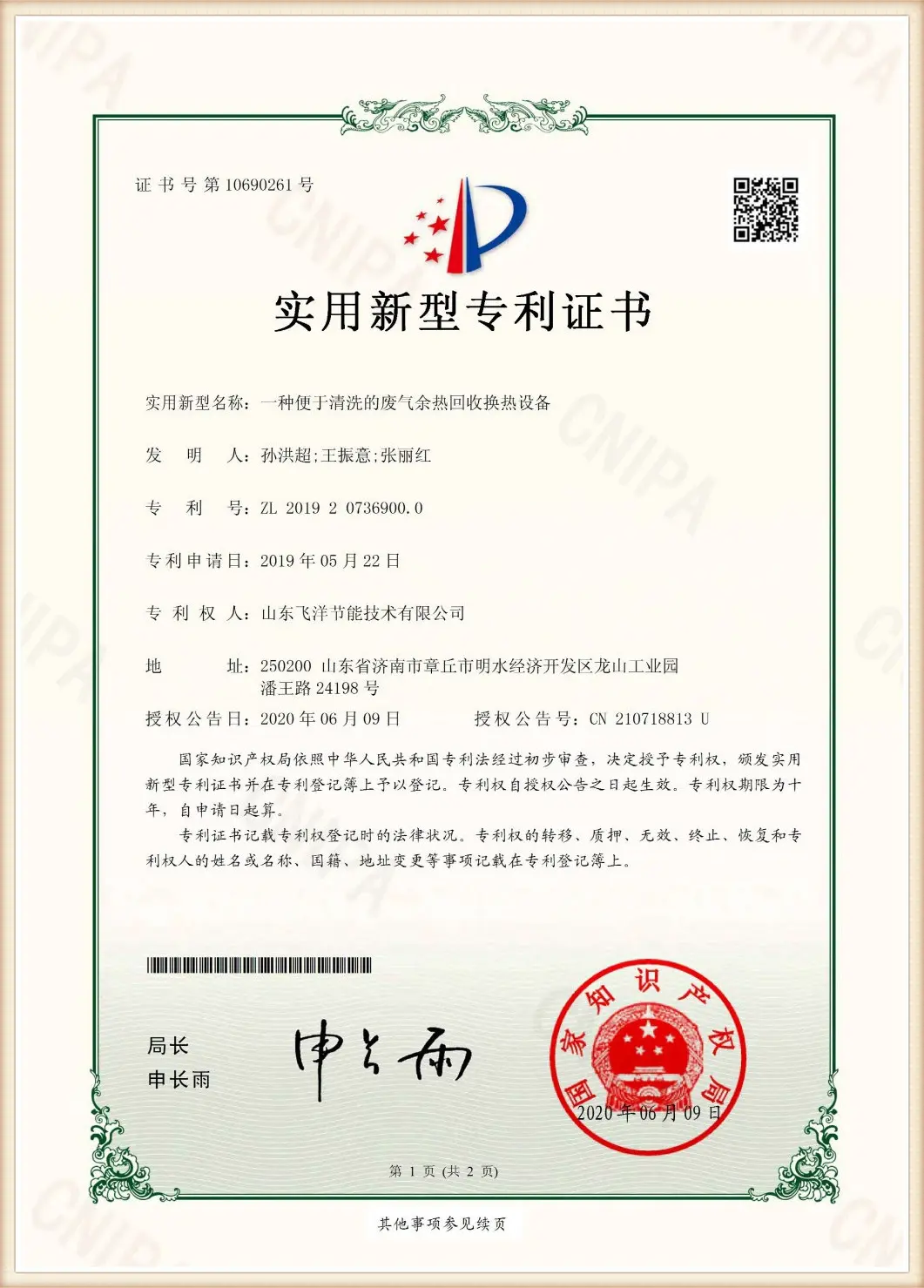
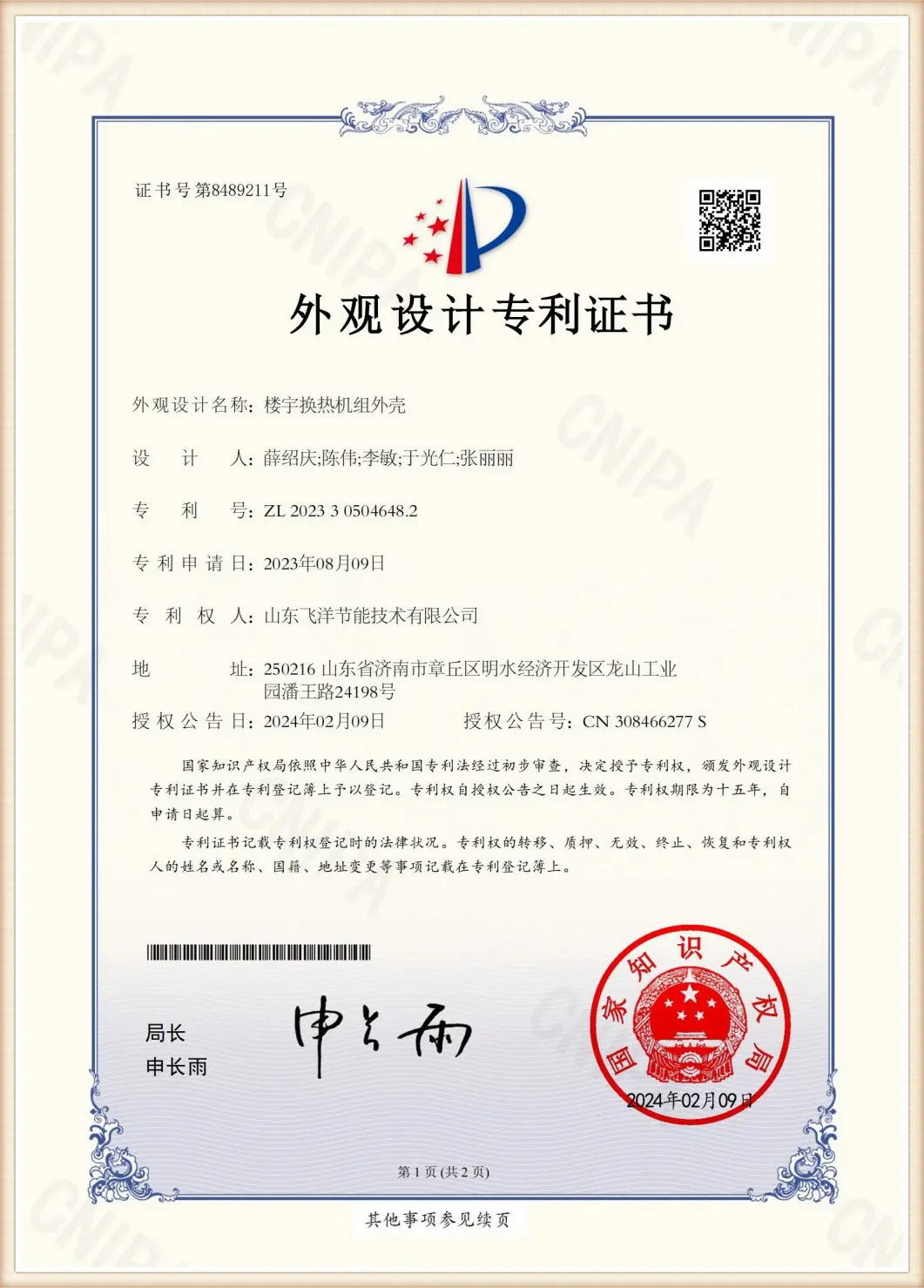
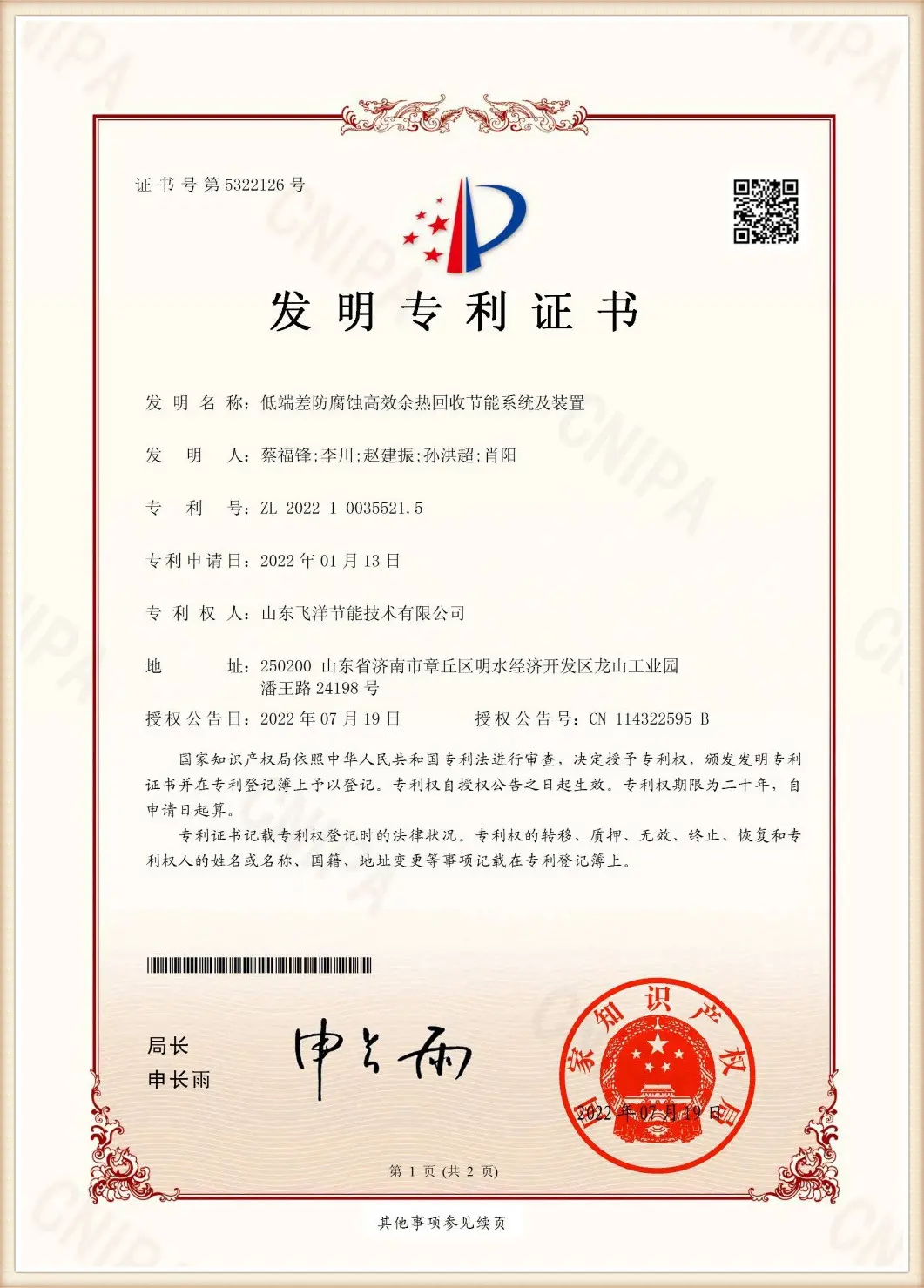
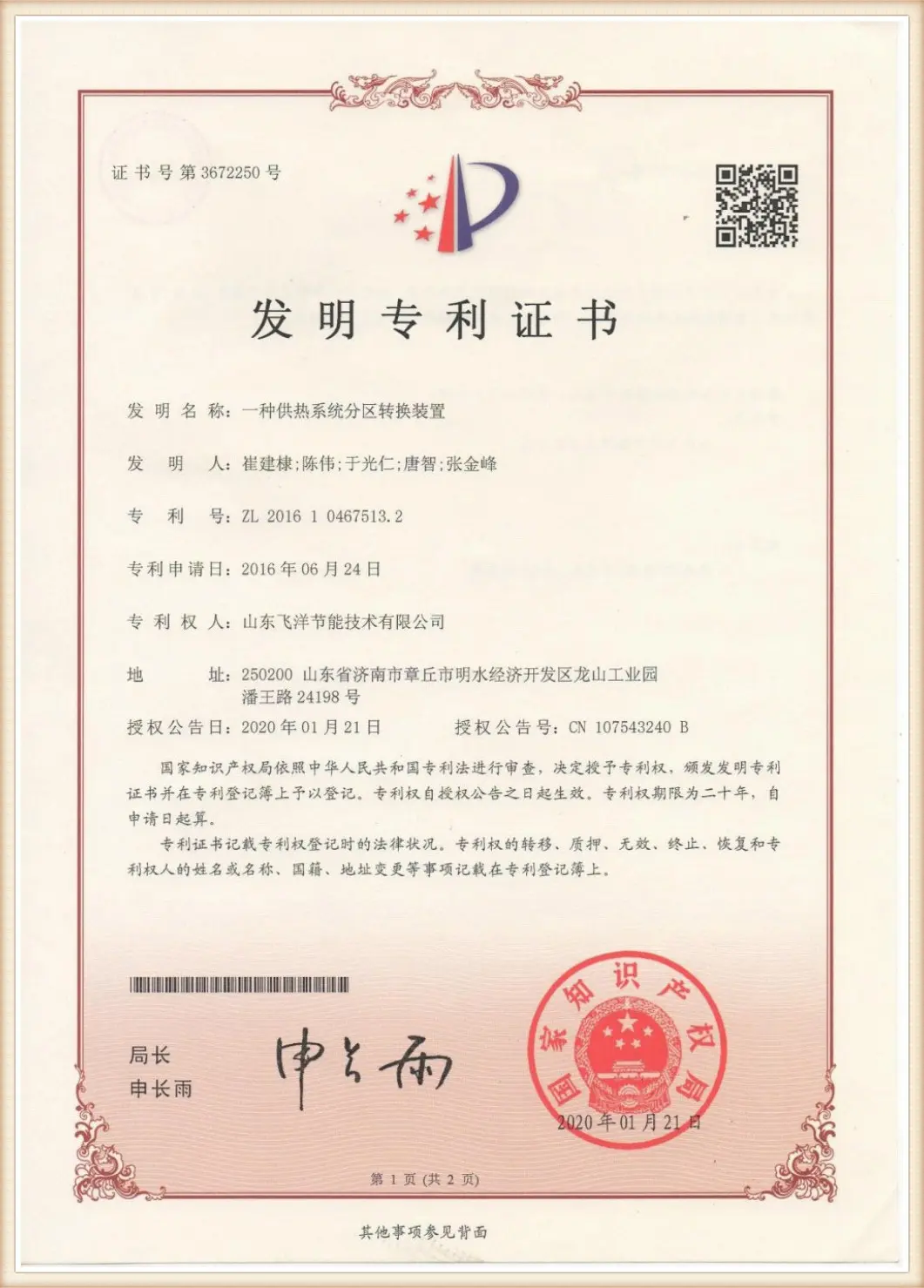
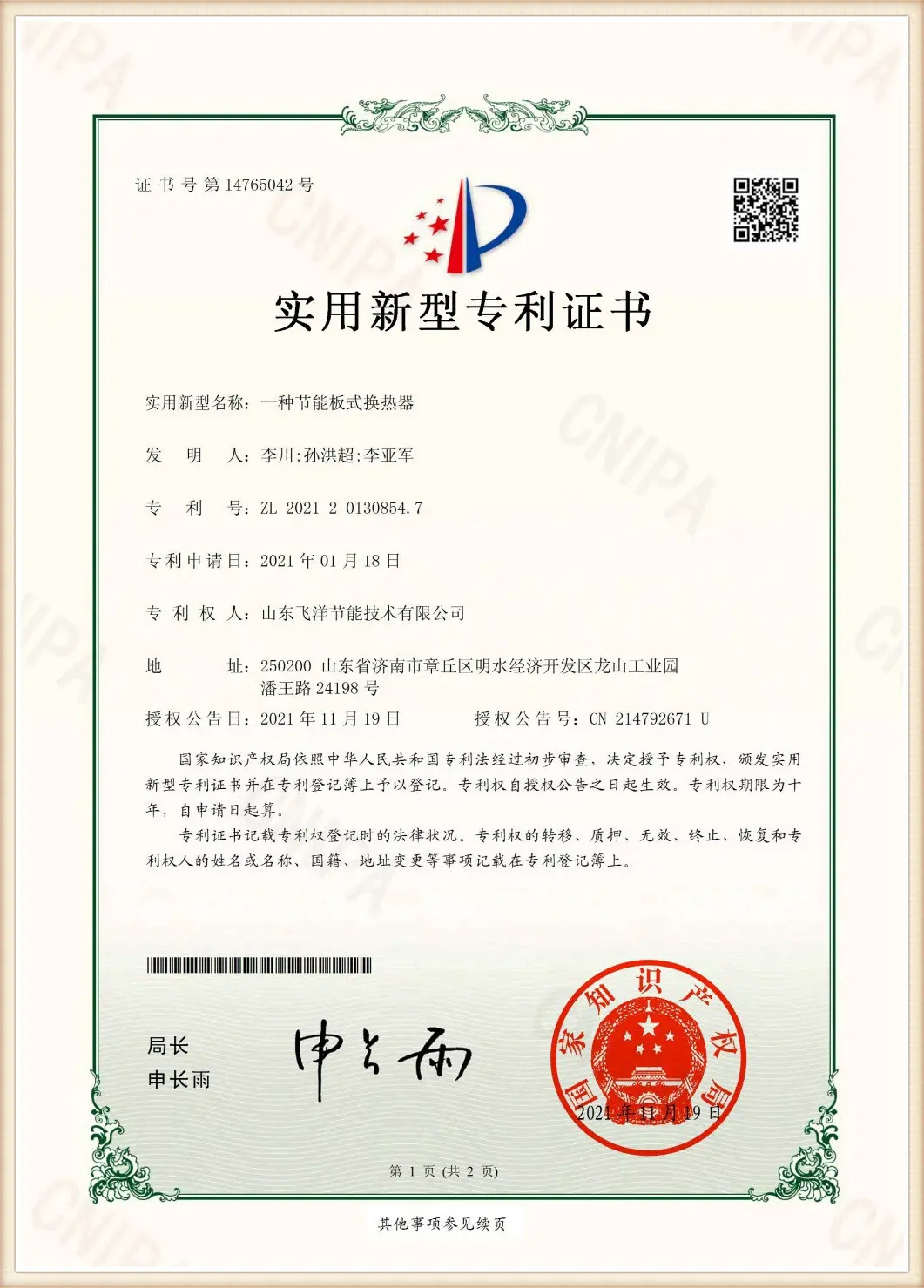
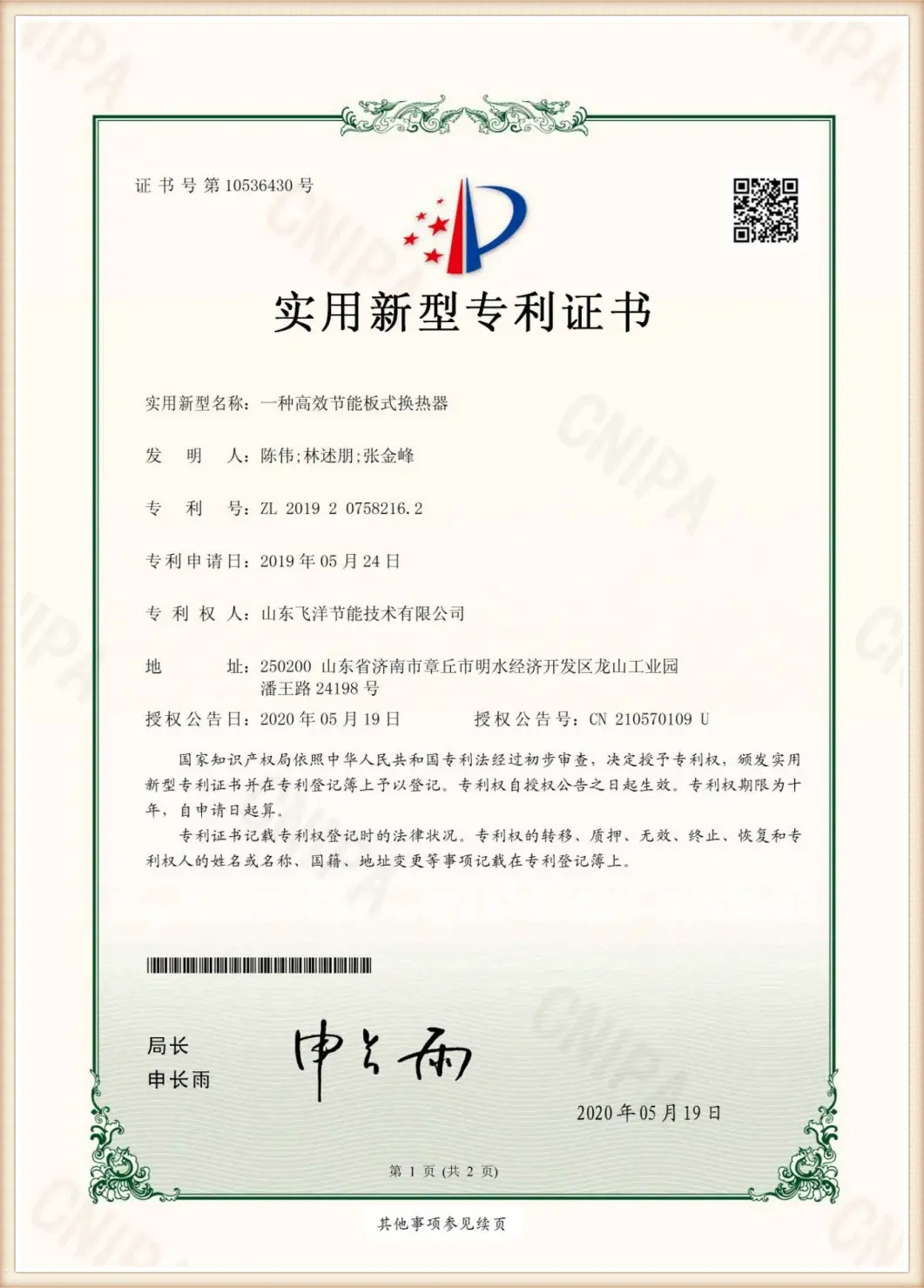
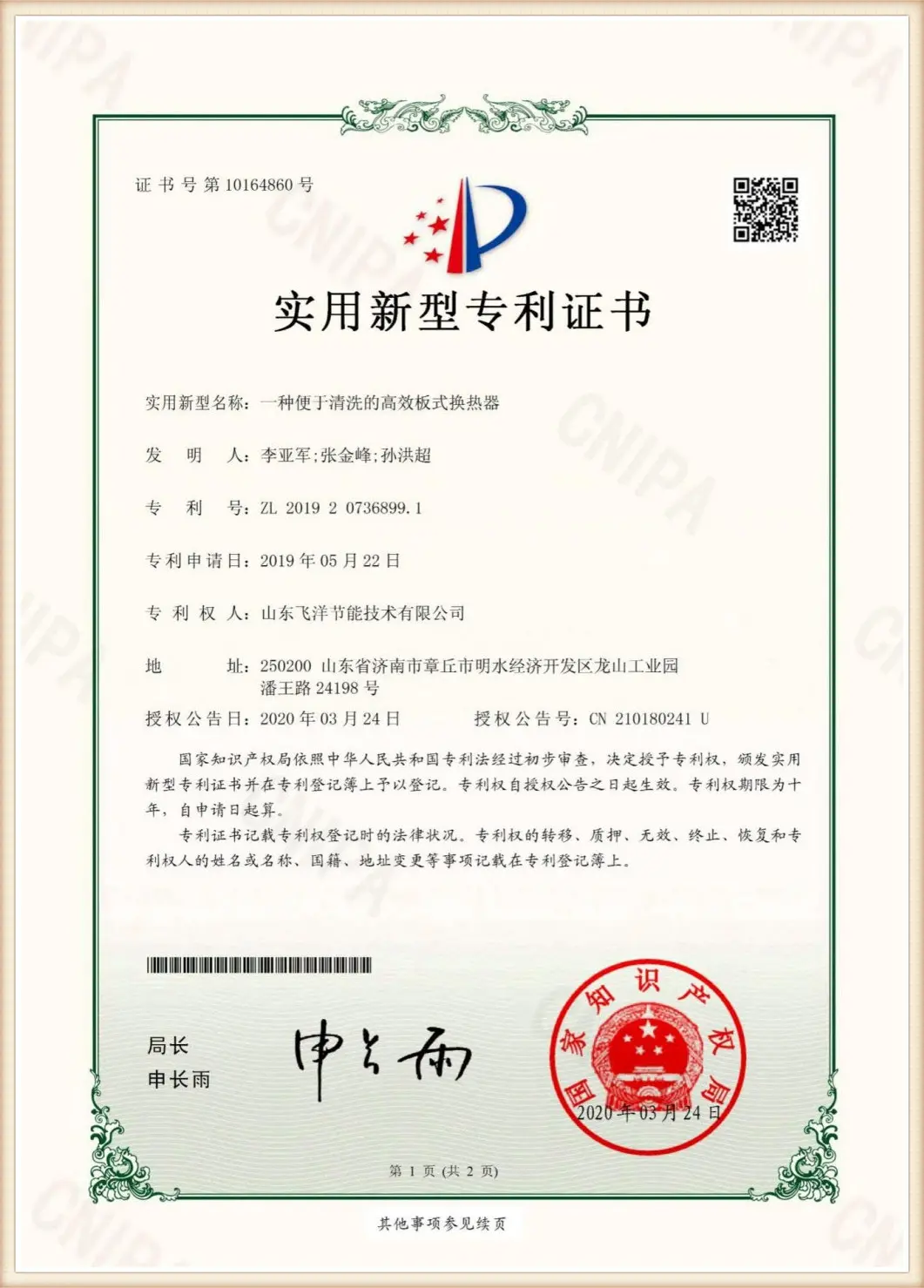
Delivering high-integrity, pressure-tested equipment that guarantees long-term operational safety.
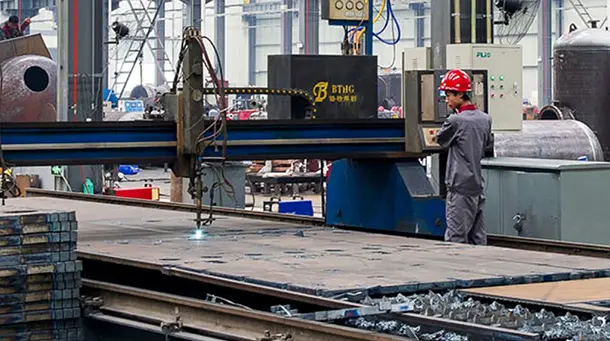
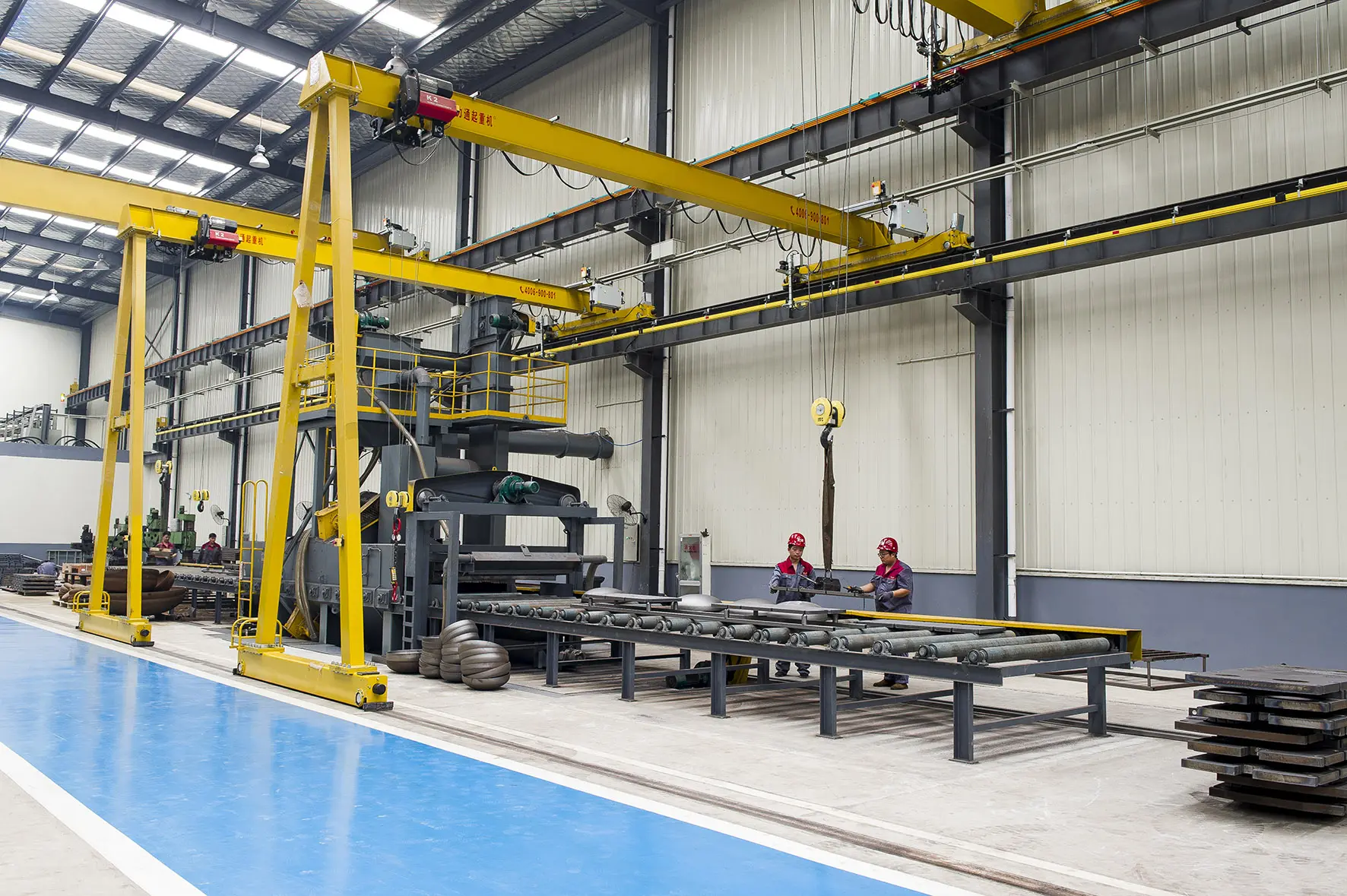
Precision CNC laser cutting ensures the frame plates match exact dimensional designs.
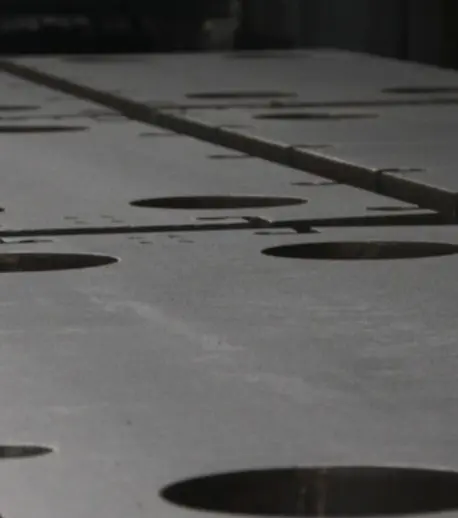
Enhancing material structure density and durability for high pressure tolerances.
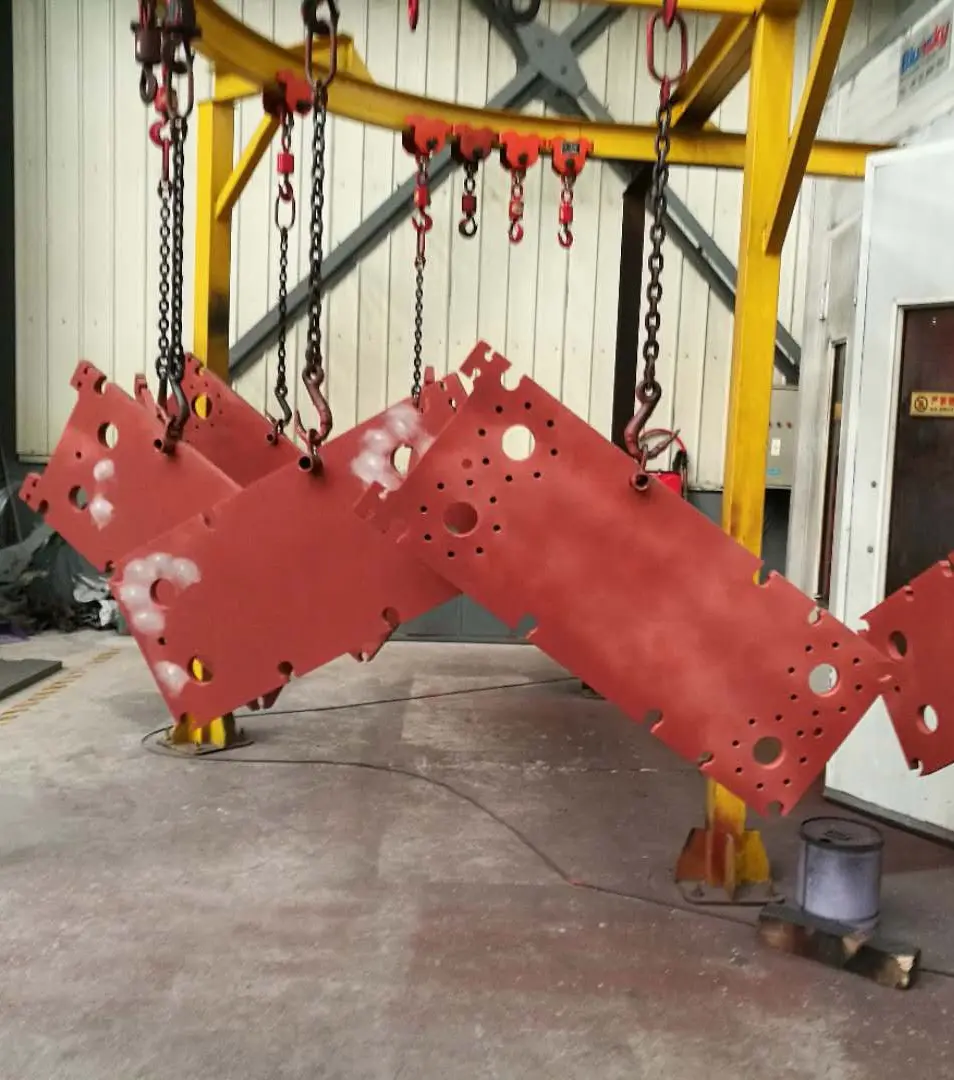
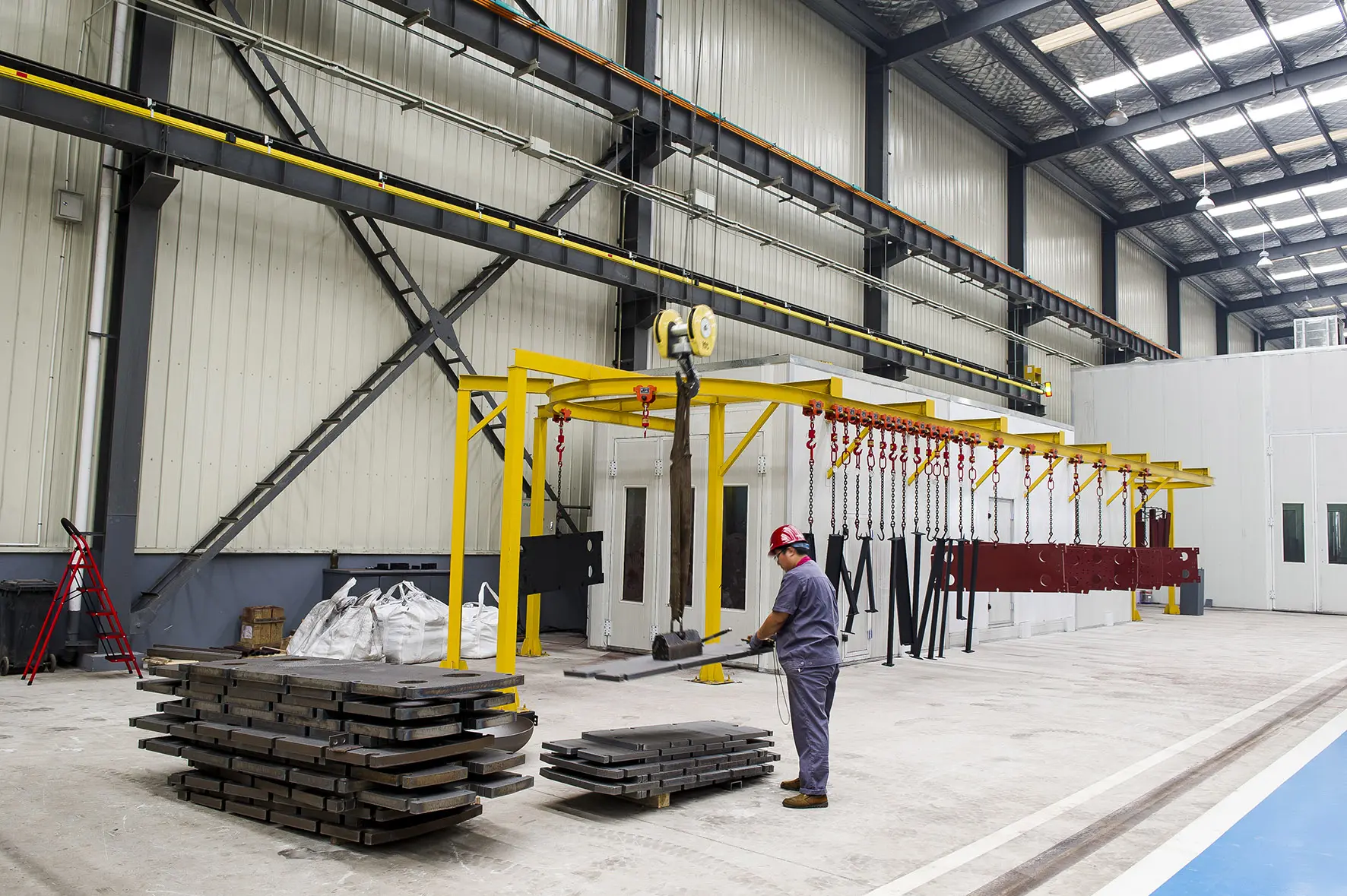
Industrial-grade anti-corrosive coatings protect structural elements against environmental decay.
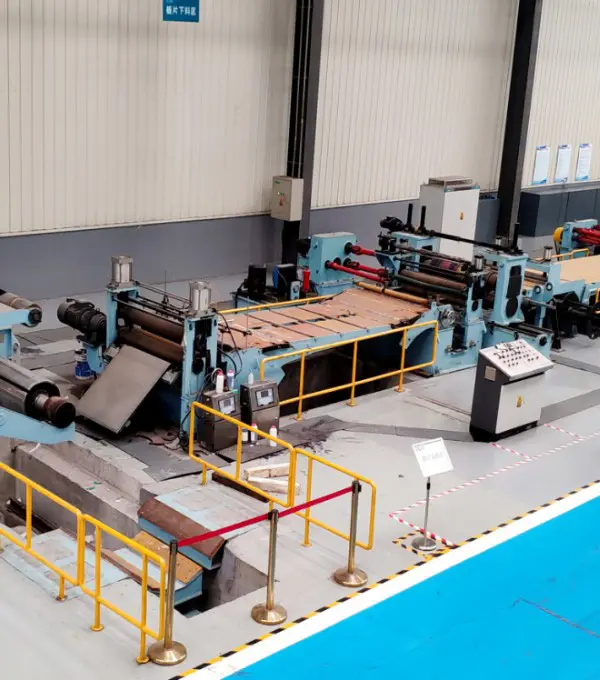
Every individual plate component receives laser-engraved serial tracking codes for material traceablity.
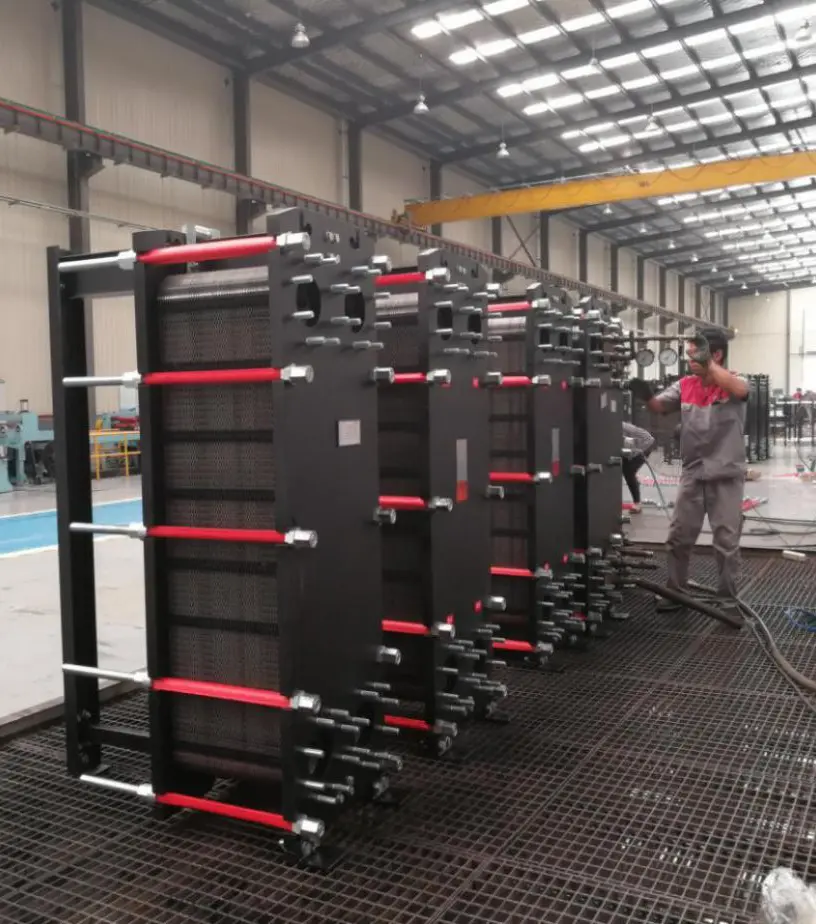
Every unit undergoes high-pressure testing to verify seal integrity and eliminate bypass leakage risks.
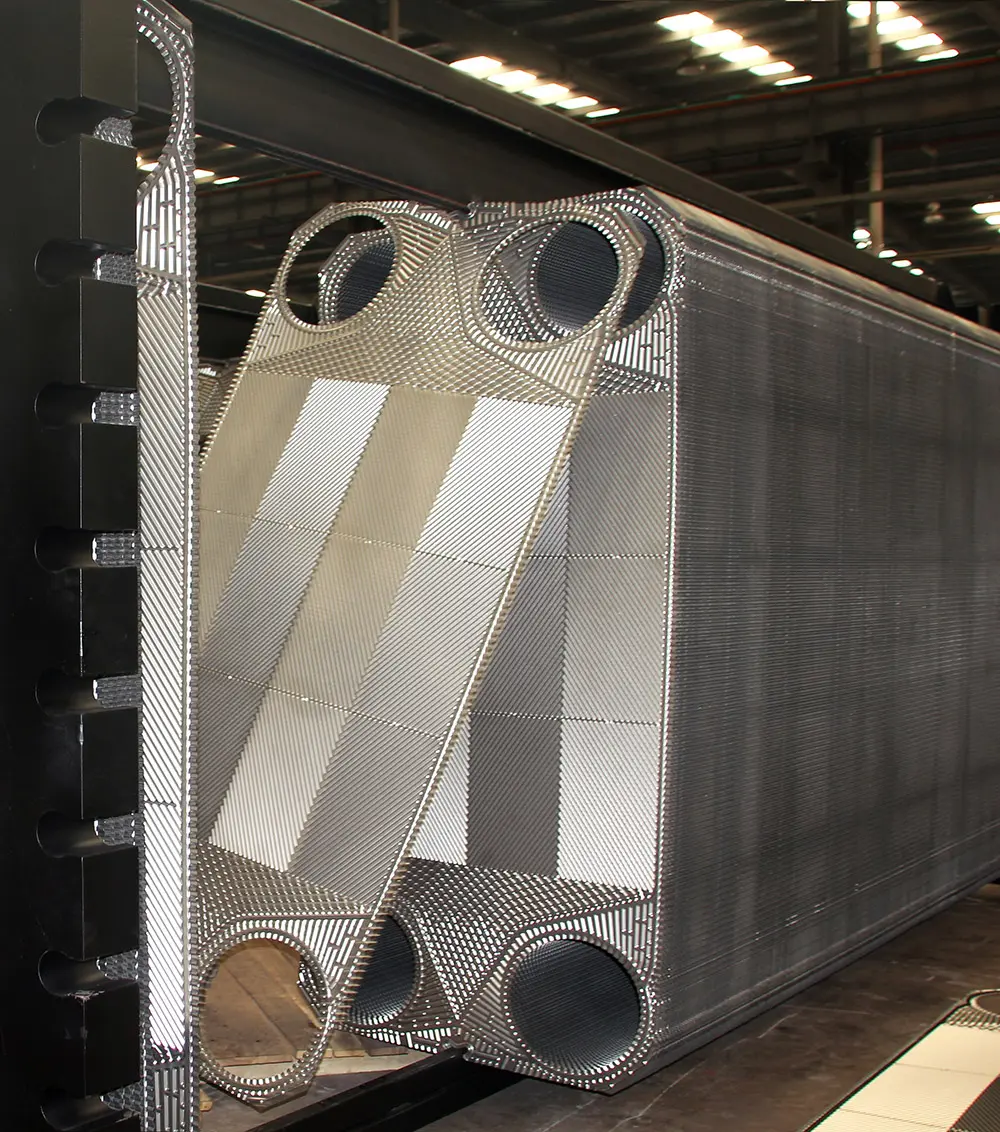
Experienced technical teams construct, compress, and torque frame assemblies to specification.
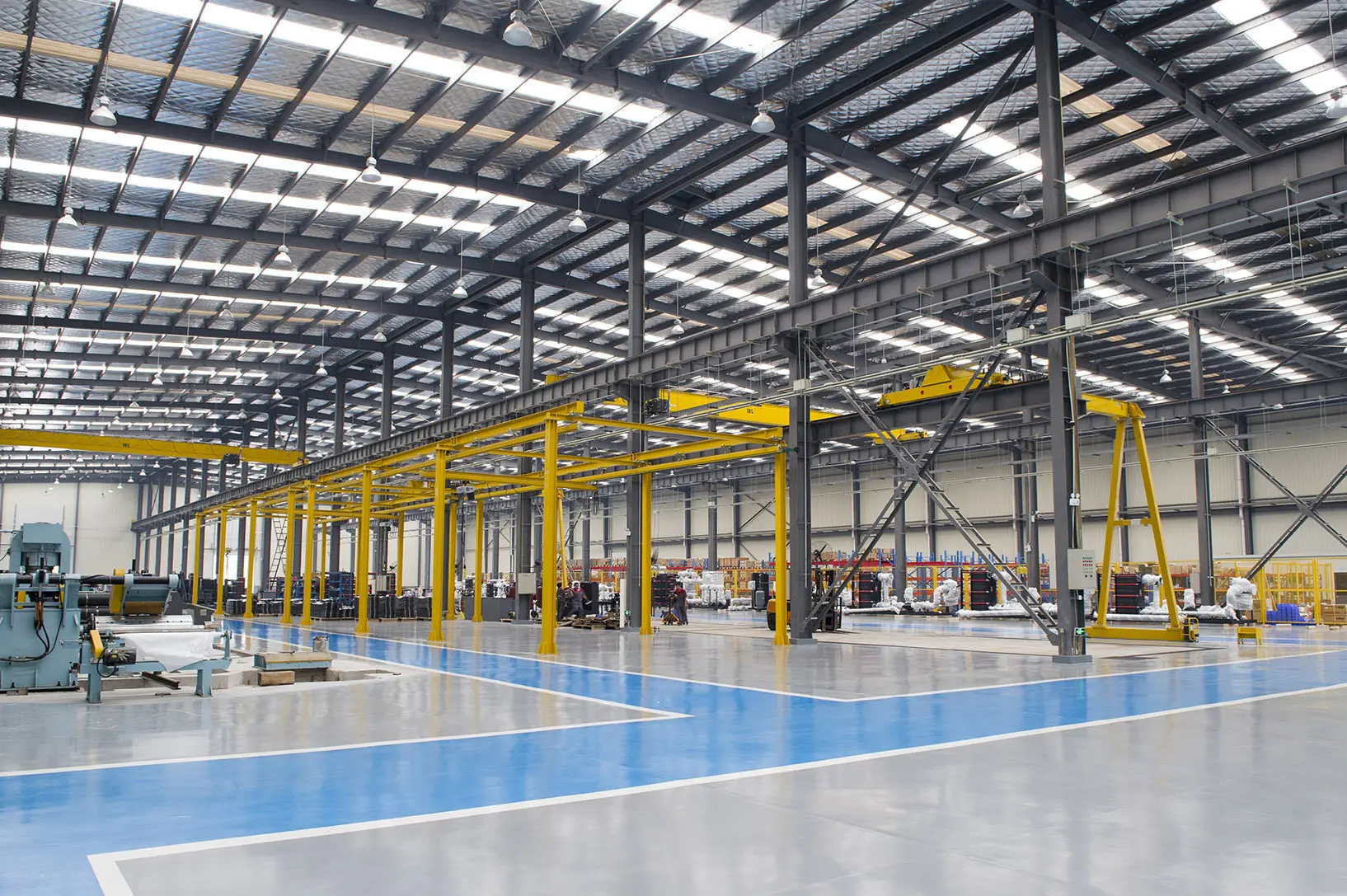
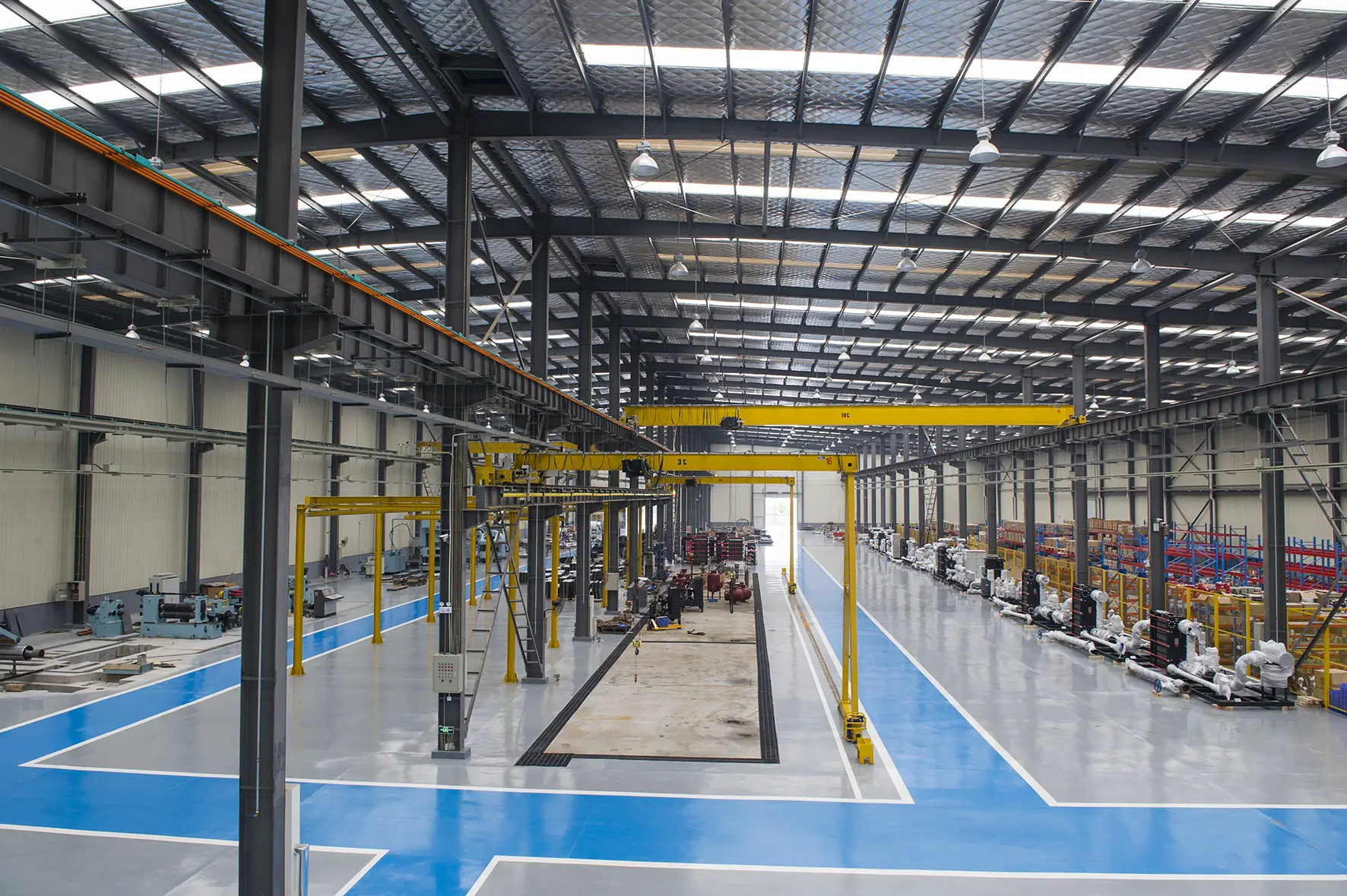
A visual insight into our advanced machinery, assembly bays, and logistics operations.
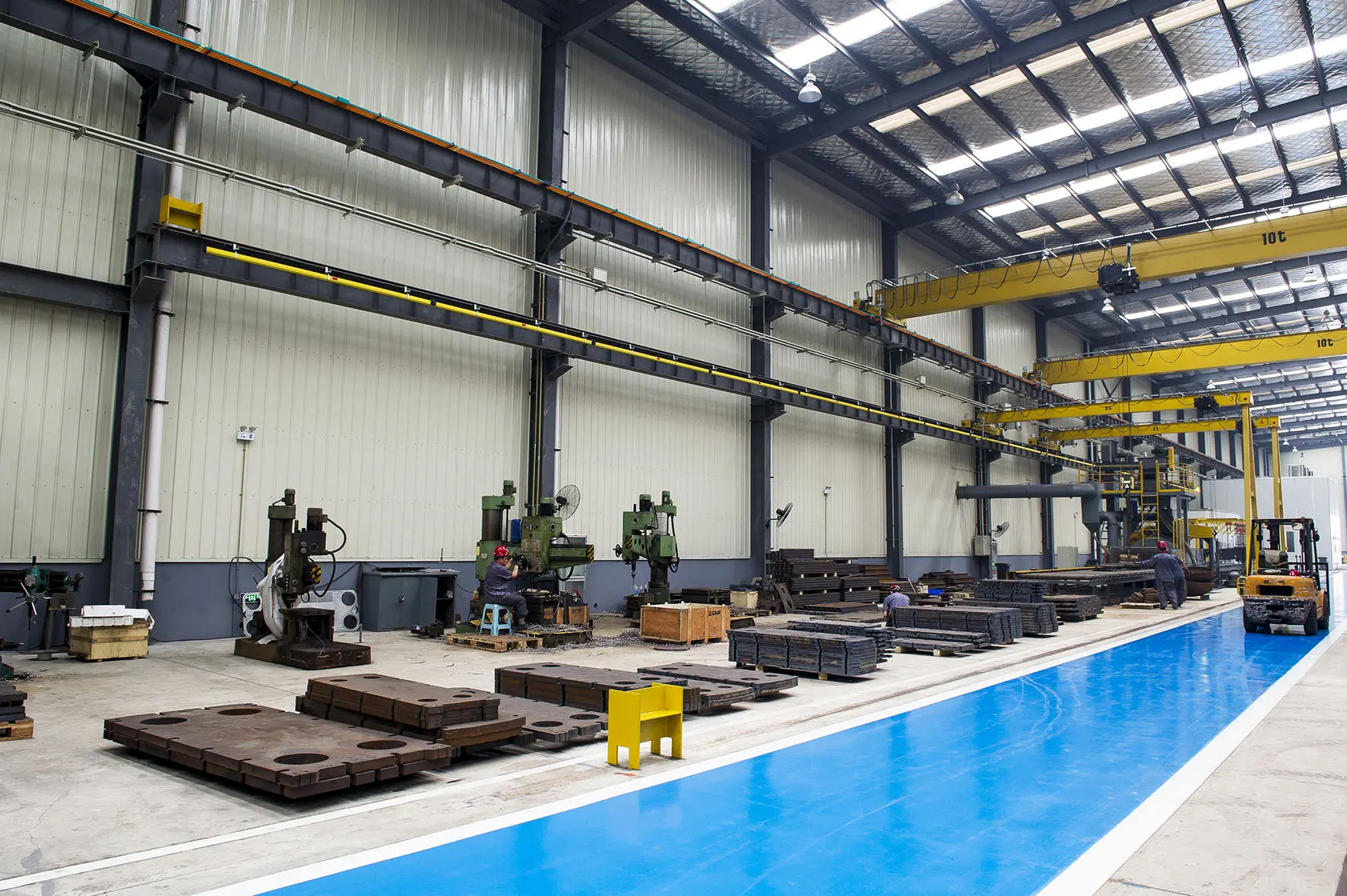
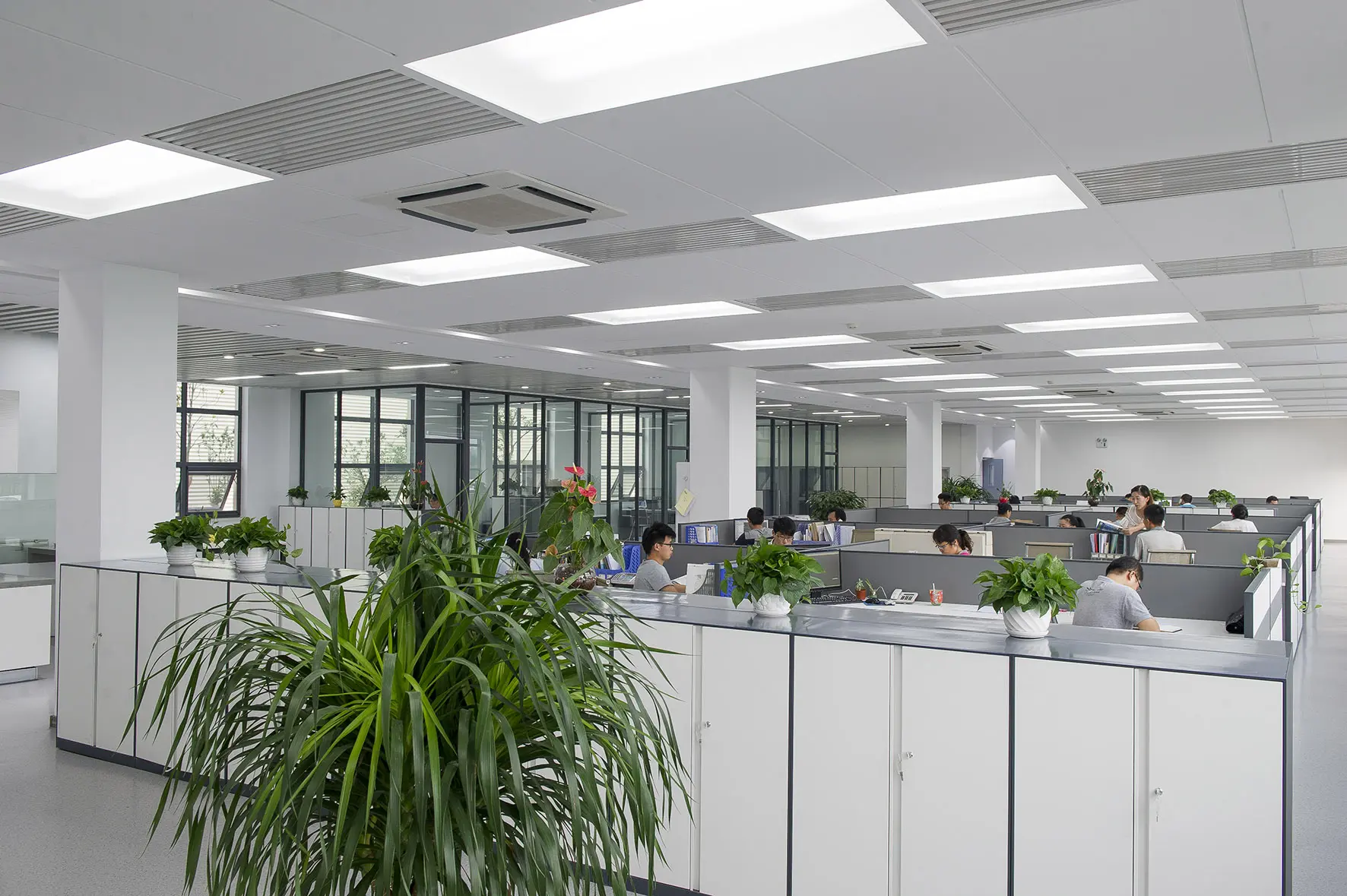
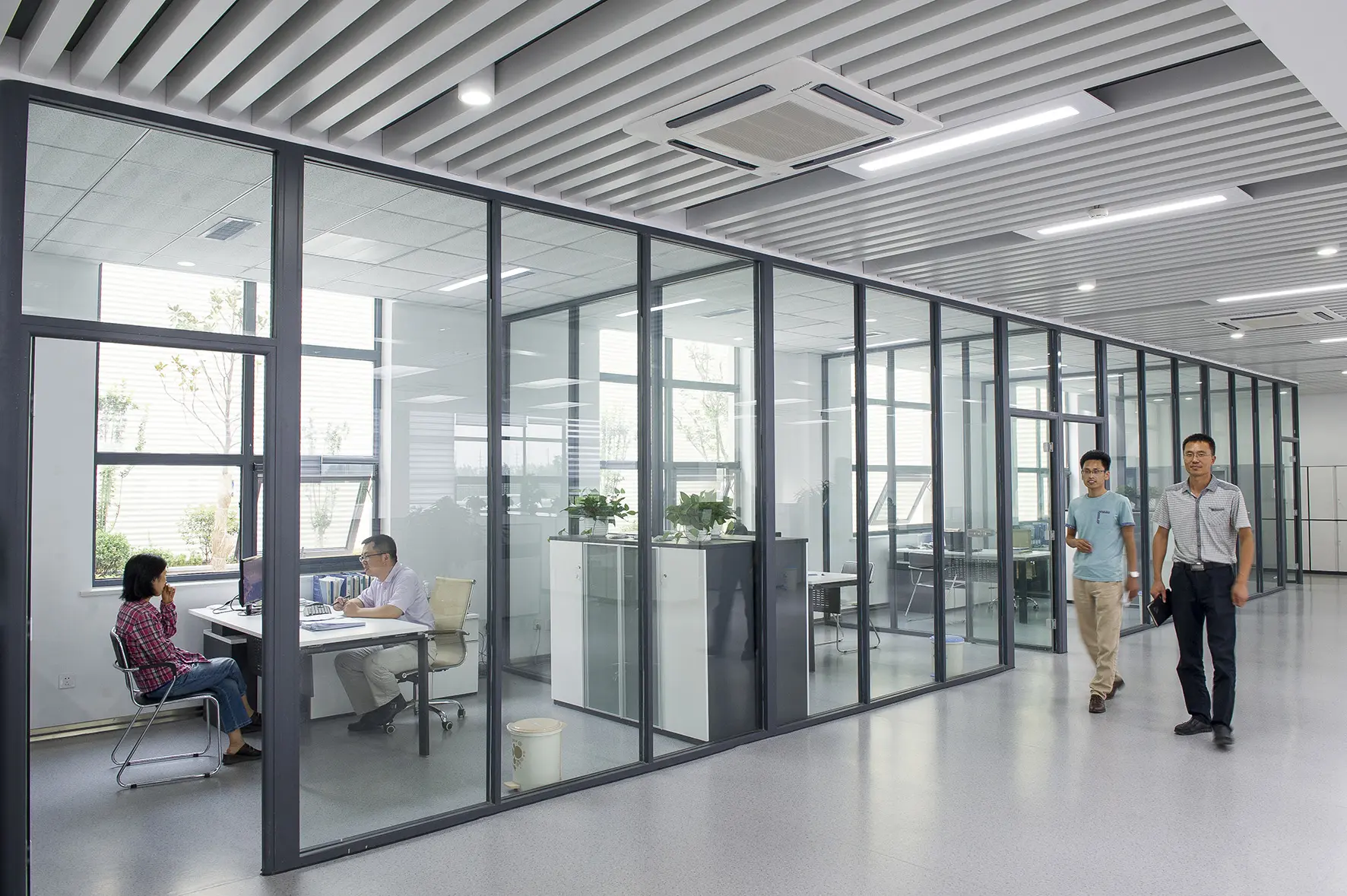
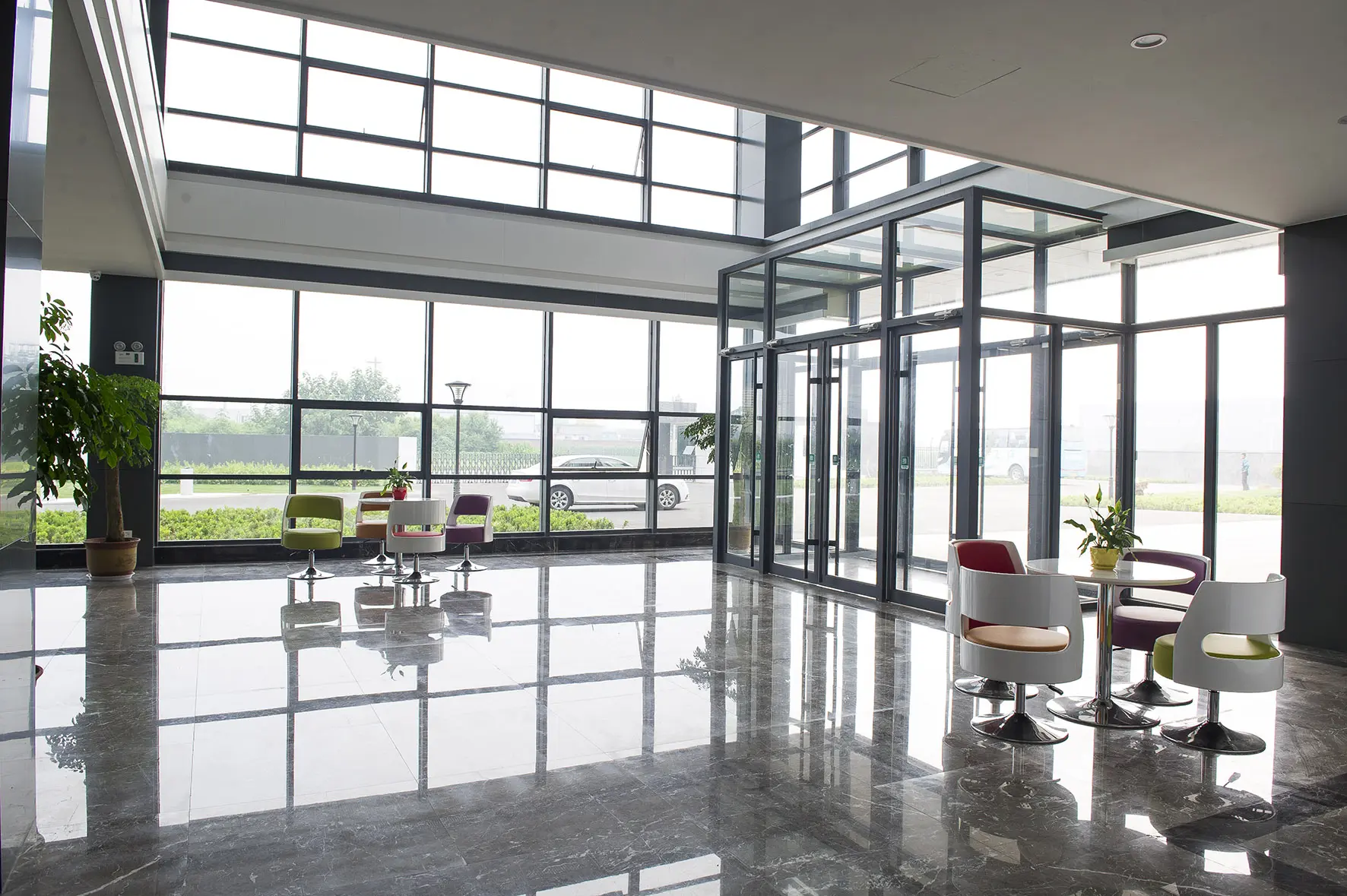
Addressing design standards, mechanical specifications, and local integration parameters for engineering projects.
Our detachable plate heat exchangers are specifically configured to manage mineral crystallization. The corrugated pattern of our plates induces high turbulence at lower fluid velocities, creating a self-cleaning mechanism that reduces boundary layer stagnation. If mineral scaling occurs, the detachable frame allows maintenance technicians to release pressure bolts, split the plate pack, and manually clean the plates or replace gaskets without requiring complete unit replacements. For geothermal brine containing dissolved hydrogen sulfide or chlorides, we utilize Grade 1 Titanium or Duplex 2205 stainless steel plates to prevent stress corrosion cracking.
All pressure vessels and heat exchangers manufactured by Flotte are designed in compliance with major global pressure vessel codes. In alignment with New Zealand's regulatory requirements (such as the Health and Safety at Work (Pressure Equipment, Cranes, and Passenger Ropeways) Regulations), our systems undergo strict hydro-testing and quality controls. We provide complete material traceability documentation, welding procedure specifications (WPS), and pressure test records to facilitate design registration with local compliance bodies in New Zealand.
Multi-Effect Evaporators recycle secondary steam across multiple chambers, reducing the boiler steam load required to evaporate water from milk products. When paired with our Membrane Concentration Systems (such as reverse osmosis or ultrafiltration modules), we can pre-concentrate liquid solids before they enter thermal drying stages. This dual configuration reduces energy consumption in spray dryers by up to 50%, enabling dairy facilities to scale their throughput while reducing carbon emissions in line with national sustainability targets.
In large HVAC distribution lines, unbalanced pressure differentials cause unequal heating and cooling zones, which leads to energy waste. Flotte's Intelligent Balance Valves monitor pressure drop and flow in real time. They automatically adjust positions to balance flow rate requirements, maintaining temperature uniformity across commercial zones. This reduces auxiliary pump loads, optimizes chiller COP values, and helps commercial buildings qualify for high Green Star rating certifications.
Engineered for high performance and durability in complex process loops.
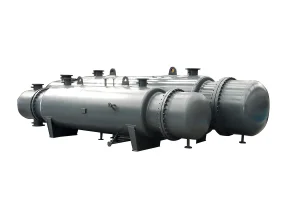
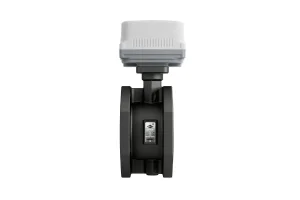
Contact our technical sales team today. We provide full customization services, design configuration support, and optimized logistics for projects across New Zealand.
Send Inquiry Now Flotte Energy