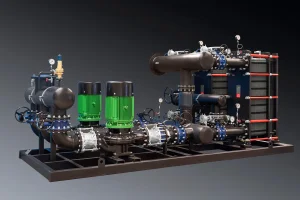
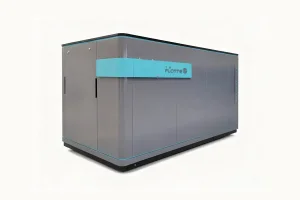
Plate Cooler Factory & Exporter in the Singapore Market

High-Efficiency Thermal Transfer Solutions Optimized for Tropical Climates, Marine Applications, and District Cooling Systems.

Send Inquiry Now

Singapore's Industrial Thermal Dynamics & plate Cooler Requirements

Analysis of thermal transfer efficiency under tropical micro-climates, maritime operations, and next-generation district cooling architectures.

As a major global commercial hub, maritime gateway, and financial powerhouse, Singapore demands highly reliable and energy-efficient thermal solutions. The nation’s tropical location near the equator requires industrial facilities to run cooling systems under constant, high thermal loads. In sectors ranging from oil refining and chemical processing on Jurong Island to high-tech semiconductor fabs in Woodlands, and marine engineering along Tuas, selecting the right Plate Cooler Factory & Exporter is crucial for operational longevity and energy efficiency.
The Green Plan 2030 and BCA Green Mark Integration

Singapore's Building and Construction Authority (BCA) imposes strict Green Mark requirements for energy efficiency. Industrial chillers and cooling loops must achieve optimal Coefficient of Performance (COP) values. Modern plate coolers address this challenge directly by offering minimal approach temperatures (down to 1.0°C) and higher heat transfer coefficients compared to traditional shell-and-tube heat exchangers. This helps reduce energy use across Singapore's commercial buildings, data centers, and heavy processing plants.

Data Center Cooling Infrastructures

With strict guidelines like SS 564 for green data centers in Singapore, high-density server configurations require reliable liquid-to-liquid heat exchange. Our plate coolers help protect delicate computational systems from humidity and contaminants.

Marine & Offshore Corrosive Mitigation

Marine ships and offshore rigs in the Singapore Strait require sea-water resistant thermal systems. We use Grade 1 Titanium and Hastelloy plates, along with NBR/EPDM gaskets, to ensure reliable, long-term operation in salty marine environments.

District Cooling Optimization

Large centralized networks, like Singapore's Marina Bay District Cooling, rely on plate coolers to manage thermal transfer across multiple commercial properties. This setup helps reduce energy consumption and lower operational costs.

Decades of Engineering Mastery & Quality Management

Flotte Energy Saving Company, established in 2013 with a registered capital of 101 million yuan, originated from Flotte Thermal Engineering founded in 1995. With three decades of technical expertise, our company specializes in water equipment, HVAC systems, and water treatment industries. We consistently lead industry peers in adopting cutting-edge technologies, developing innovative products, and delivering comprehensive production and sales services.

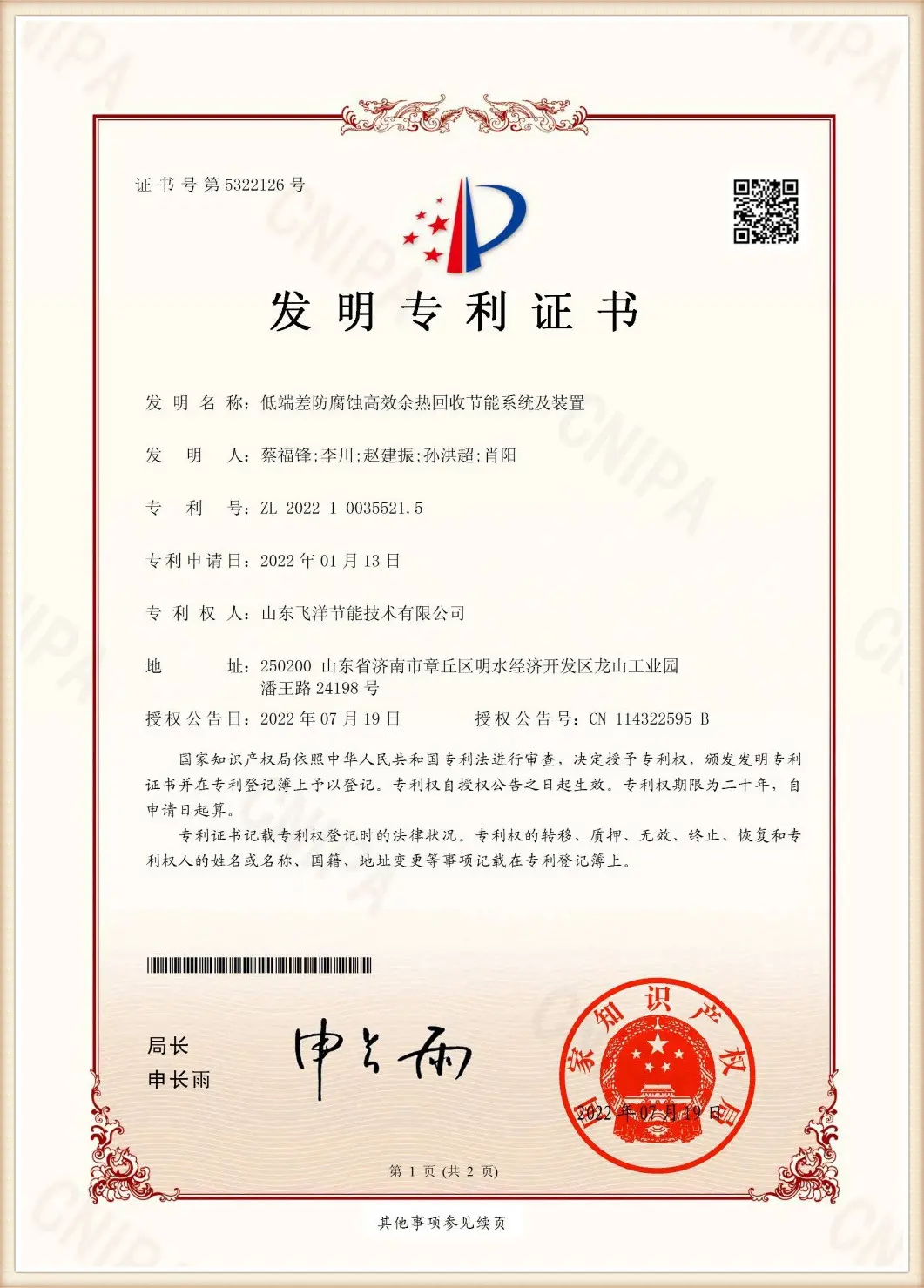
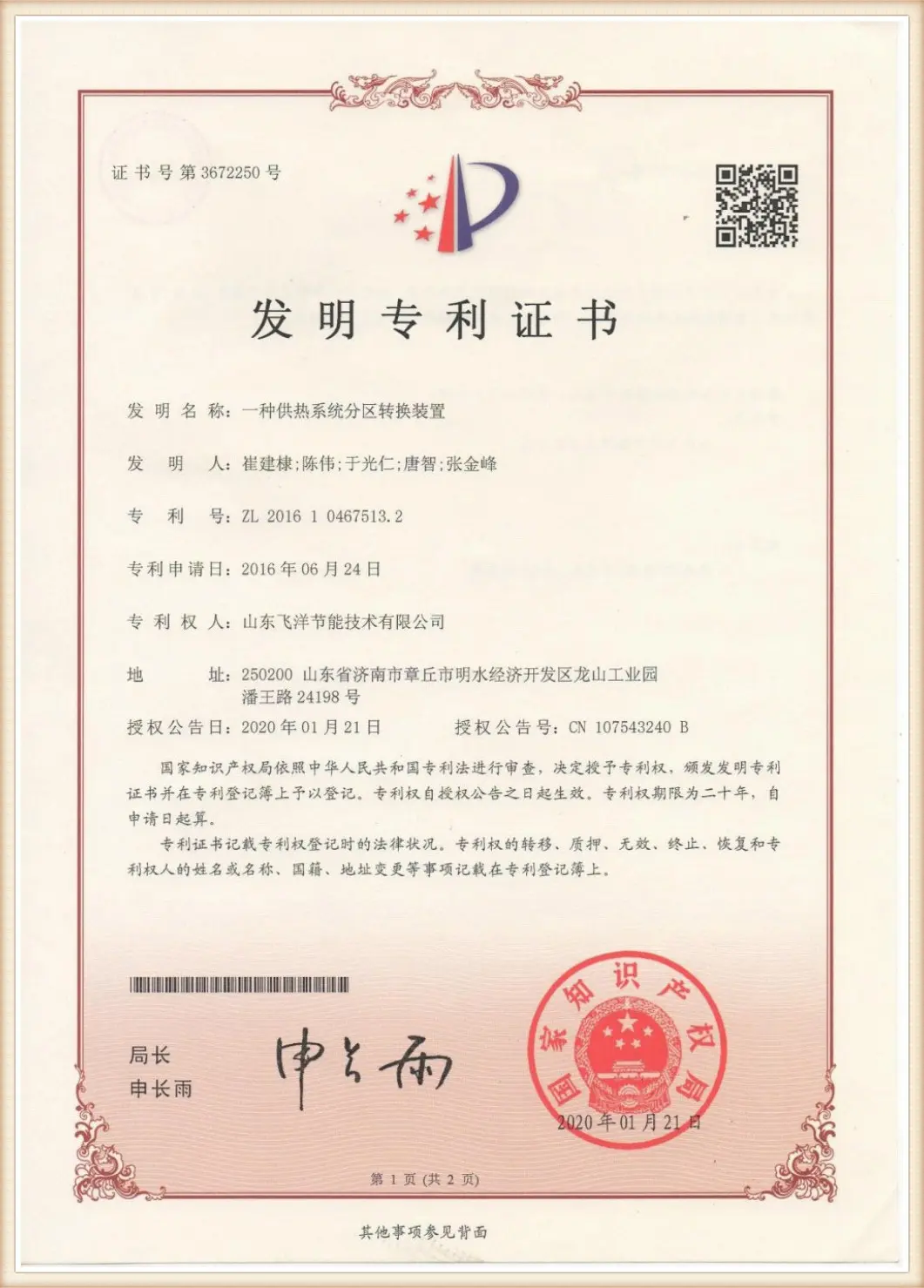
Our company continuously advances in production technology, holding multiple patent certifications, including our "High-Efficiency Plate Heat Exchanger", "Intelligent Plate Heat Exchanger System", and "Plate Heat Exchanger Scale Removal Device". Our thermal products have obtained mandatory national product certification and safety registration from the National Standardization Committee.
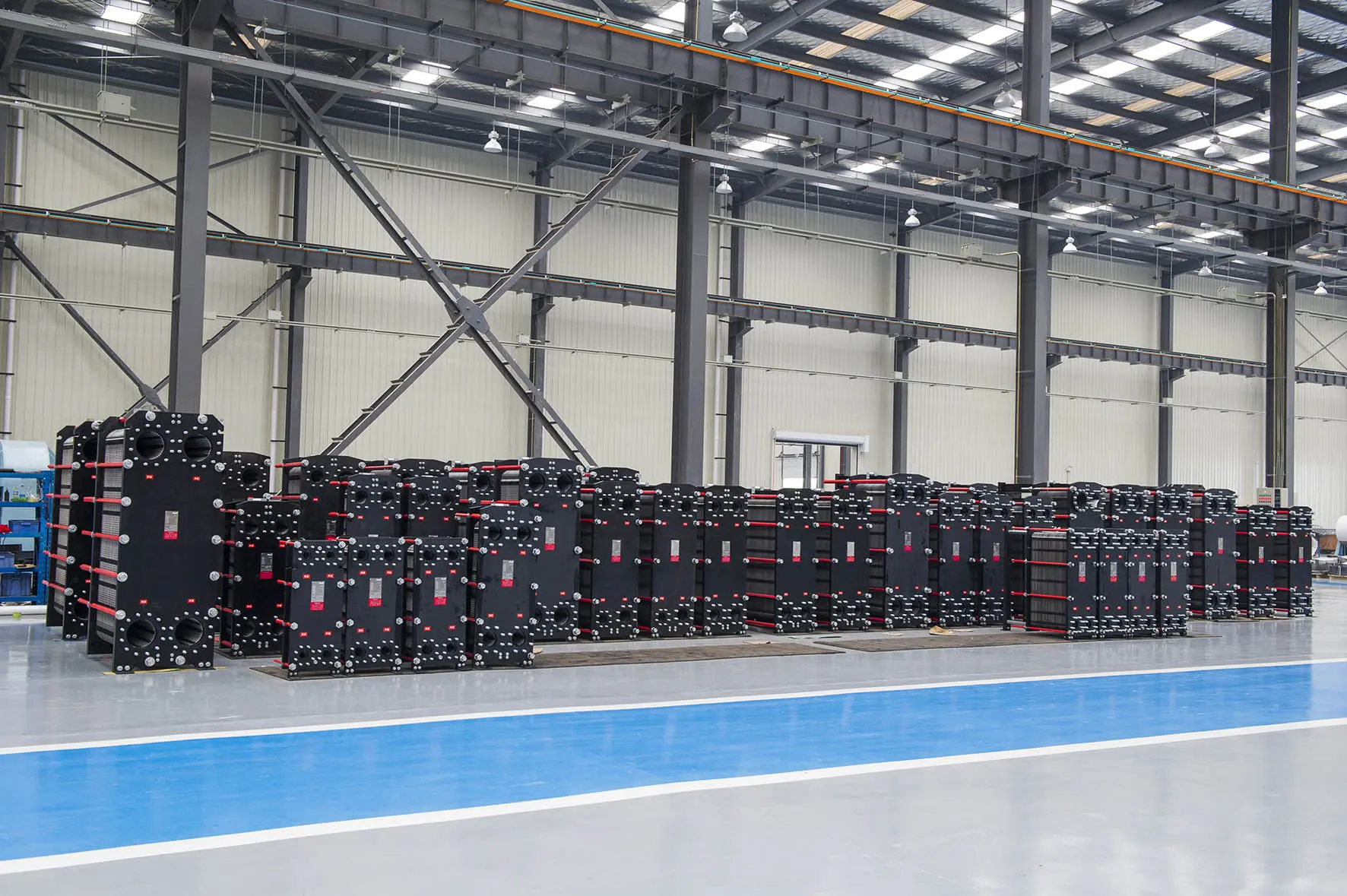
Flotte Thermal Manufacturing Facility
30+
Years Industry Experience
260+
Dedicated Engineering Staff
2000+
Annual Unit Delivery Volume
70k㎡
Advanced Manufacturing Footprint

Technical Parameters & Design Specifications

Our engineering team designs every plate cooler configuration to optimize energy efficiency and thermal performance under demanding operating conditions.

Our plate coolers are designed to optimize the Logarithmic Mean Temperature Difference (LMTD) and maintain turbulent fluid flow even at low Reynolds numbers. The corrugated plate pattern promotes micro-turbulences that help reduce surface fouling and maximize the overall heat transfer coefficient (U-value).

Precision Material Selection

Selecting the right plate material is key to balancing thermal efficiency and corrosion resistance in marine environments:

  • Stainless Steel (AISI 304/316L): Suitable for general HVAC, fresh water cooling, and organic solvents.
  • Titanium (Gr.1 / Gr.2): Highly resistant to sea water, brackish water, and high-chlorine fluids. Ideal for marine auxiliary cooling systems.
  • Hastelloy C-276: Best for high-temperature acids and corrosive chemical processing.

Innovative Plate Engineering

Our chevron corrugation angles are tailored to match pressure drop restrictions and heat load demands:

  • High-Theta Plates (Obtuse angles): Induce higher flow resistance and turbulence, delivering superior heat transfer coefficients for short thermal lengths.
  • Low-Theta Plates (Acute angles): Minimize pressure drops in systems with high volumetric flow rates and low allowable pressure losses.

Advanced Manufacturing Process & QC Controls

Our manufacturing process follows strict ISO 9001:2015 standards, ensuring that every plate cooler meets high standards of performance and reliability.
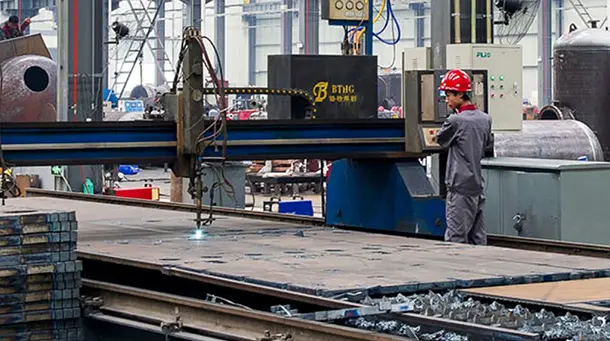
Splint Cutting Process
Splint Cutting & Prep

Precision raw plate shaping and cutting using CNC plasma and fiber lasers to ensure clean, precise edges.
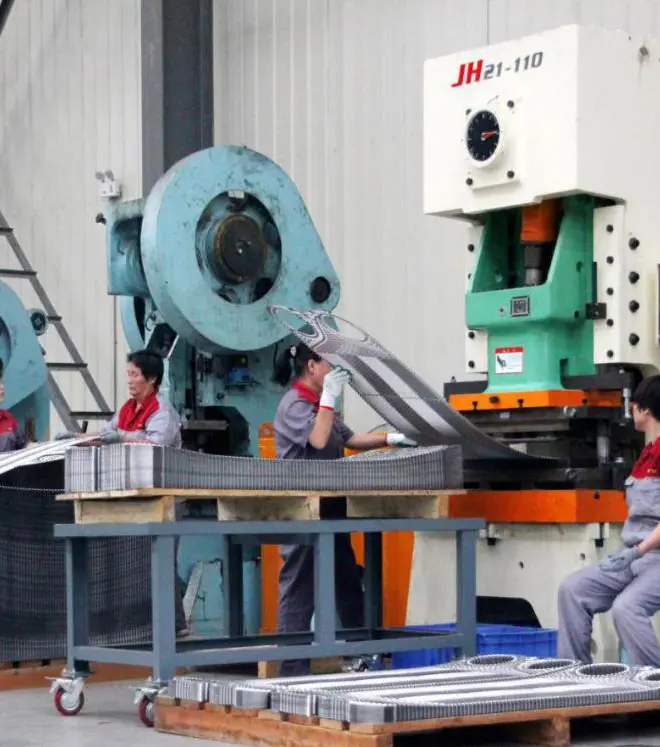
Plate Punching Process
Plate Punching

Advanced punching machines shape port configurations, preventing micro-fractures in high-strength alloys.
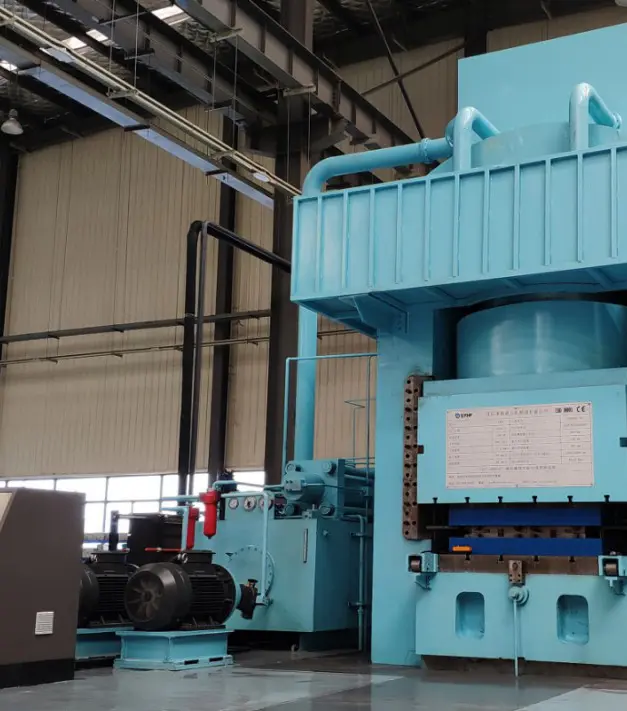
Sheet Stamping Forming

High-capacity hydraulic press forming (up to 20,000 tons) creates precise chevron corrugated patterns.
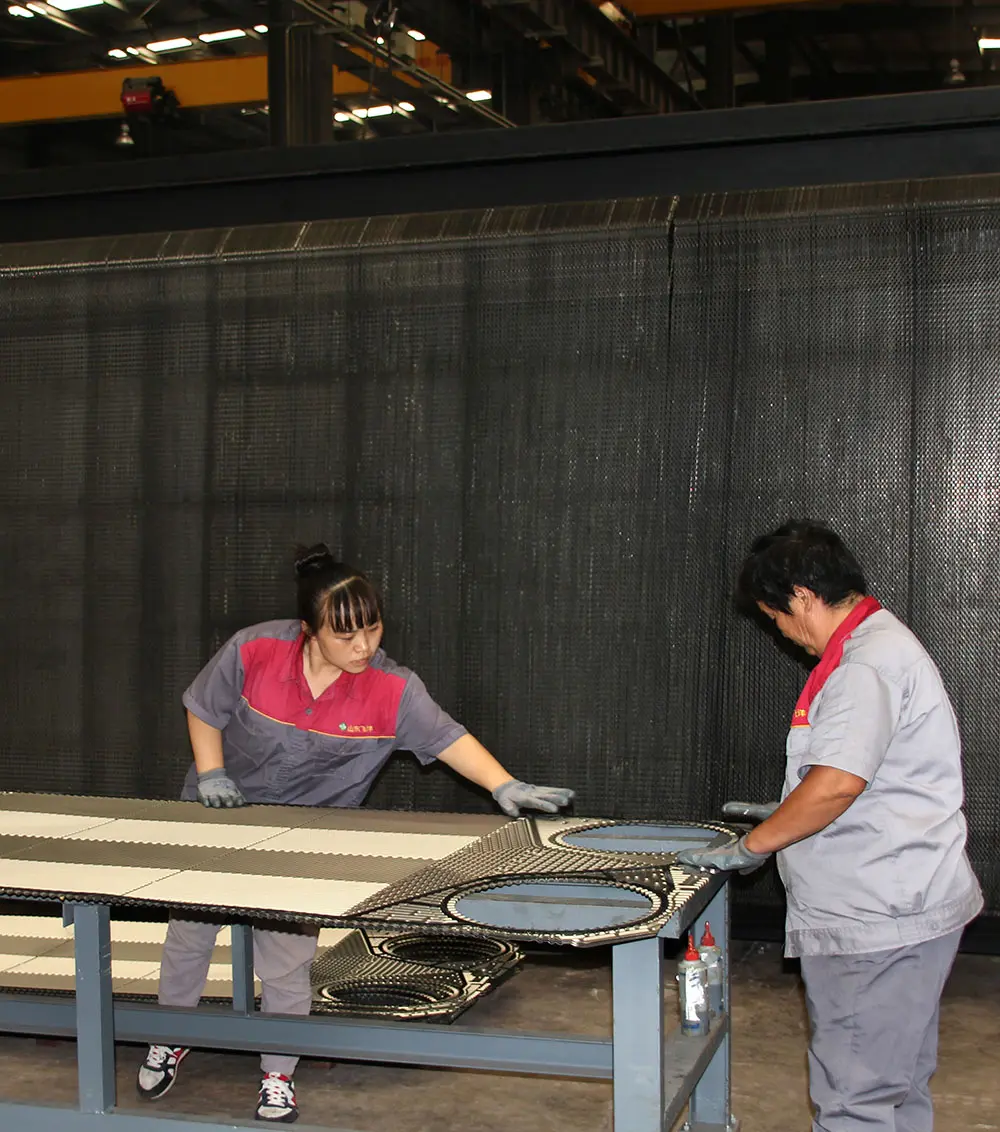
Rubber-Coated Pad
Gasket Attachment & Bonding

Applying specialized elastomer gaskets (NBR, EPDM, FKM) with advanced bonding agents for a reliable seal.
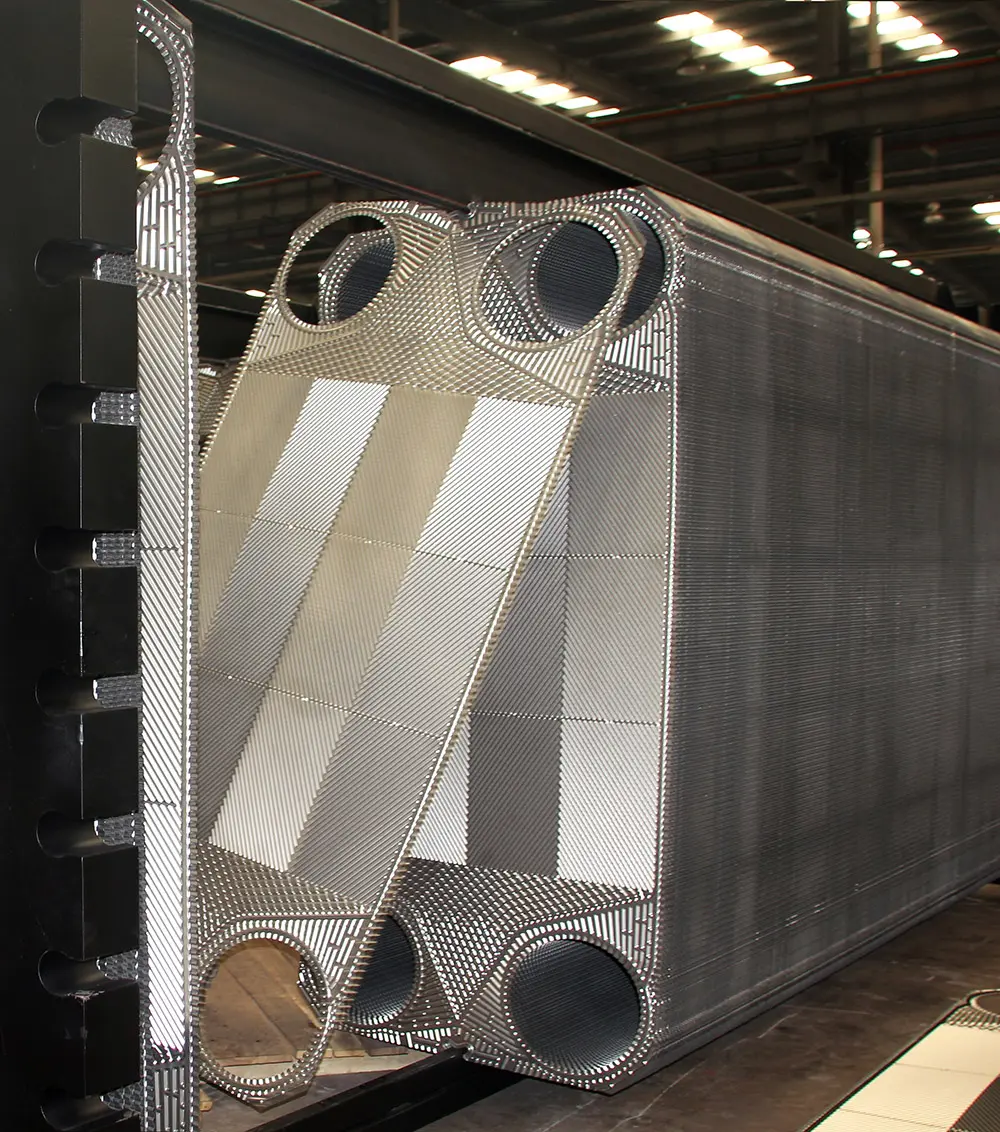
Equipment Assembly
Frame & Plate Pack Assembly

Grouping plates and clamping frames under controlled torque to maintain consistent plate pack dimensions.
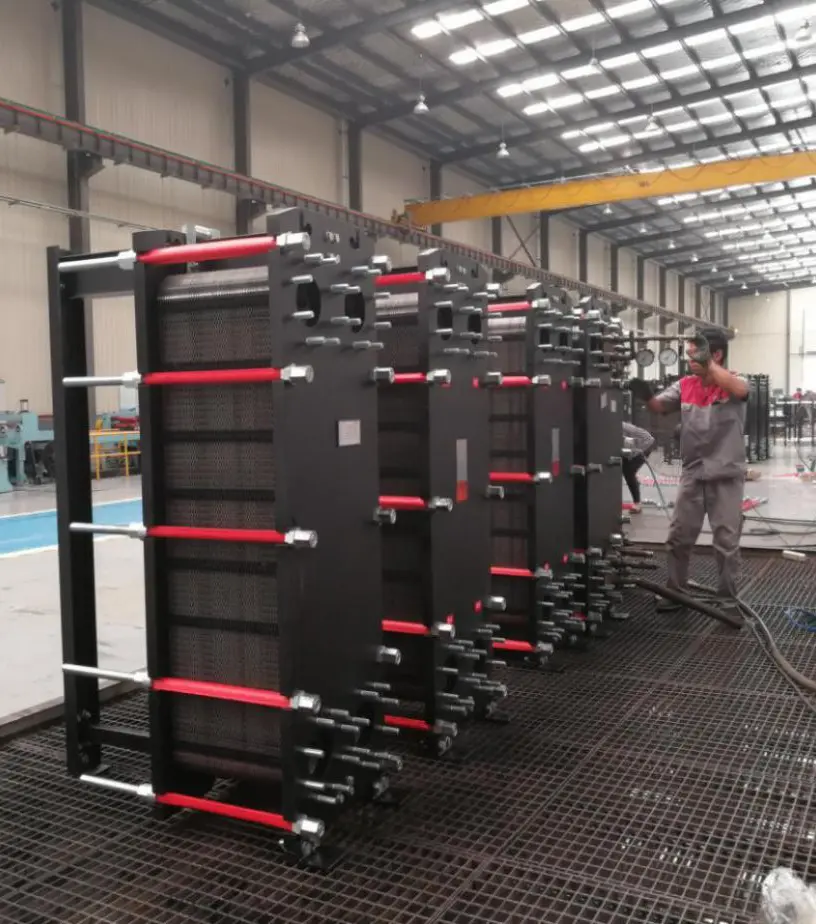
Water Pressure Detection

Hydrostatic pressure testing at 1.3 to 1.5 times the design pressure to verify leak-free performance before shipment.

International Compliance & Engineering Certifications

Our manufacturing facilities adhere to strict pressure vessel safety and environmental management systems globally.
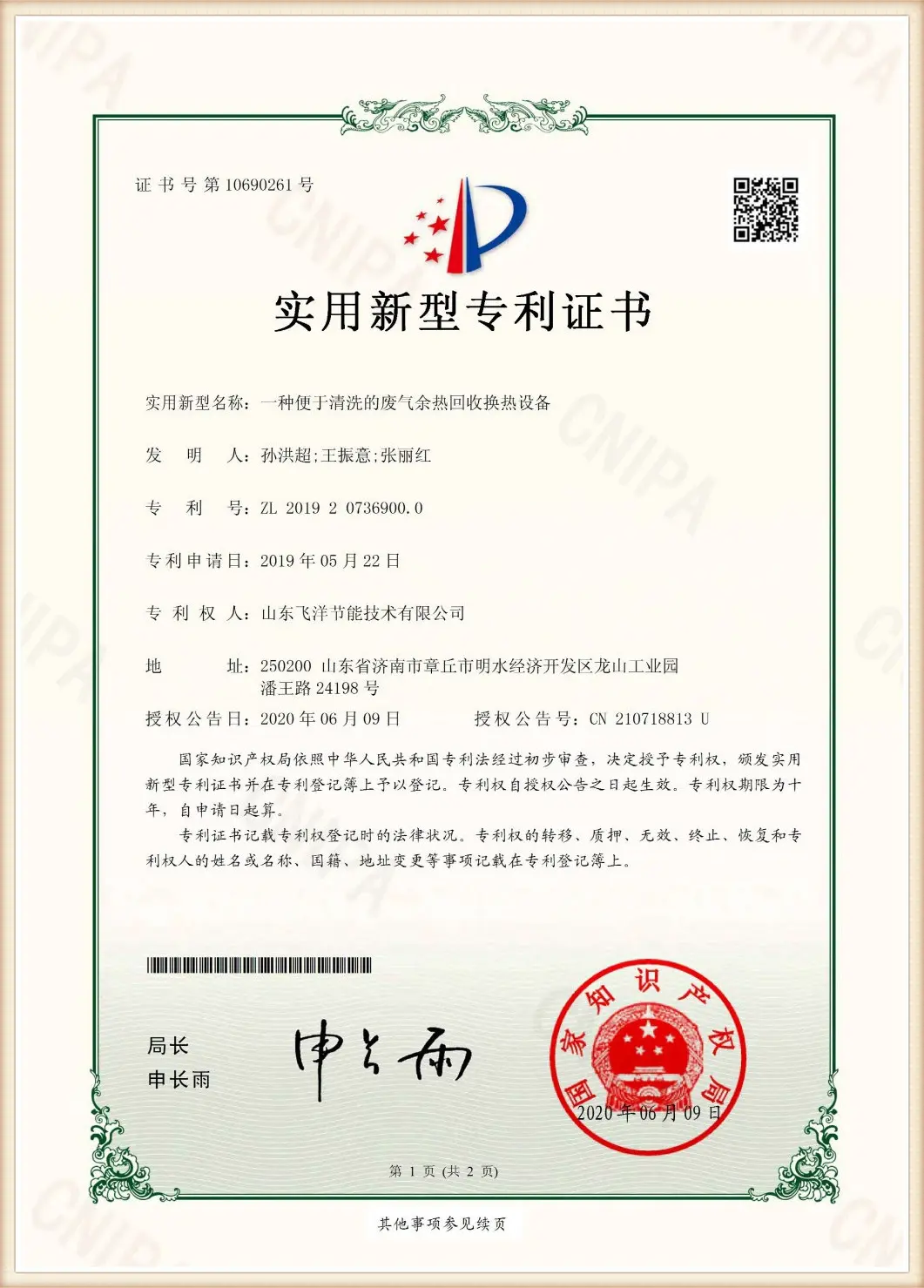
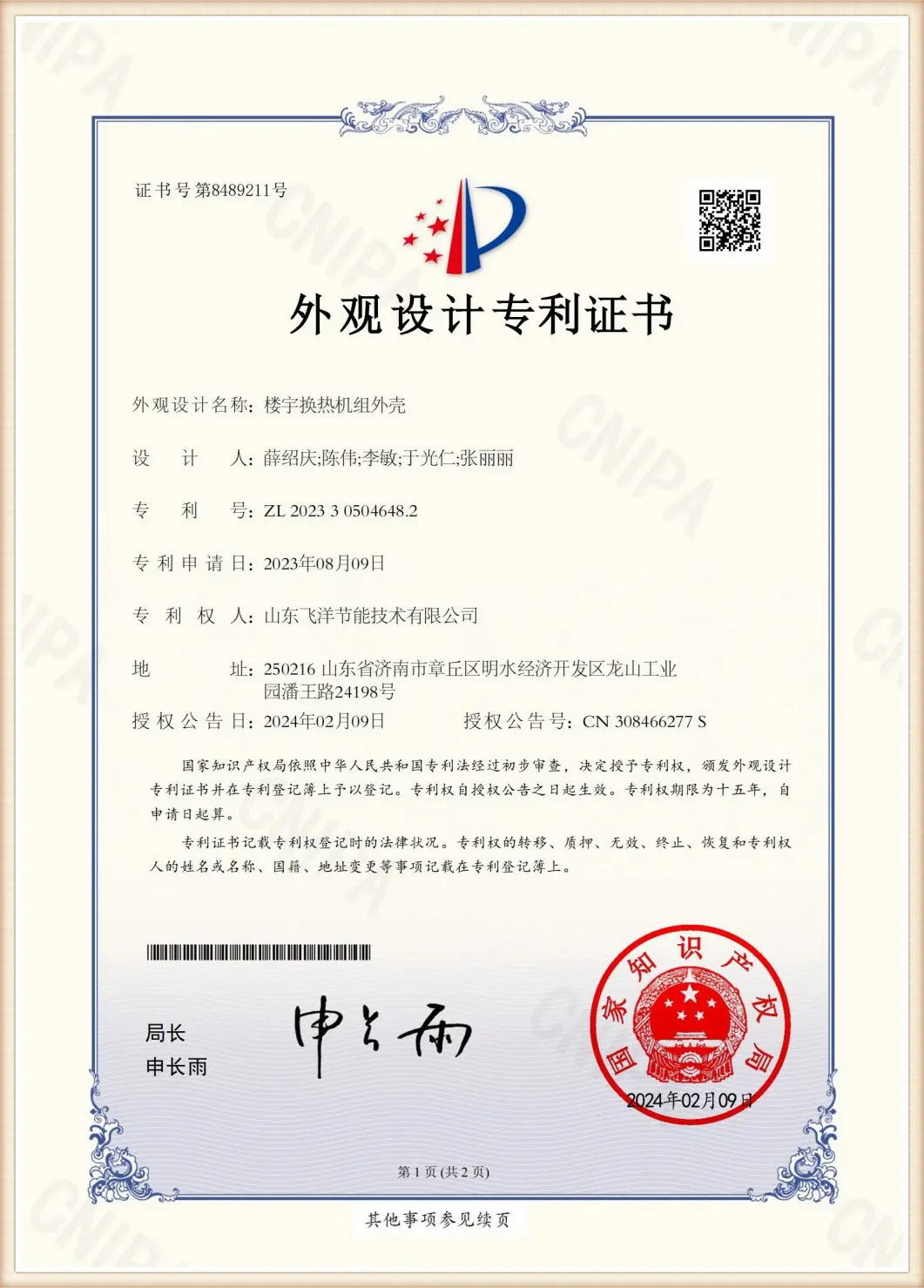
Production processes, quality control, and field service operations at Flotte strictly follow the ISO 9001:2015 international quality management system, along with the pressure vessel quality assurance framework. All frontline production staff are certified technicians who undergo regular formal training.

Our thermal units are designed in compliance with major global industrial design codes, including ASME Section VIII Division 1, EN13445, and API 662. This documentation helps simplify project approvals for plant managers, EPC companies, and engineering consultants in the Singapore market.
Certificate 1 Certificate 2 Certificate 3 Certificate 4

Technical FAQ - Plate Coolers & Heat Exchangers

Detailed engineering answers for system designers and procurement specialists in Singapore.

How does the plate cooler prevent fouling when using seawater in Singapore?
To manage seawater fouling, we use Grade 1 or 2 Titanium plates, which resist localized pitting and crevice corrosion. Additionally, the chevron corrugation angles are engineered to maintain high shear stress at the plate surface, promoting self-cleaning. For seawater systems, we recommend allocating a fouling allowance factor of 0.00015 to 0.00025 hr·ft²·°F/BTU.
Which gasket material is recommended for high-temperature tropical applications?
For typical HVAC applications, EPDM (Ethylene Propylene Diene Monomer) is suitable for temperatures up to 150°C. For industrial cooling systems involving oil products or chemical solvents, NBR (Nitrile Butadiene Rubber) or FKM (Viton) gaskets are recommended to handle hydrocarbon exposure and higher chemical loads.
What is the minimum approach temperature achievable with your plate coolers?
Our high-theta plate geometries support approach temperatures as close as 1.0°C to 1.5°C. This makes them highly effective for data center free-cooling systems and district cooling networks where maximizing temperature cross is essential.
How do your systems comply with Singapore's local environmental and code regulations?
All our imported heat exchangers are tested and documented in compliance with local pressure vessel standards (e.g., Singapore MOM rules). We provide standard hydro-test certificates, material traceability reports, and third-party inspections to help simplify the installation and commissioning process.

Ready to Optimize Your Cooling Loop?

Contact our thermal engineers today for a custom simulation design report (covering pressure drops, velocity calculations, and LMTD modeling) tailored to your Singapore project requirements.

Send Inquiry Now